

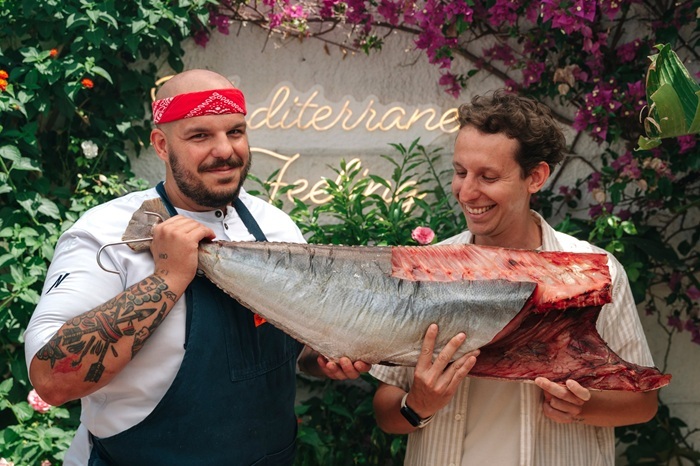
In Antignano, the home of cacciucco, chef Matteo Nannini challenges the cult of freshly caught fish with extended aging periods and a culinary approach that highlights even the least conventional parts. With references to the sea, Asian influences, and a focus on reducing waste, this is the story of a dining experience that breaks the mold.
After a long trip along the Livorno coast with our fishing rods in search of fresh, just-caught fish, and after carefully observing the reddish hue of the gills and the crystal-clear gleam in the eyes, we realized that perhaps we’d gotten it all wrong. For advocates of aging, the most intense flavors are revealed precisely by allowing the fish to mature. And the pursuit of flavor goes hand in hand with a focus on reducing waste, because nothing from aged fish is thrown away—not even the bones and innards. In Italy, the guru of aged fish is the Sardinian Luigi Pomata, but in Tuscany, it’s actually Chef Matteo Nannini at his restaurant in Livorno, serving fish that has undergone an extreme aging process and is used in its entirety.
Dry-aged fish in the city of cacciucco
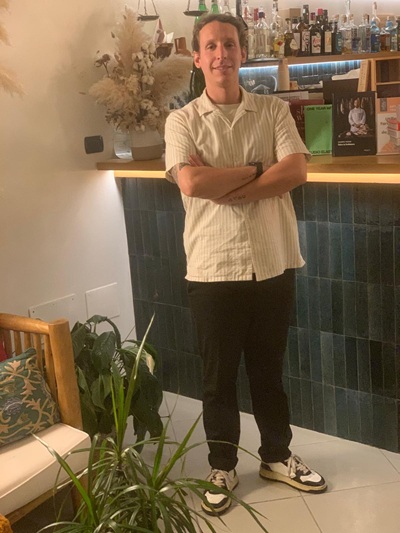

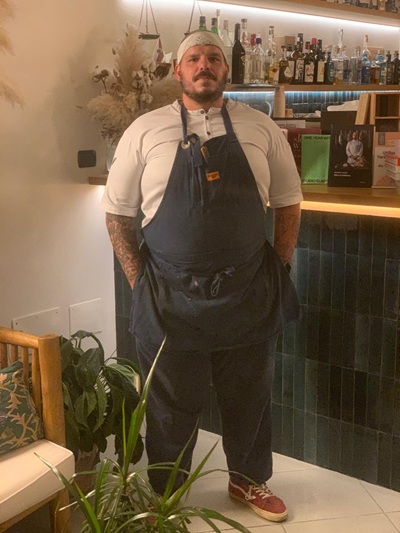
Nannini is located in the small village of Antignano, on the southernmost edge of the city of Livorno , where babies are weaned on the rocks with fresh nasellini, or, if those aren’t available, with steamed gobies and blennies. To hear talk of aging fish in the city of cacciucco (spelled with five “c”s), or of free-diving for sea bream, is heretical—perhaps something only Pisans would do.
Anyone who walks into Nannini’s without knowing the rules risks be thoroughly disoriented. At the entrance to the restaurant, as you head toward one of the pleasant dining rooms or the cool pergola in the summer, you come across two walk-in refrigerators where the skeletons of fish—some of them stripped of their flesh—are prominently displayed, taking those unfamiliar with the principles of dry-aging by surprise.
The goal is to bring out the full flavors of the fish. In addition, there is an ethical aspect: nothing from the fish is thrown away, least of all its most “intimate” parts, such as the heart, liver, and stomach. So, to evaluate Nannini’s cuisine, we paid the utmost attention during the tasting to how well the dishes evoked memories of the sea and sensations reminiscent of freshly caught fish, then to the elegance of the flavors and textures, and finally to the absence of unpleasant odors.
Between the Sea and Asian Influences

The menu offers a variety of dining experiences, ranging from the most relaxed to the most adventurous. If you’d like to trust the chef’s expertise, you can choose the tasting menu, which takes you on a journey through the world of dry-aging with different cooking methods and textures, all selected by the chef himself.
Otherwise, choose from the menu: in the “Starters” , highlights include aged fish sashimi, bouillabaisse with peppery mussels, mussels with pesto, macha sauce, and caper leaves, or muggine in saor, served with bao buns and aioli. It’s very clear that Nannini is interested not only in dry-aging but also in cultural fusion, particularly Eastern ones. The result is undoubtedly remarkable, thanks to a perfect blend of the flavors derived from dry-aging and the Eastern nuances infused with umami and spicy notes.

Next up is the menu “To Continue.” Notable dishes include the roasted cappellaccio stuffed with creamed monkfish head, green bean pesto, and pil pil, as well as the fish soup, mixed pasta, and seared red mullet—a dish with very pronounced yet overall well-balanced flavors, where the hint of the sea emerges boldly and complexly in the finish, almost like a dreamlike cacciucco.
From the monkfish liver platter
With the sections “From Our Tray” and “In Closing” And so we enter the grand finale of this concert of flavors.
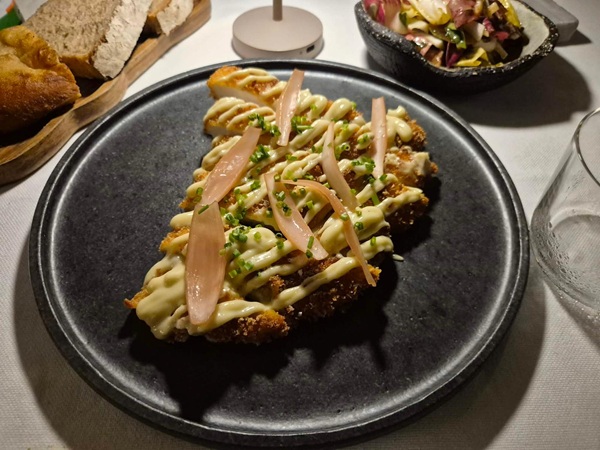
Our Platter consists of a selection of aged fish cuts and prepared whole. The cuts are presented to the customer for selection in an original arrangement on a platter, each with a price tag. The chosen cut is then cooked using the method Chef Matteo deems most suitable. We have chosen a fried turbot with mayonnaise and aioli sauce. Overall, it resembles British fish and chips in appearance, the perfection of the frying—crispy and dry—and the accompanying sauces. In this case, however, the oceanic flavor resulting from the aging process takes a back seat, leaving the taste somewhat flat.
Refined La Rana Goes to Bangkok. Thai-style fried monkfish, tangy onions, yogurt sauce, and honey mustard—but what impressed us most, however, was a special. The Venetian-style monkfish liver escalope. An enormous liver, from a gigantic monkfish—the kind of catch that Nannini hunts relentlessly. A dish of remarkable balance, both in its seafood flavors and textures.
Cheese, Desserts, and the Changing Seasons

The dessert selection is also excellent: in addition to delicious cakes and cream-based desserts, there’s a selection of Guffanti cheeses, all perfectly aged. (Not to mention the dry-aged beef.)
The menu varies by season. We dined on the summer menu during our visit, but from October through November, the fall menu—or “fishing moratorium” menu—is featured, offering an unusual pairing of game and artisanally caught fish, before shifting the focus back to seafood in the winter.
FROLLATURA: FROM MEAT TO FISH
For the meat , the concept is easier to understand. The muscle of a freshly slaughtered animal is stiff due to rigor mortis and only relaxes after an appropriate aging period. Every self-respecting butcher prides himself not only on the quality of the meat but also on its aging. Recently, however, the concept has evolved: once upon a time, a few days of aging, a few weeks in the case of game. Then we moved on to months; today, we’ve even reached years—all the way to the mummified-looking half-carcasses of animals from the 18th Dynasty. In Tuscany Edoardo Tilli of the Podere Belvedere restaurant in Pontassieve is the most famous and active advocate of extreme aging and the use of every part and offal of the animal through unconventional methods and deep fermentation.
How Fish Changes Through Aging
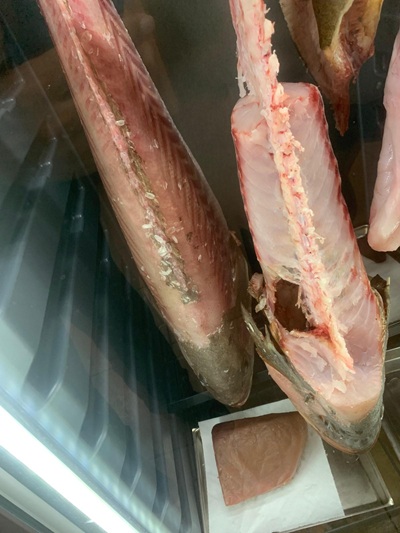
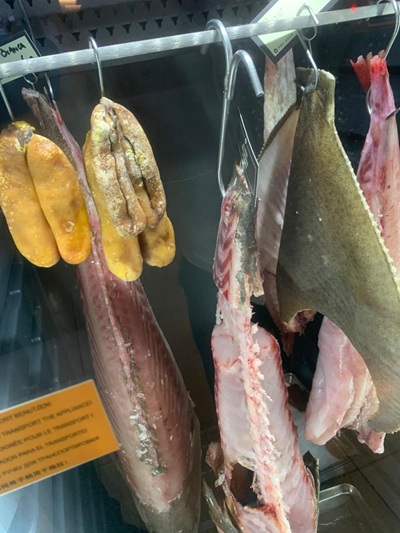

For the fish , the issue gets more complicated. The advocates of aged fish, led by the Australian Josh Niland, argue that aging results in significant improvements in flavor and has an important ethical implication in terms of reducing waste. It is a process of enzymatic maturation. Complex proteins are broken down, and the fish flesh becomes more tender, creamy, and silky. The process is much more delicate than that used for meat.
The critical factor is moisture control at every stage of processing. “First, the fish must be bled (including the intercostal blood) and cleaned of scales, gills, and entrails to prevent the growth of bacteria and unpleasant odors ,” explains Nannini. “ During this extremely delicate and labor-intensive stage, the fish must be thoroughly dried with absorbent pads or rice paper. At this point, it is hung in refrigerated rooms with controlled humidity , where it loses up to 30% of its weight in water. This process transforms complex proteins into simpler structures, restoring the fish’s texture, concentrating its flavor, and maintaining a recognizable shape on the plate». For larger fish, the head is removed after one week. Aging ranges from 8 to 12 days for medium-sized fish, up to 40 days for fish such as groupers and amberjacks.
This is the mantra of dry-aging enthusiasts. “Dry-aging is not an end in itself, but a means to an end.” It serves to restore value to the fish, to make it more accessible in terms of flavor and texture.
RESTAURANT