
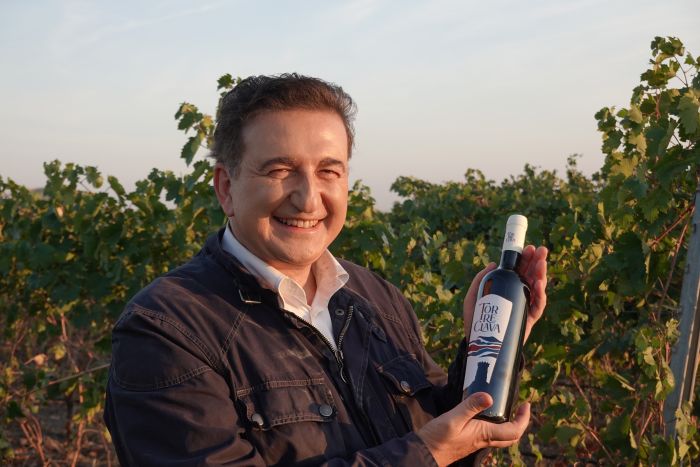
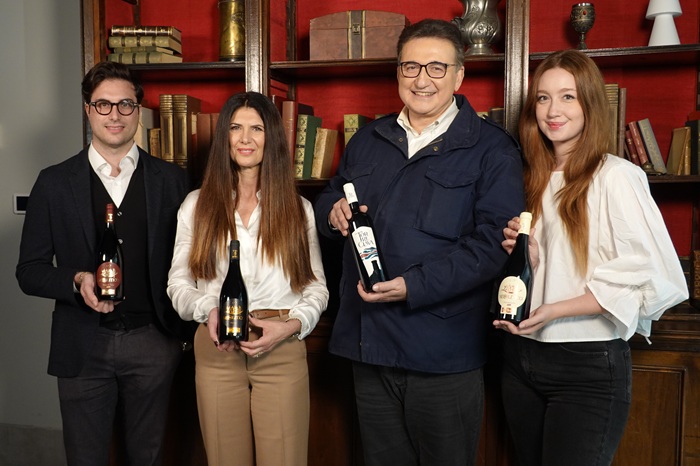
Torreclava—the organic Primitivo born from Terre di Maria in Orta Nova, in the Tavoliere region—embodies the spirit of Voyager and Freedom. It’s a family project that combines his passion for wine with the work of the Faretra family. In this interview, she discusses the choice of grape variety, her relationship with the winemaker, the origin of the name, and her take on the consumer crisis. Annalucia Galeone tells us more.
Torreclava is the first label created by Roberto Giacobbo, a journalist and host of programs dedicated to the mysteries of archaeology, science, and ancient civilizations, such as Voyager and Freedom. After opening two restaurants, one in Carloforte and one in Rome, his curiosity and desire to take on new challenges led him to embark on a new adventure as a wine producer.
Alongside him is Terre di Maria, a farm in Orta Nova, in the heart of the Tavoliere of Puglia, which practices organic farming using modern technologies. The project brings the Faretra and Giacobbo families together through the marriage of Cataldo Faretra and Giovanna Giacobbo, Roberto’s daughter. We spoke with the host about it.
Why did you choose Primitivo, since the winery also grows Nero di Troia and Susumaniello?
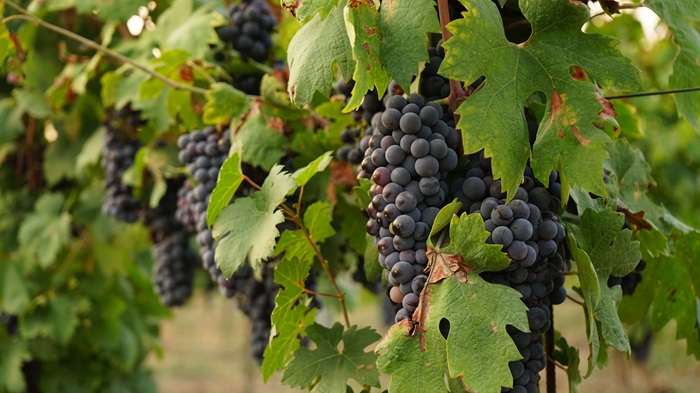
I chose Primitivo for a very simple reason: it’s a grape variety with deep historical roots in the region of Puglia. We’re also fortunate to be located on a unique plot compared to the surrounding area: the soil was on the banks of an ancient waterway that, over the millennia, deposited silt, creating small, scattered patches of particularly rich soil. Our vineyard is located right in one of these patches.
I believe that here the Primitivo manages to express strength, sweetness, delicacy, intensity, and complexity. It is a wine that brings great satisfaction and carries with it an important history. Furthermore, it has become one of the best-known and most appreciated Italian wines even abroad, standing shoulder to shoulder with historically famous Italian names and varieties.
How did you make the production “your own”?
I have a particular sensitivity to taste—a trait my brother shares and that I also see in one of my daughters. My first goal was to create a wine that I myself would enjoy, smoothing out those rough edges that can sometimes be found. This sensitivity comes into play at various stages of production. It’s a lengthy process, consisting of constant tastings and small adjustments, and it’s proving very rewarding. Because, in the end, good things have one simple characteristic: they bring everyone together.
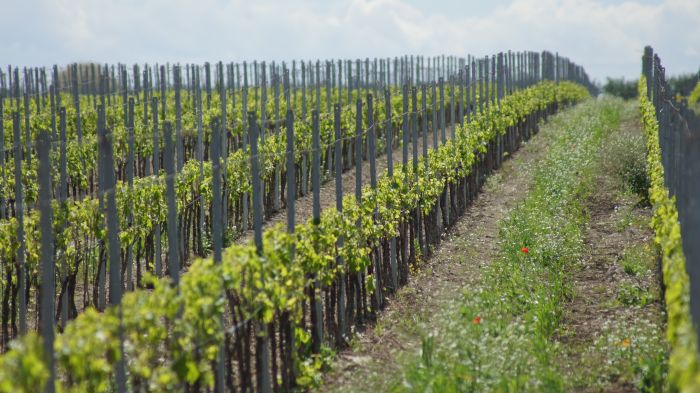
Of course, our winemaker, Tommaso Pinto, with whom we agreed on two guiding principles: to create a product that is authentically Apulian and organic. We sought to make the most of what the land has to offer: the wind, which supports organic cultivation; the mineral-rich groundwater; and exclusively plant-based fertilization. Grasses are sown between the rows and are later mulched and worked into the soil. Pruning also follows modern and precise criteria. The harvest is carried out by picking each berry individually, made possible by advanced technology.
Torreclava has an interesting name: where does it come from?
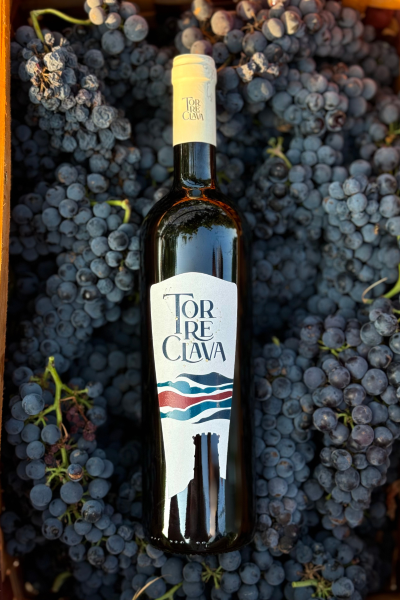 It all started with a conversation among friends. When I told them about the project, they said: “Roberto, you have to include the word ‘tower’ in the name of the wine, because it’s a good omen.” I liked it right away. A tower is something historic, imposing, and beautiful: it evokes history and the exploration of the past—and thus, my world as well.
The second part of the name comes from the land where our vineyard grows, a place that was already inhabited by people in the Neolithic era. They had likely realized, through experience, that it was a particularly fertile land: it naturally provided food, vegetation, and animals to hunt. The club has become a symbolic reference to prehistoric man and that ancient world.
Is the wine industry really in crisis, or have tastes simply changed?
When we assume that a product—simply because it is trendy or part of an important tradition—can be consumed regardless of its quality, we begin to undermine it. I believe this has also happened with wine: for a long time, it was assumed that any wine, simply because it was Italian, should automatically be appreciated and drunk all over the world.
Today’s consumers are more demanding, have more choices, and competition is fiercer. If the wine industry is going through a difficult period, I believe part of the responsibility lies in the fact that, in some cases, people have tried to exploit the market without paying sufficient attention to quality. I’m not talking about high-quality wines, which continue to have a discerning audience.
 Quality doesn’t necessarily mean sky-high prices: it’s possible to make a good wine without charging hundreds of euros for it, respecting nature and allowing time to take its course, without expecting to recoup all our investments in just a few years. We started out with just a thousand bottles.
Not everyone perceives the crisis in the same way. Those who offer a high-quality, recognizable product that leaves a lasting impression on consumers continue to achieve success.
From Torreclava to Torreclava Gold?
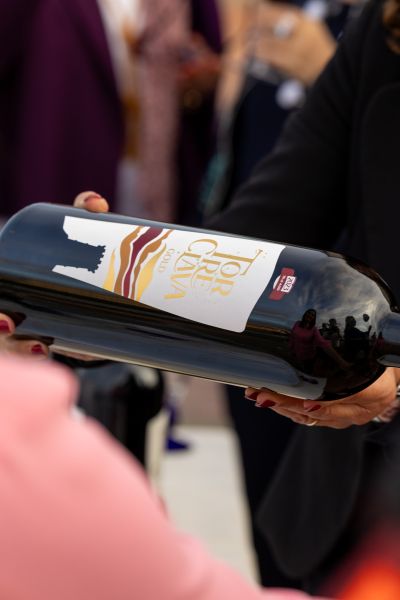
It’s a blend I like to call “Super Apulia,” because it’s made exclusively from Apulian grape varieties. The main component, of course, is Primitivo, complemented by Susumaniello, Nero di Troia, and other varieties from our vineyard. We’ve produced it exclusively in magnum bottles, with just 499 bottles made.

