

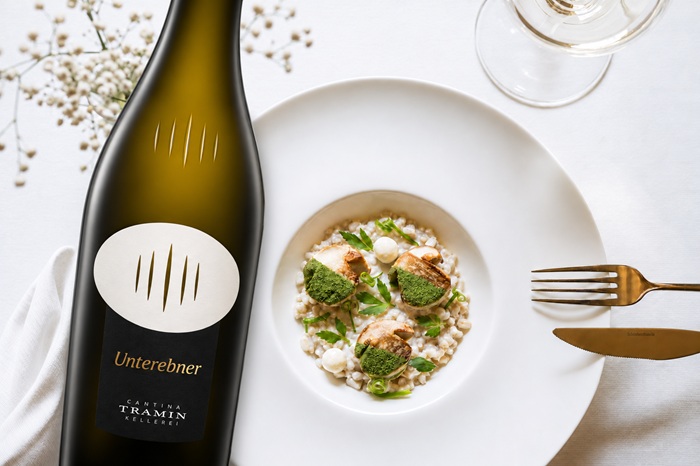
Recipe presented by Chef Martino Longo of the Adler Dolomiti in Ortisei. We recommend pairing it with the Alto Adige Pinot Grigio Unterebner 2023 from Cantina Kellerei Tramin.
This creamy first course is inspired by the traditional barley soup, offering a contemporary take on ingredients typical of South Tyrolean cuisine. The barley risotto pairs with the delicate flavor of porcini mushrooms—which are also used to create a richly aromatic broth—and the creaminess and pleasant savory flavor of fresh and , and the intense, aromatic notes of lovage, an aromatic herb common in Alpine regions, also known as “mountain celery,” which, when added either dried or fresh, complements and balances the dish’s flavors.
Ingredients for 4 people
- 320 g pearl barley
- 150 g porcini mushrooms
- 3 liters water
- 10 g dried porcini mushrooms
- 1 small yellow onion
- 1 chopped shallot
- Extra virgin olive oil, to taste
- 50 g Parmesan
- 80 g fresh goat cheese
- Salt and pepper to taste
- Thyme, to taste
- Garlic, to taste
- Fresh porcini mushrooms and lovage (mountain celery) for garnish
Procedure:
Rinse the porcini mushrooms under running water and slice them. Set aside the trimmings for the broth, some of the sliced porcini for cooking the orzotto, and other sliced porcini to roast with extra virgin olive oil, thyme, and garlic.
Rinse the barley.
Prepare a broth by bringing 3 liters of water to a boil with the trimmings from the porcini mushrooms, the dried porcini mushrooms, and the onion cut in half; let it simmer for about 15 minutes.
In a saucepan, sauté the chopped shallot in extra virgin olive oil until softened; add the sliced fresh porcini mushrooms and cook for 5 minutes, then add the previously rinsed barley and toast for two minutes.
Add a ladleful of hot broth, then gradually add more, continuing to cook the orzotto as you would a regular risotto for about 30 minutes. Off the heat, stir in the Parmesan and goat cheese, and season to taste with salt and pepper.
To serve, transfer the orzotto to a plate and add small balls of fresh goat cheese formed with a small spoon. Add the sliced porcini mushrooms and sprinkle with dried lovage powder. Garnish with fresh lovage leaves.
In the glass, selected by Stefania Vinciguerra
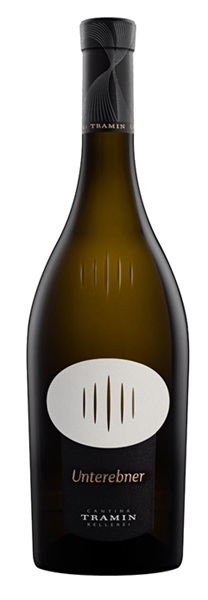 Alto Adige Pinot Grigio Unterebner 2023 Cantina Kellerei Tramin
Golden yellow. Fresh, fruity notes of pear, spices, hay, and toasted bread on the nose. Full-bodied and dense, with lovely freshness and rich character on the palate. Juicy, briny, and with excellent length.
Production area: the hills around Termeno, elevation 400–600 meters above sea level, 85% southeast-facing and 15% south-facing slopes, calcareous gravel and clay soil, partly with a porphyry bedrock base.
Grape varieties: 100% Pinot Grigio, vines aged 10–30 years. Yield of 50 hl/ha.
Description of the 2023 vintage:
A mild winter, with little precipitation and plenty of sunshine, was followed by a dry March that led to relatively early budbreak. Spring was cool and rainy, while in June, warm, sunny days alternated with rainy ones. A hot summer and a rainy start to September demanded a great deal of effort from the winegrowers, which was rewarded with a splendid fall and ideal conditions for the harvest. Meticulous work in the vineyard, combined with experience and dedication, enabled the member winegrowers to brilliantly overcome the numerous challenges of this vintage.
Grape Harvest: mid-September. The grapes are harvested entirely by hand and placed in small containers that keep them intact.
Production processes: Slow, temperature-controlled fermentation (18–20°C) in wooden barrels and, to a lesser extent, in tonneaux, where malolactic fermentation also takes place. Racking of the must by natural sedimentation. Aging in large wooden barrels (30–40 hl) and, to a lesser extent, in tonneaux, always in contact with the yeasts until the end of August. After bottling, the wine is left in the bottle for a minimum of 3 months for further aging, bringing the total aging period to a minimum of 14 months.
Aging potential: 7–10 years
Serving temperature: 12–14° C
Recommended pairings: excellent with light pasta dishes, seafood dishes, and lightly spiced white meats; perfect with all smoked fish and meat dishes and grilled vegetables


