Three generations of pizza makers and a commitment to the fundamentals. On the Riviera di Chiaia, Francesco and Salvatore Salvo showcase Neapolitan pizza through a menu featuring seven Margherita pizzas, each with its own tomato sauce and extra-virgin olive oil. Rounding out the offering is a selection of wines that invites guests to explore different pairings.
How much can a Margherita pizza change depending on the type of tomato or olive oil used? From Pizzeria Salvo, on the Riviera di Chiaia in Naples, this question becomes a tasting journey. Salvatore’s meticulous work with ingredients allows you to closely observe the delicate balance of a pizza that, precisely because of its apparent simplicity, leaves little room for error.
Salvo Pizzeria, which opened in 2018, is the second location of Francesco and Salvatore Salvo. Following the one that opened in 2006 in San Giorgio a Cremano. They bring three generations of expertise and the experience of their father, Giuseppe. Who took over a pizzeria in Portici in 1968. The two brothers began working alongside him in the mid-1990s, eventually carrying on his legacy and developing a concept centered on the selection of ingredients has taken on a central role.
Seven Ways to Be Margherita
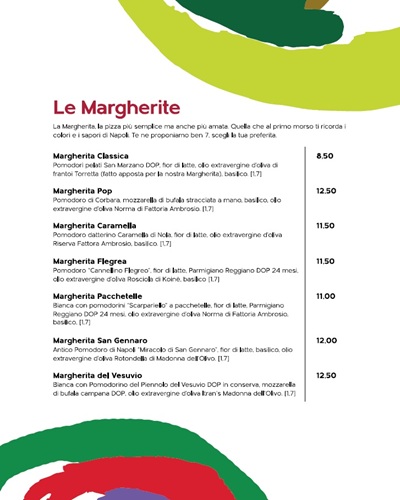
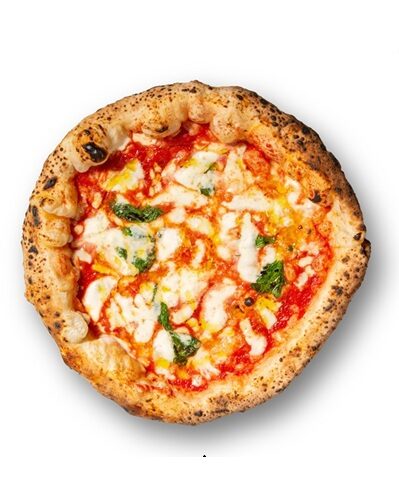
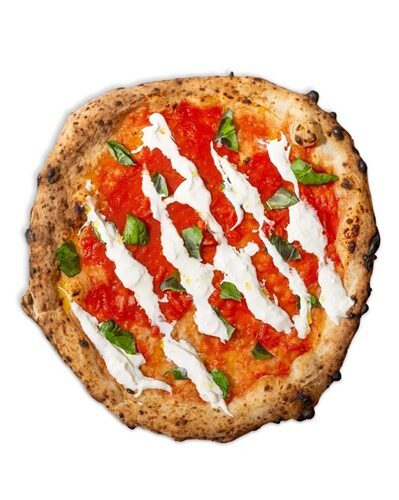
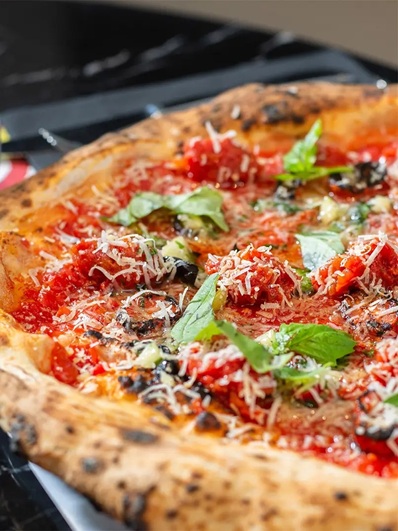
Margherita menu is the most immediate example of this approach. There are seven versions, and each features a precise combination of tomato, dairy, and extra virgin olive oil. The dressing becomes an integral part of the flavor profile: by varying its intensity and aromas, it helps define the balance between the tomato’s acidity and the mozzarella’s milky richness.
The Classic combines San Marzano DOP peeled tomatoes with fiordilatte cheese and an olive oil from the Torretta mills, specially crafted for this pizza. Caramella features the eponymous Datterino tomatoes from Nola and Fattoria Ambrosio’s Riserva extra virgin olive oil. The Flegrea features Cannellino Flegreo tomatoes, 24-month-aged Parmigiano Reggiano, and Rosciola olive oil from Koinè. Margherita del Vesuvio , on the other hand, is a white pizza, featuring canned Piennolo DOP cherry tomatoes, Campania buffalo mozzarella DOP, and Itran’s oil from Madonna dell’Olivo.
This comparison helps clarify the purpose of the research: the best-known recipe for Neapolitan pizza becomes a key to understanding the differences between products and regions. I’d like to add a note that’s heartwarming these days. On the menu, the seven Margherita pizzas range from 8.50 euros for the Classica to 12.50 for the Pop and the Vesuvio. It’s a way of reminding us that, despite the research and the emphasis on high-quality ingredients, it’s not necessary to drive pizza prices through the roof.
A dough made according to tradition
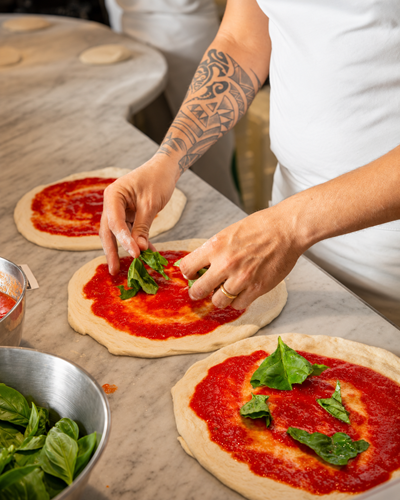
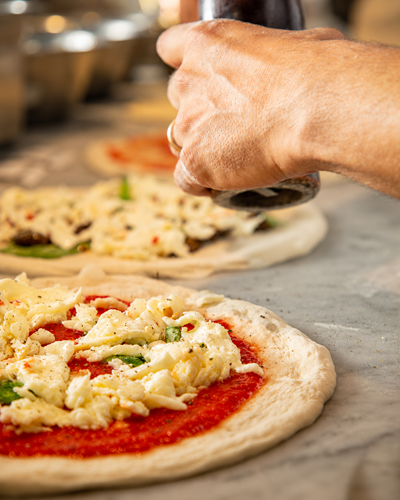
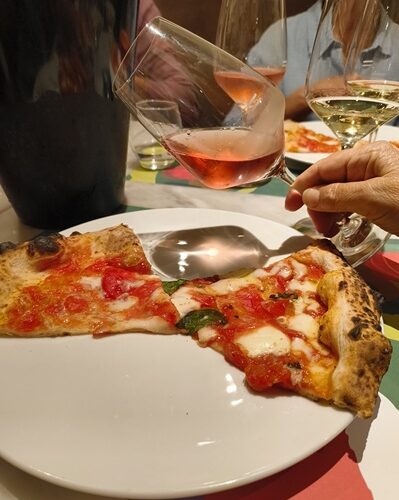
The dough-making process also follows a familiar pattern: brewer’s yeast, high hydration, and long proofing times at room temperature. Wide base and low crust echo the tradition of the Neapolitan “ruota di carro” (cartwheel). This is a pizza where softness is key, with a texture that Salvatore likes to describe as “melt-in-your-mouth.” Knowledge of the ingredients thus goes hand in hand with the art of dough-making and the skill of the person overseeing the baking process.
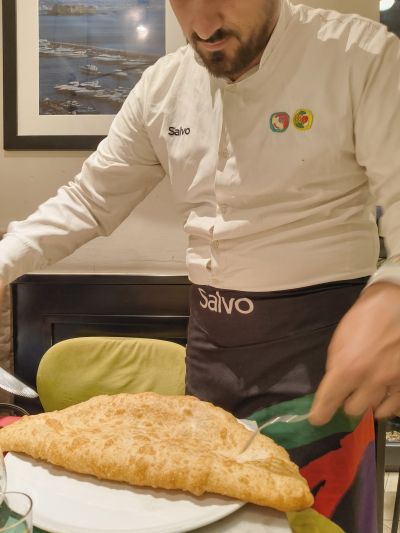
The menu includes fried foods, classic pizzas, and personal takes (“Salvo’s Pizzas”: what can we say about the delicious Scarpariello? Three types of tomatoes and three types of cheese), while staying true to its core philosophy in the selection of ingredients. They’ll drive you wild with their deliciousness and explosion of flavors— the seafood pizzasare to die for. I’m still here wondering whether to choose the Costiera (a white pizza with fresh anchovies marinated in Vermouth and lemons from the Amalfi Coast) and the Terramare (tuna fillets, red onion, and crisp celery) which one was tastier.
Perhaps, however, the “Margherite” remain the most effective starting point for exploring the Salvos’ work: with just a few ingredients, it’s easy to clearly follow each variation.

Wine Becomes Part of the Project
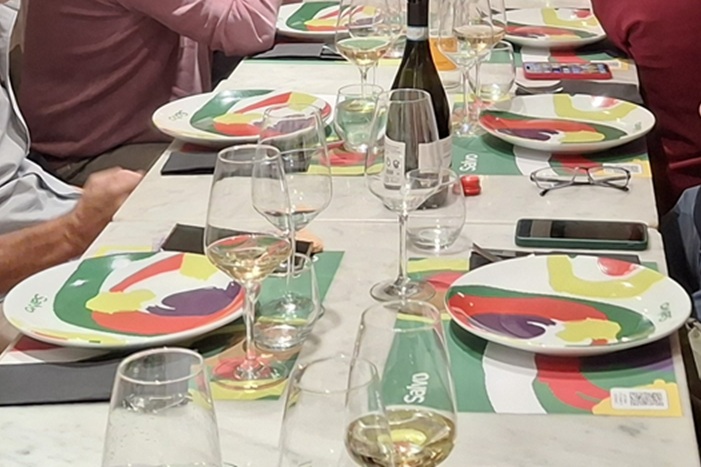
For those in the wine industry, another point of interest is the focus on the winery. The selection is extensive, and the theme of food and wine pairings is also featured in the tasting menus. With by-the-glass options paired with the various pizzas. We focused on wines from Campania, but the selection also extends beyond the region. The wine plays a role in interpreting the ingredients and offers further opportunities for comparison, complementing the acidity of the tomato, the richness of the dairy products, and the intensity of the seasonings.
The same care taken in choosing the oil for a particular type of pizza is reflected in the attention paid to what’s poured into the glass. One more reason to stop by Pizzeria Salvo, take a bite, and let a familiar pizza reveal some unexpected nuances.