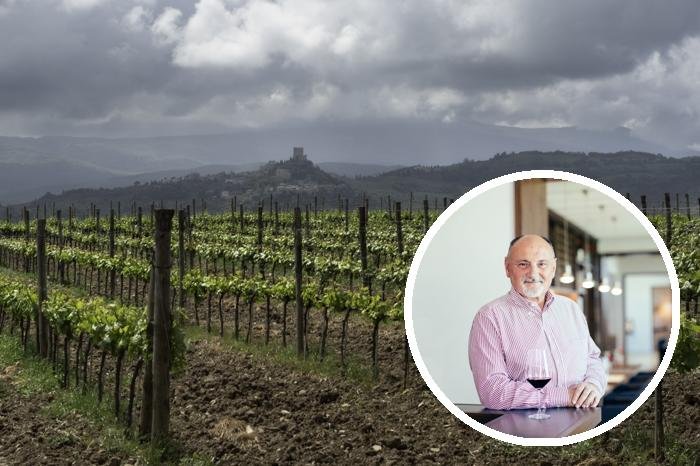
Masaf’s National Wine Committee has approved changes to the Toscana IGT specification: introduction of sparkling wines (Classic and Charmat Method) and exclusive adoption of the designation “Toscana.” Now the dossier goes to the European Commission: entry into force is expected no earlier than the end of 2026.
The green light from Masaf ‘s National Wine Committee to changes in the specifications for Toscana IGT marks a step that is anything but formal: it is, rather, an update that clearly reflects the direction taken by contemporary wine, even in a region as strongly identity-driven as Tuscany.
“Changes introduced respond to evolving consumption styles and market needs,”said Cesare Cecchi, president of the Consorzio Vino Toscana.
The approval, which came on March 17 after the region’s okay in December 2024, now opens the European phase. The timeframe will not be short: there is already talk of the end of 2026 for the entry into force of the new specification. But the substance of the changes is already clear.
Sparkling wines: opening necessary (rather than revolutionary)
The most obvious change is the official entry of sparkling wines into the Toscana IGT, both Charmat and Classic Method, in white and rosé versions.
More than a breakthrough, it is a realization. In Tuscany, bubbles have already been produced for some time, often outside a coherent disciplinary perimeter. Including them in the IGT means giving a regulatory framework to an existing reality and, above all, intercepting a market that continues to grow.
It remains to be seen how far this openness will be able to translate into a recognizable identity and not just a range extension.
One Tuscany: branding choice before technical choice
The elimination of the term “Toscano” in favor of only “Toscana IGT” is a seemingly lexical intervention, but in fact a profoundly strategic one.
The direction is one of simplification and strength of the name: “Tuscany” becomes a brand, even before it becomes a geographical indication. A choice consistent with the region’s international positioning, where recognizability counts as much as-if not more than-technical specificities.
A specification more aligned with the market
The changes clearly respond to theevolution of consumption: greater attention to diversification, openness to dynamic types such as sparkling wines, and strengthening of communicative identity.
In this sense, Toscana IGT confirms its role as an “elastic” appellation, able to adapt more quickly than DOC and DOCG appellations, while maintaining strong territorial ties.
The (always open) issue of consistency
The broadening of typologies, however, brings a familiar question back to the center: to what extent can an IGT expand without losing coherence?
Toscana IGT already encompasses a very wide range-from still and sparkling wines to passiti and late harvests-and with the entry of sparkling wines, the perimeter is widening further. The risk is not so much qualitative as identity.
The numbers confirm the weight of the designation
Data help to read the context:
- About 91 million bottles produced on average over the past five years
- more than 458 million euros in value
- 69% destined for export, with Europe and the United States as the main markets
Numbers that explain why each change to the specification has a significant impact not only at the regional level, but on the entire Italian wine system.
The Consortium also reflects this growth: from about 70 members in 2019 to the current 450 (over 1,700 considering cooperatives).
Toward Brussels, with a clear goal
The final step will be that of the European Commission. Only then will the changes become operational.
In the meantime, the direction is set: strengthen the name Tuscany, expand the types and align with a market that is demanding more and more flexibility. It remains to be seen whether this evolution will manage to maintain a balance between openness and identity, which is then the real challenge for all contemporary appellations.