


From son to father. That is, the reversal of roles in the dynasties that thrive in the shadow of the new wineries. Born one wine is made another.
There is no doubt that in the great epic of the renewal of Italian wine a key role was played by the newcomers, those entrepreneurs from completely different sectors who “invented” themselves as farmers, winemakers and wine producers. Their inexperience, and the inability to draw on the wealth (but also the burden) of knowledge of their fathers and grandfathers, forced them to act rationally, outside the rhetoric that had become established in the industry, and Develop their own technical, stylistic, operational paths. A fare innovazione, insomma.
The new protagonists

These new players in the wine world, however, have also distinguished themselves by a particular character trait: a kind of perennial infuriation, a ardor of doing which often takes on tones of mystical ecstasy, a total dedication to the new object of their interests. And an uncritical love for the fruit of their labor, which is always perfect, good, beautiful, able to withstand and win any comparison.
They are reminiscent, in short, certain unrepentant bachelors who at a certain age end up getting married and give birth (to them, not their wives) the first child. Quarantenni che passano in un batter d’occhi dal night al nido, dal tumbler al biberon, dal caviale agli omogeneizzati, from Pampero to Pampers. Che vendono la spider e comprano la station wagon. Ma, soprattutto, che finiscono per parlare solo di quello, maniacalmente ed ossessivamente, non importa chi sia l’interlocutore, amici, parenti, colleghi, clienti, oppure gente incontrata per caso.
More fathers than winemakers

Well, yes, newly vocational producers are more fathers than winemakers and, surely, much of their success is due to the fact that they care for vineyard, winery and wine just like a first child conceived a little late in life.
On these vineyards of Orion we have seen things you mortals cannot even imagine: green pruning that are massacres at the point of a gun, pampering of the vine that a woman’s face has never dreamed of receiving, cutting of clusters that look like organ explants rather than acts of harvesting, crushing that is softer than the puff of a cherub, fermentations with a subdued and imperceptible bubbling, aging in barrels in which each stave has been tasted as if it were the stick of a cream…
The care of the first-born
Conception is identified with pruning, pregnancy lasts until September, harvest is delivery, and everything that follows is growth, weaning, kindergarten, school. From time to time the new producer calls an expert to his side to help him. The agronomist is the gynecologist, the enologist is the pediatrician. And both order analyses, tests and laboratory examinations. Then they prescribe treatments and medicines, even some vaccinations, because the heir must be born and grow up beautiful, strong and healthy.
So far the two figures coincide, and acts, gestures and intentions of the father and the producer proceed parallel, allowing us to hop from one to the other with graceful interchangeability. Until a something that drives our two symbolic characters apart and pushes them down paths that are not only different, even contrary.
The father is proud of his firstborn son and tries to lovingly accompany him throughout his life. It opens every possible door for him, flanks him, defends him, exalts him in every sphere. Most importantly, does not abandon him, not even in terms of less attention, when by similar procedure he is joined by a first brother, and then a second, and so on. The firstborn is him and he is defended and carried in the palm of his hand even though as he grows up he turns out to be a bit of a jerk, of little worth, ill health.
Shall we remember how much literature has produced this attitude of fathers toward their first child?
The repudiation of the firstborn

The new wine producer, who is also the father of his wine-child down to the core of his every cell, as soon as he gives birth to another, betraying the millennial parental vocation, repudiates the first-born and expends all his energy in accompanying, exalting, promoting and make the second-born triumph.. E l’anno successivo tradirà anche il secondogenito e così via, vendemmia dopo vendemmia.
To no avail, alas, will be the consideration that the wine of the previous vintage was as good as a father-producer could hope for: structure, elegance, complexity, harmony, recognition and certificates of excellence from the outside world. All thoughts, energies, skills, are devoted to the latest vintage, no matter what it looks like, what it is worth, what prospects for success it has.
Greek tragedy and its opposite

As in a reverse Greek tragedy, the father-producer kills the first-born son to leave space, power and glory for the second-born son.
One wonders why such an attitude is so at odds with the established constants of the human soul.
And the attempted answer, unfortunately, might be that that father-producer lives hostage to a kind of many-headed hydra called the “market”.
A market that no longer allows room for value, which has made the shelf rotation its basic rule, that doesn’t give a damn if you still have three thousand excellent bottles in your cellar from 2022 and wants, nay, demands anything from 2023, even if it is a barrel flush.
Those who love good wine are feeling this discomfort, the lack of the calm, long time of reflection. He suffers from it and remedies it in his own way, with a practical spirit.
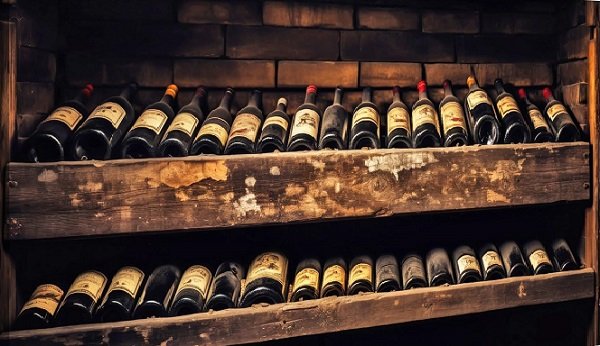
If value is expelled from the market, in the sense that valuable bottles are given the same commercial life span as the sparkling wines of the last vintage, it goes looking for it elsewhere, in the cellars of friends, in the collections of some maniac (blessed! fortunately there are still some), in some restaurant where a clueless sommelier has failed to “intelligently” manage the turnover of bottles.
It seeks and restores dignity and life to these modern victims of a renewed slaughter of the innocent, guilty only of being first-born.
Freely excerpted from “RuvidaMente.com,” courtesy of author https://www.milioni.com/vino-veritas/nato-un-vino/Stefano Millions :