
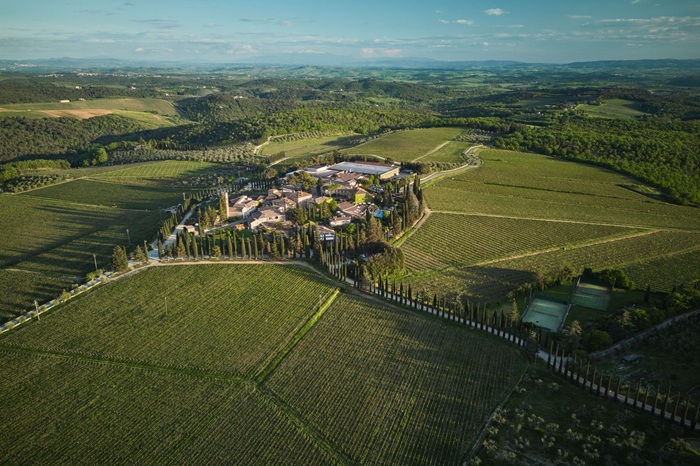

In the heart of Chianti Classico, San Felice presents the Suoli Project: an initiative designed to explore the different expressions of Sangiovese, starting with the nature of the soils. San Vito and Poggio Rosso thus become two complementary interpretations of the same grape variety, set against a backdrop of Pliocene sands, Alberese, and Galestro.
Often, when it comes to wine (as in life), we focus on what’s visible: the color and the taste in the glass, the grapes and the vineyard in the countryside. Yet, as is often the case with the most authentic things, what truly matters remains unseen.
The Soil: The Invisible Grammar of Wine
The soil is this: a silent grammar at work beneath the surface. A system of roots, stones, sand, strata, and geological memories that the wine slowly absorbs, transforming them into its identity. Because the vine is an interpreter: it translates what happens underground and conveys it in the glass as energy, tension, delicacy, or depth.

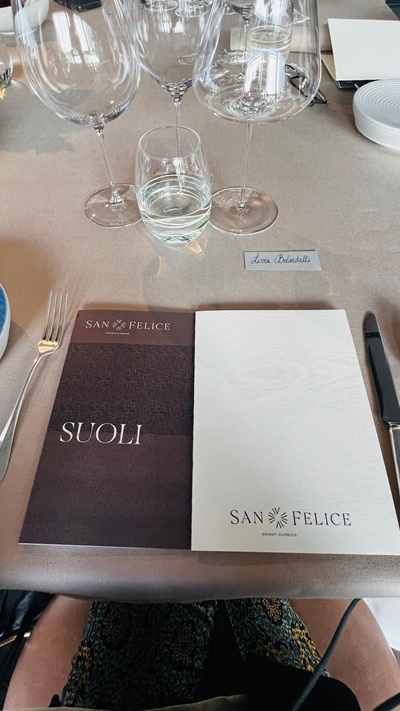
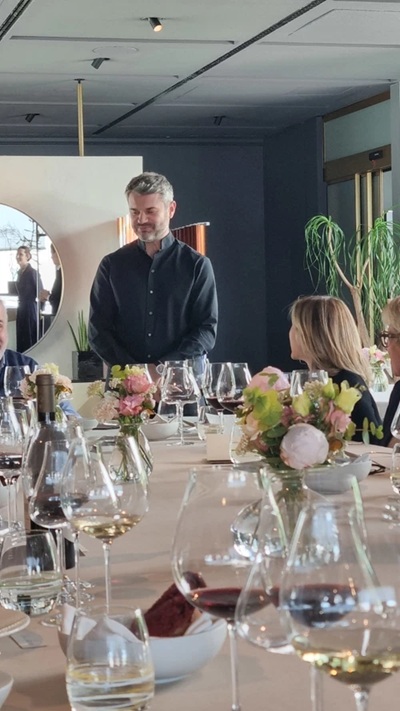
In line with this vision, the San Felice company, in the elegant and refined setting of the Enrico Bartolini’s Mudec, presents the Soils Project.
With a medieval village in the heart of the Chianti Classico region, in the province of Siena, San Felice is now synonymous with hospitality and history: it has been part of the Relais & Châteaux network since 1992 and was the first example of a “spread-out hotel” in the Chianti Classico region.
San Felice: Research and Identity in the Chianti Classico Region
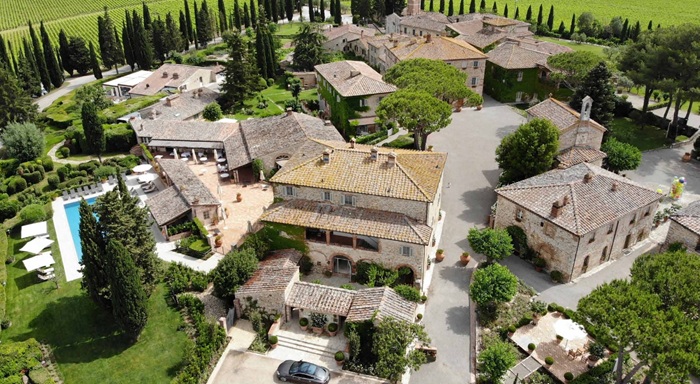
Over the years, the company has marked important milestones in Tuscan winemaking: from the founding of the Vigorello—the first Super Tuscan in history—to the revival of Pugnitello, a native grape variety that has been reintroduced to the estate’s vineyards thanks to extensive research and experimentation. Furthermore, as early as the 1980s, San Felice was already talking about biodiversity through the creation of an experimental vineyard dedicated to varietal conservation.
Today, the company is nearing the end of the its transition to organic farming and has been pursuing an approach of regenerative viticulture. The goal is to preserve soil health, because healthy soils produce more balanced and resilient plants that are better able to cope with climate change.
Surrounding the village are 140 hectares of vineyards, all located in the municipality of Castelnuovo Berardenga, where the Sangiovese accounts for about 85% of the vineyards.
The Soil Project
As early as the zoning studies of the 1980s, it became clear just how much different soil types can produce very distinct nuances in the glass. This led to the “Suoli” project, which was created to to highlight the characteristics of Sangiovese based on the nature of the soils, capturing and describing the nuances of the soil in order to isolate them, preserve them, and convey them through the wine.
“Suoli stems from an idea that is as simple as it is decisive: letting the soil speak for itself. Not through stylistic embellishments or invasive winemaking interpretations, but through real, discernible differences, “tangible in the glass” explains Francesca Giuggioli, an oenologist from San Felice.
And here are the two variations of Sangiovese, different interpretations of this work: San Vito and Poggio Rosso.
San Vito, the delicate Sangiovese
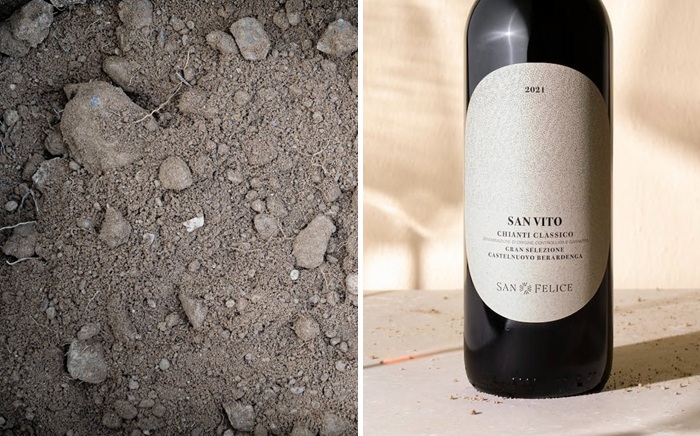
With San Vito, a new label introduced for the occasion, the Sangiovese is grown on Pliocene sands, among the youngest soils on the estate. The result is a subtle, delicate, almost whisper-like wine: floral, evolving, capable of entering the palate on tiptoe, while maintaining depth and the potential to age. A minuscule production—just over one hectare of vineyard—that becomes an exercise in territorial precision.
Poggio Rosso: The Energy of Alberese and Galestro
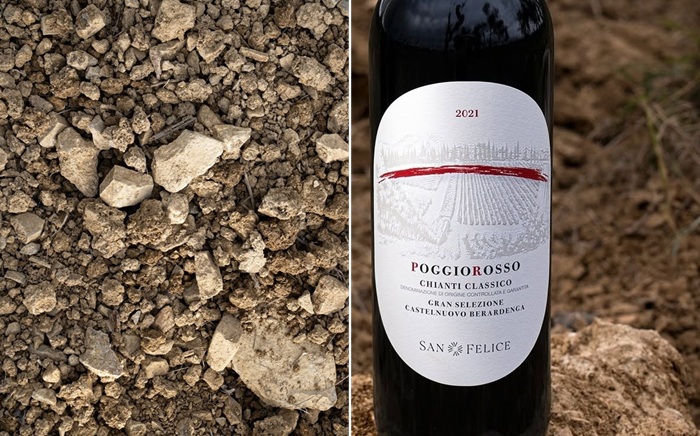
And then there’s Poggio Rosso, a historic cru that has been produced since 1978 and is now one of the winery’s flagship wines. Here, the sand is replaced by the Soil typical of the Chianti Classico region: alberese and galestro. And the character of the wine changes immediately. If San Vito is a melody carried by the wind, Poggio Rosso is the energy of a concert. More body, more intensity, more tannic structure. A wine that doesn’t ask permission to make its presence felt.
It’s the soil that speaks
And this is where the Suoli project is most fascinating: the differences between the wines do not stem from the winemaker’s touch—since vinification and aging are deliberately kept identical—but from the soil itself. It is the terroir that shapes the character of Sangiovese; the soil is the true musician, and it can possess the nuanced grace of Claude Debussy or the energetic incisiveness of Igor Stravinsky.
 Chianti Classico Gran Selezione San Vito 2021 San Felice
Score: 93/100
Estimated price: €70
100% Sangiovese. Aged in 500-liter French oak barrels for 20 months. Ruby red. Subtle and elegant on the nose, with notes of cherries, flowers, and red fruits. On the palate, it is juicy and dynamic, with a refined, lively mouthfeel and excellent drinkability.
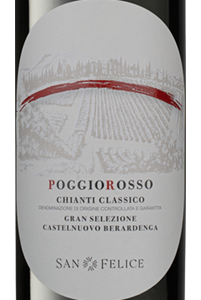 Chianti Classico Gran Selezione Poggio Rosso 2021 San Felice
Score: 93/100
Estimated price: €52
100% Sangiovese. Aged in 500-liter French oak barrels for 20 months. Ruby red. Deep aroma with notes of undergrowth, flowers, and ripe fruit. On the palate, it is full-bodied and structured, with dense tannins well supported by a freshness that lengthens the finish and adds volume to the mouthfeel.