

With the 2025 vintage, Cantina Sankt Pauls’ Plötzner marks its 40th harvest. First produced in 1986 from a selection of the highest-altitude vineyards in San Paolo, it has become the signature white wine of the South Tyrolean cooperative. The tasting confirms a style characterized by precision, freshness, and savory notes.
Forty years for a wine is not just an anniversary; it’s long enough to see whether an intuition has managed to become an identity. This is what has happened with Plötzner, a South Tyrolean Pinot Bianco from Cantina Sankt Pauls, which, with the 2025 vintage, reaches the milestone of its fortieth harvest and is being released with a commemorative label.
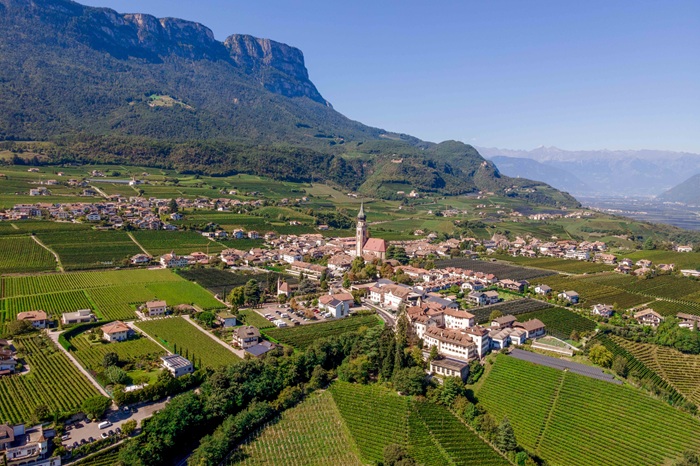
Its history began in 1986, when Valentin Spitaler, then a winemaker, decided to set aside the grapes from the the highest vineyards above San Paolo, in the municipality of Appiano. In a South Tyrol still largely associated with red wines, the choice of Pinot Bianco—and, above all, the high altitude—was something of a pioneering move: focusing on natural acidity, finesse, and aromatic clarity to give the variety a recognizable profile.
An idea that took shape around the Plötznerhof
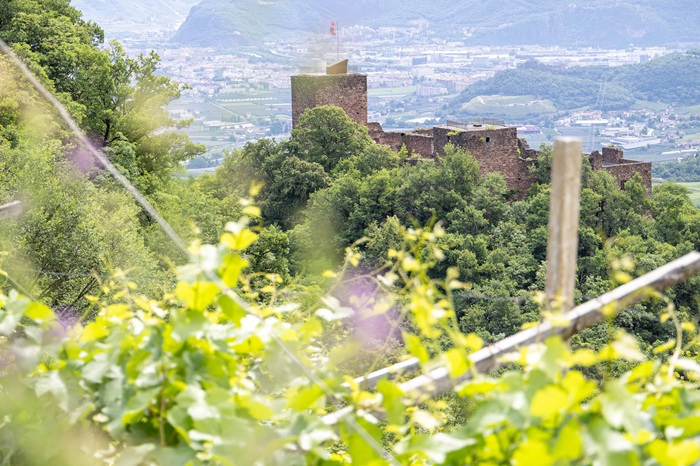 The original settlement covered about one hectare in the vicinity of the Plötznerhof (Plötznerhof), near Castel Boymont, at an altitude of about 650 meters. Today, the label encompasses eight hectares, spread across adjacent plots at the foot of Mount Macaion, along the Mendola Ridge. The elevations indicated for this selection range from 520 meters to 670 meters, with east-facing slopes and a common soil matrix of dolomitic-calcareous soils of postglacial origin.
These conditions help reveal the wine’s character. Ventilation and temperature fluctuations slow down the ripening process, while poor, limestone-rich soils result in a flavor profile that is more taut than opulent. The vines range in age from twenty to fifty years, and in the highest and most historic plots, the traditional pergola system still survives in part, a sign of the agricultural continuity on which the vineyard has been built.
From the small initial production, output has grown to about 49,000 bottles a year. The increase in scale has not changed the Plötzner’s role within the lineup: it remains the wine that most directly conveys the cooperative’s Alpine character. And it does so while keeping its feet firmly on the ground, maintaining a price that remains affordable for everyone: about 15 euros.
A Cooperative and Its Signature Wine
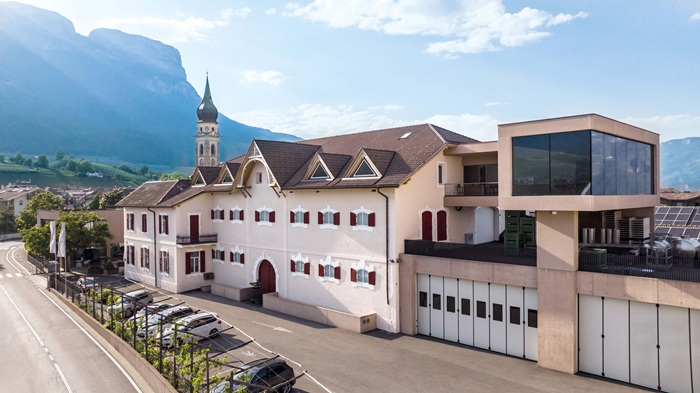
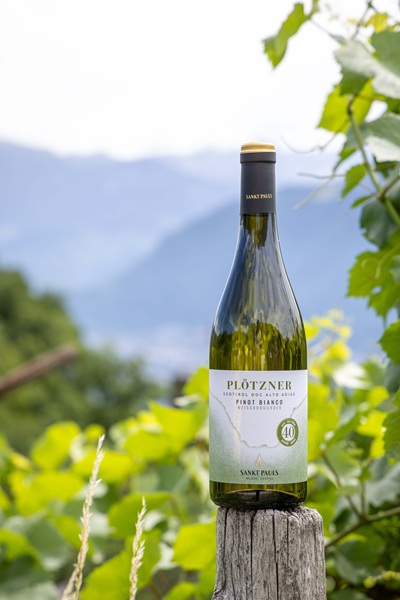 Cantina Sankt Pauls was founded in 1907 by 36 winegrowers. Today, it brings together 190 families and manages 185 hectares cultivated according to the principles of certified integrated viticulture. A cooperative structure in which the fragmentation of the vineyards becomes an asset: different exposures, elevations, and soil types make it possible to identify plots with specific growing potential.
Pinot Bianco holds a special place in this heritage. In Missiano, the winery also boasts vineyards that are up to a hundred years old—among the oldest in South Tyrol. These are not the vines from which Plötzner is made, but they help illustrate the depth of the connection between the variety and San Paolo. The wine’s 40th anniversary thus takes on a broader significance: it tells the story of the transition from a selection chosen by a winemaker to a label embraced by an entire community of grape growers.
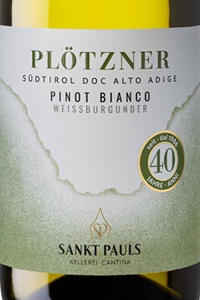 Alto Adige Pinot Bianco / Südtirol Weißburgunder Plötzner 2025, Kellerei Sankt Pauls
 Score: 92/100
Estimated price: €15
100% Pinot Bianco. Aged in stainless steel and, to a small extent, in large barrels, with aging on the fine lees.
Intense straw-yellow. The nose is clean and well-balanced: fruity notes of apricot and peach with a hint of banana, followed by a subtle nuance of medicinal herbs. On the palate, savory notes lead the way; the structure is well-balanced, with good freshness; the fruit remains distinct, and the distinctly salty finish extends the wine’s length. A young wine, yet already well-defined.
The Plötzner 2025 is not intended to be a celebratory cuvée created for the occasion, but simply the new vintage of a wine designed to reflect a specific terroir—a decision made in 1986 that time has proven to be sound.