
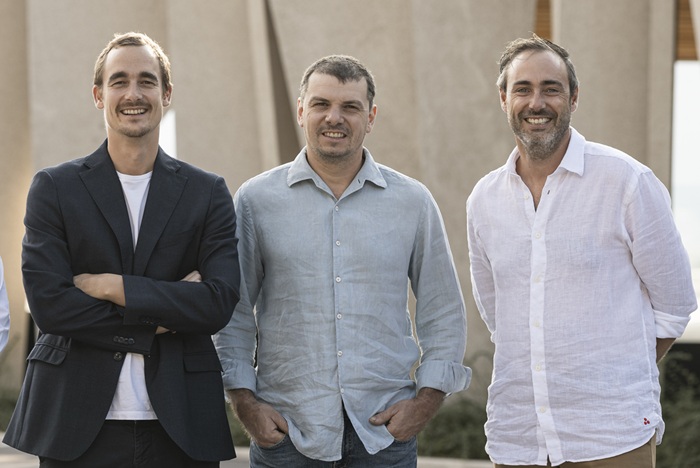
Record revenue, growth in average value per bottle, new markets, and an increasingly well-established wine tourism sector. In a joint interview, President Andreas Kofler, winemaker Erwin Carli, and Harald Cronst, Head of Export & B2B Marketing, discuss the strategy the South Tyrolean cooperative is using to navigate a challenging period for the wine industry.
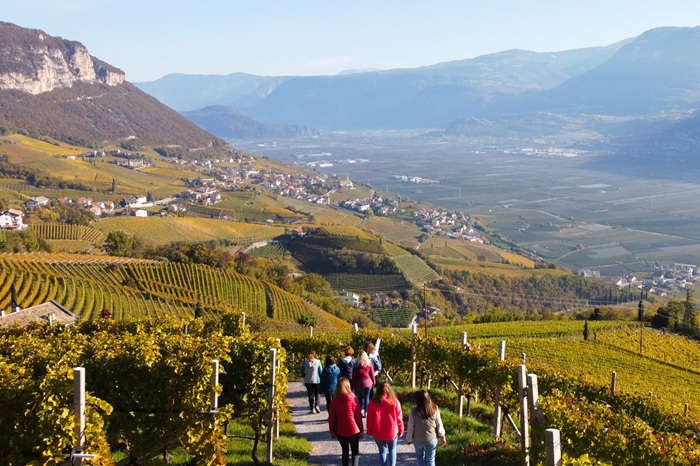
Founded in 1900, Cantina Kurtatsch today brings together 190 families and cultivates 190 hectares in the municipality of Cortaccia, at altitudes ranging from 220 to 900 meters. The 2025–2026 fiscal year closed with revenues of 12.34 million euros, up 11.08% compared to the previous year: the highest figure ever recorded by the cooperative.
President Kofler, what does this financial result mean for Kurtatsch?
ANDREAS KOFLER: This is an achievement that makes us proud, but above all, it confirms the direction we’ve been taking in recent years. For a cooperative like ours, growth doesn’t simply mean increasing numbers, but rather strengthening the Kurtatsch project: adding value to the work of our member families, clarifying our identity, building solid relationships across various channels, and fostering a deeper understanding of the connection between wine, grape varieties, elevation, and the vineyard landscape.
So growth isn’t measured solely by revenue?
ANDREAS KOFLER: No. The goal is to grow in the right way, strengthening the brand’s authority and its most distinctive lines, while also maintaining a credible value proposition. Kurtatsch interprets value as a balance between quality, origin, stylistic precision, and consistent accessibility. Over the past five years, the average price per bottle has increased by 23.40%, and the Terroir line has taken on an increasingly important role: this is a sign of the direction we’re taking.
Erwin Carli, how does this pursuit of quality translate into your work in the vineyard and in the winery?
ERWIN CARLI: The quality of a wine stems from the precision of the choices made. Our work consists of understanding where each grape variety can best express itself — even in light of changing climatic conditions — and translating this understanding into wines that clearly reflect their origin.
Is the significant elevation range of the vineyards therefore a key asset?
ERWIN CARLI: In the municipality of Cortaccia alone, we work across an elevation range of about 700 meters. This complexity is something we do not wish to oversimplify: variety, altitude, soil, and microclimate must all be carefully analyzed. Our work on the Additional Geographical Units (UGAs) also aligns with this approach: today we are presenting nine wines from eight UGAs.
Harald Cronst, which markets have driven exports?
HARALD CRONST: We have strengthened our position in our key markets, particularly Switzerland, the United States, and Belgium. Over the past two years, we have also gained new partners in Sweden, Denmark, and Finland. Mexico, Brazil, and Taiwan still account for smaller volumes, but they show promising prospects.
How important is geographic diversification?
HARALD CRONST: Exporting isn’t a race to open up as many markets as possible. For us, it means choosing partners who align with our vision, building strong relationships, and guiding our wines into channels where they can be understood and appreciated. Diversification is important, but it must remain consistent with the winery’s positioning.
And what about the Italian market?
ANDREAS KOFLER:In Italy , we need a strong presence, the ability to listen, and continuity. That’s why we’ve added a new position — Brand Ambassador and Area Manager — to support the sales manager. Strengthening our team allows us to better serve our customers, support the work of our sales representatives, and more accurately communicate the value of our wines.

Is wine tourism also becoming a significant sector?
ANDREAS KOFLER: Above all , it’s an opportunity for direct interaction. Between the 2023–24 and 2025–26 fiscal years, the number of visitors to our winery experiences grew by 23%, and revenue from wine tourism activities increased by 41.97%. On-demand tours and tastings have increased by 63%. Alongside our long-standing “Wine Exploration ” program, we’ve introduced two new experiences and a dedicated hospitality coordinator to make hospitality a core component of the project.
Ultimately, what does this growth mean for a cooperative?
ANDREAS KOFLER: First and foremost, it means taking on a responsibility: ensuring a future for the work of our member families, generating positive impacts for the local area, and sending a message of confidence during a challenging time for the wine industry. The market changes and consumer habits evolve, but projects grounded in identity, consistency, and value can continue to be relevant. Resilience stems from the ability to remain true to one’s identity while continuing to evolve.