

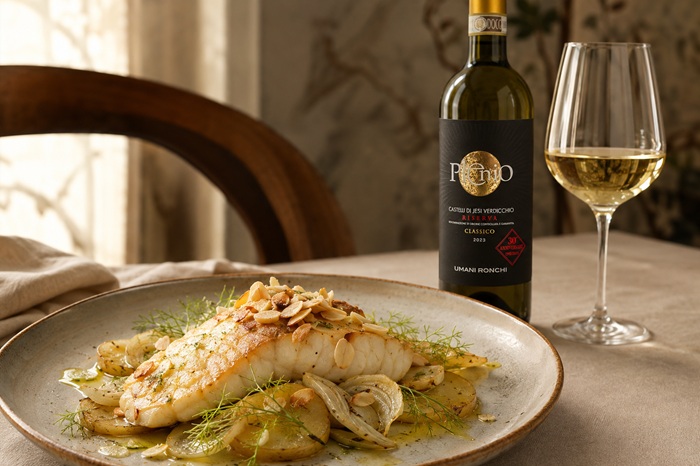
The turbout complements the full-bodied character of the Castelli di Jesi Verdicchio Riserva Classico Plenio 2023 from Umani Ronchi that we recommend pairing with this dish, while fennel and wild fennel evoke its notes of anise and aromatic herbs.
Ingredients for 4 people
- 1 turbot weighing about 1.4 kg, cleaned
- 500 g potatoes
- 2 fennel bulbs
- 40 g sliced almonds
- 1 clove of garlic
- ½ glass of white wine
- Wild fennel or fennel fronds
- Extra virgin olive oil
- Salt and white pepper
Procedure
Cut potatoes and fennel into thin slices. Arrange them on a baking sheet with oil, garlic, salt, and pepper; bake at 190 °C for about 20 minutes.
Place the turbot on top of the vegetables, season it lightly with salt, and drizzle it with oil and white wine. Continue cooking for 20–25 minutes, depending on the thickness of the fish.
Toast the almonds in a skillet.
Fillet the turbot and serve it over the vegetables, garnished with almonds, baby fennel, and a drizzle of oil.
In the glass, chosen by Stefania Vinciguerra
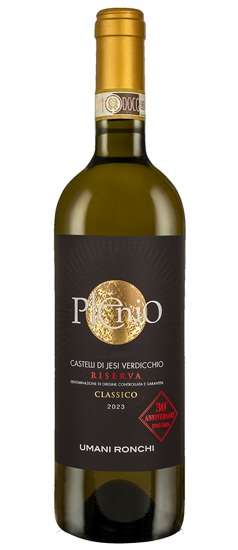 Castelli di Jesi Verdicchio Riserva Classico Plenio 2023 Umani Ronchi
Straw-yellow with golden hues. Yellow fruit, tropical fruit, anise, aromatic herbs, wildflowers, and fresh almond. On the palate, it is fresh, balanced, and consistent, with a long, savory finish.
Production area: the hills of Cupramontana, in one of the highest and historically most renowned vineyards of the appellation. Vineyard, planted in the early 1990s, faces east and is located between 250 and 300 meters above sea level. Soil, which dates back to Pliocene-Pleistocene formations, is characterized by being very deep, loamy-clay, with rather low fertility and therefore well-suited to the production of quality wines. The area provides the acidity and structure necessary for a wine with great aging potential.
Grape Varieties: 100% Verdicchio, with a yield per hectare of about 70–90 quintali.
Grape Harvest: performed by hand, with the grapes picked and transported in crates. It normally takes place between late September and the first ten days of October, when the grapes have reached the optimal balance between acidity and sugar content.
Production Processes: After gentle pressing, the free-run juice is rapidly cooled and then allowed to settle statically. Fermentation takes place 60% in 50-hl oak barrels, with a small portion in tonneaux, and the remaining 40% in temperature-controlled concrete tanks at 16–18°C, lasting approximately 10–15 days. The aging phase lasts about 12 months, during which the wine remains in contact with its own yeasts in the respective fermentation vessels, prior to blending and subsequent bottling.
Serving temperature: 12–14°C
Recommended pairings: stuffed pasta, roasted white meat, roasted fish.
First vintage produced in 1995.


1 comment
A pleasure to read your accounts. The terms and
the expressions are great prose