Wine has a rich and precise language, but those who choose a bottle are also looking for simple answers: Will I like it? What dish should I pair it with? Why does it cost that much? The expertise of those who describe it is also measured by their ability to make themselves understood, sparking curiosity without turning every glass into an exam.
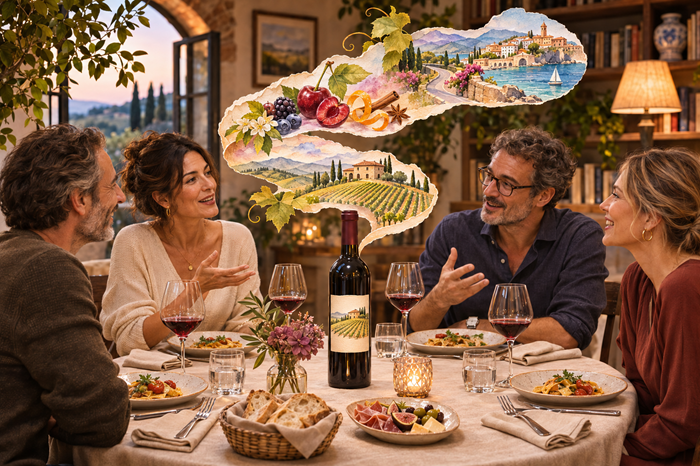
Looking at the wine list, a person is searching for a bottle for dinner. They have an idea of how much to spend, a few preferences, and perhaps a memory of a wine they’ve had elsewhere. The waiter begins talking about maceration, spontaneous fermentation, and limestone soils. She wanted to know if that red wine was light or full-bodied and if it would pair well with the dish she’d ordered; she wanted to understand whether it was worth the forty euros they were asking for it.
The scene is fictional, but the situation it describes could happen in any restaurant, wine bar, or winery. Those who know a subject well may forget what it was like not to know it. And they may answer the questions they find interesting, rather than the ones they’re asked.
A bottle isn’t a test
Wine terminology is used to describe real differences. “Tannic” does not mean “acidic,” and a sweet wine is not simply “smooth.” Precise words are necessary. The problem begins when they become a hurdle that must be cleared in order to feel accepted into the conversation.
You can appreciate a wine without recognizing the bergamot. And you can find a critically acclaimed bottle unpleasant without feeling ashamed of it. Taste is cultivated through tasting and comparison; rarely through embarrassment. If expressing a preference means risking being corrected, it’s easier to order something you’re already familiar with.
Telling the Stories That Matter
Even accurate information can be of little use. The elevation of a vineyard becomes interesting only when someone explains how it can affect the wine. Otherwise, it remains just a number, to be added to the age of the vines and the number of months spent in the barrel.
The same goes for the winemakers’ stories. Passion, tradition, and respect for the land mean little unless they translate into concrete actions: a difficult decision, a plot of land brought back to life, a method abandoned because it didn’t work. It is these details that set a bottle apart and make even a technical matter interesting.
Explaining requires making a selection. At the dinner table, it may be enough to know that a red wine is low in tannins and best enjoyed slightly chilled. During a visit to a winery, the same person might want to understand how it’s made. The conversation can go deeper if you give it room to do so.
Simple questions deserve serious answers
Why does this bottle cost twice as much as the other one? How long can it stay open? Does it need to age? These are questions that deserve consideration. Buyers want to understand what they’re paying for and whether that value meets their expectations.
Everyone who approaches wine brings their own habits, memories, budget, and tastes. Listening to them helps you find more relevant words and stronger reasons for recommending a bottle.
In the end, a person might forget the grape variety or confuse the appellation. But if they’ve gained a better understanding of their own taste, they’ll be able to make better choices. And they might have a new question to ask.