
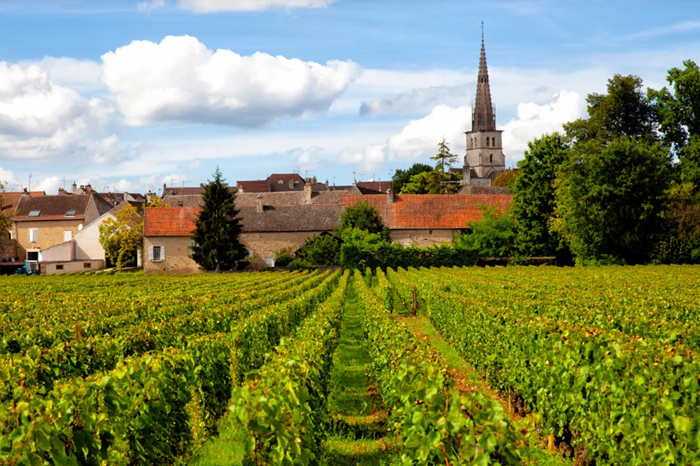

In Meursault the official classification is simple: there are no Grand Cru and the quality pyramid is divided between Bourgogne, Villages and Premier Cru. But in reality the “truest” hierarchy is constructed by the vignerons, thanks to their ability to interpret parcels, lieu-dits and micro-differences of terroir. Vinogodi takes us, starting today and for the next few Tuesdays, to discover one of the most fascinating areas of Burgundy.
Never was classification so “easy” as at Meursault: a qualitative pyramid that leaves no room for misunderstanding-at least in theory.
Because in practice, the hierarchy seems more like a parallel scale: vignerons, great vignerons, semi-god vignerons – with no official correspondence to geology, microclimate, exposures, clones, or history.
Joking aside, sticking to the regulations, in Meursault there are no Grand Cru. The classification is then limited to:
- Bourgogne (Appellation Régional)
- Meursault (Villages / Appellation Comunale)
- Meursault Premier Cru (selected vineyard or village: there are 19, but few really of absolute resonance)
The importance of Lieu-Dits
In the area, the possibility of indicating on the label the lieu-dit is crucial for vignerons: it represents an additional and often decisive qualification.
To clarify: a lieu-dit is the historical name for a vineyard location, that is, a plot (or part of a plot) from which grapes are sourced to produce a wine.
While often narrower than a climat (parcel with a recognized viticultural identity), it can sometimes be used as a synonym or indicate areas without an official appellation.
The Perrières “case”: Premier Cru (but from Grand Cru?).
Quality surveys and market recognition make clear a historical anomaly: Premier Cru Perrières, at least, could have been classified as a Grand Cru.
But as is often the case in Burgundy-and amplified here-it is the hand of the vigneron that makes the difference, enhancing with mastery and craftsmanship supreme the personality of the wines, regardless classification.
Ancient history and mysterious name
The history of Meursault and its vineyards is very ancient: some bibliographical references even speak of the end of the first millennium or the beginning of the second, largely by Cistercian friars.
The origin of the name Meursault is controversial, but the most popular theory links it to the Latin word “Muris Saltus”, meaning “rat’s leap,” in reference to a stream running through the town.
Sovereign chardonnay (with a few bold exceptions)
Although some producers dare to plant Pinot Noir or other white grapes such as Aligoté and Pinot Blanc, the king of the region remains him: the Chardonnay, declined in very different styles, from the most immediate to the deepest.
Terroir and climate: gentle slopes and great nuances
The slopes of Meursault are gentle and undulating: they range from 200 meters up to almost 450 meters altitude.
lass=”yoast-text-mark” />>The subsoil is composed of clay, limestone and sand, while the surface soils have loess and shale, rich in iron, manganese and magnesium.
<span style=”font-weight: 400;”>The climate alternates between hot summers e cold winters<span style=”font-weight: 400;”>. Exposure, altitude and temperature ranges have a major impact on the profile of the wines: variables but always handled with great skill by the best producers in the area.
Sore note: prices (and the Meursault equation).
In my experience, to calculate X price of a Meursault wine, one need only solve a multi-variable equation: X = (Producer + Classification + Vintage + Availability Index) × Speculation Factor
(often a multiplier without decimals…).
To simplify: just consult Wine Searcher without freaking out.
Tastings: Village and Lieu-Dit by “Grandi Vigneron” (plus a demigod intruder)
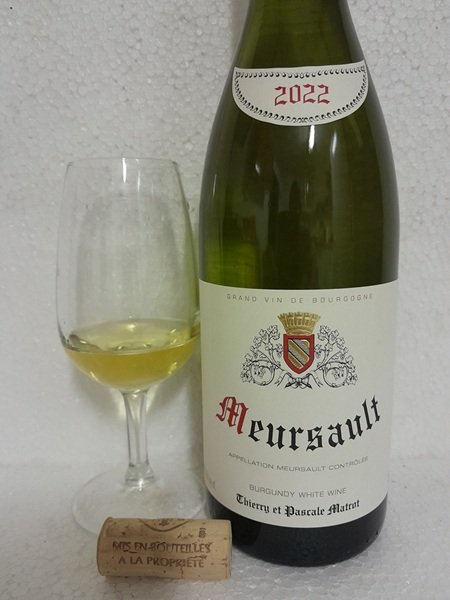
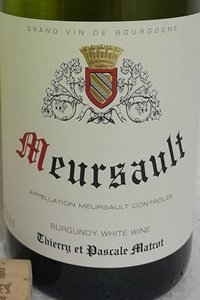 Meursault 2022 Thierry et Pascal Matrot
Score: 93/100
Average price: € 110
100% Chardonnay. 12 months sur lies in oak fûts (used barrels, 1 to 5 years). Pale golden yellow, with greenish highlights. Graceful but well recognizable aromas: white fruit, peanuts, white pepper. Very young mouthfeel, with lively acidity and solid structure. Elegant.
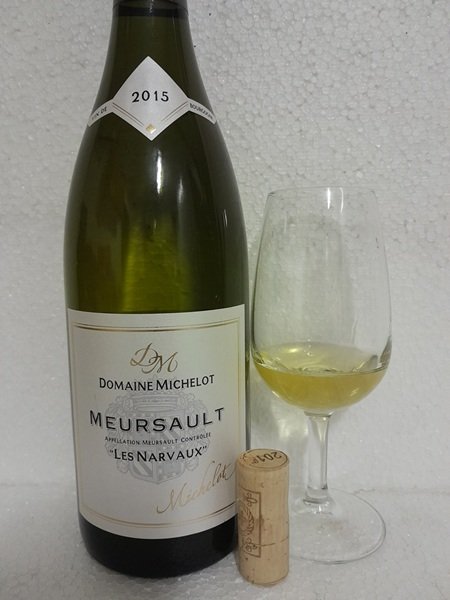
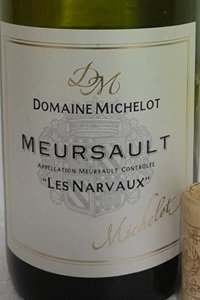 Meursault Les Narvaux 2015 Domaine Michelot
Score: 94/100
Average price: € 140
100% Chardonnay. Barrique. Relatively deep but bright gold. Aromas refined and complex, though not too intense, floral and slightly balsamic: almond flower, jasmine, chamomile. Mouth fresh “with judgment,” glyceric, broad, enveloping. Medium-length finish.
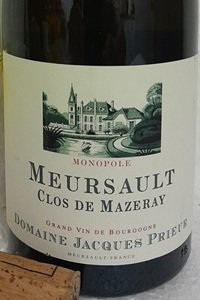
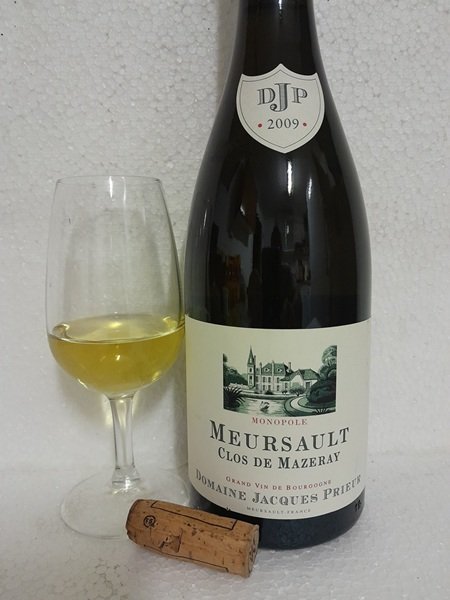
Meursault Monopole Clos de Mazeray 2009 Domaine Jacques Prieur
 Score: 95/100
Average price: € 110
Monopole of 2.87 hectares.
100% Chardonnay. 17 months in oak fûts. Rich and deep gold, with important but stable evolution. Enveloping aromas of ripe fruit: melon and jujubes. Mouth soft, structured, almost “fat”, round and enveloping.
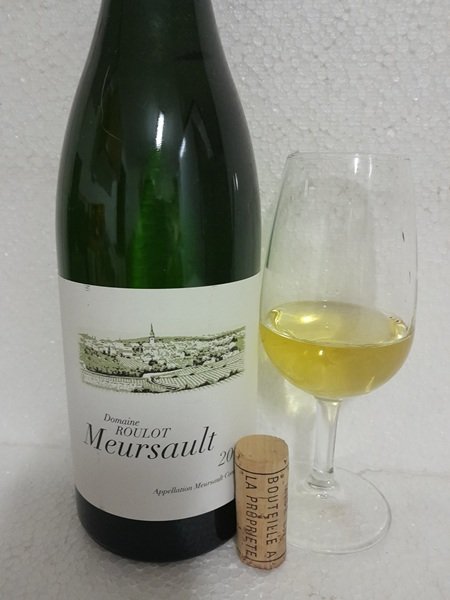
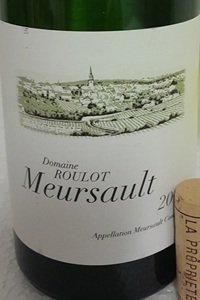 Meursault 2016 Domaine Roulot
Score: 95/100
Average price: € 320
A “basic” Meursault from one of the producers ranked demi-gods on the “Vinogodi scale,” perfect, however, to close the introduction to the area (more installments will follow…).
100% Chardonnay. About 12 months in fût on the lees followed by 6 months in steel, with moderate use of new wood. Surprisingly intact color: pale gold with greenish nuances. Aromas electrifying in intensity and on the way to complexity: fresh flowers, Golden apple, very fine spices, almond. Mouth energetic, fine, caressing, characterized by an oxymoron combination: freshness and warmth.
It costs money, but still remains (relatively) affordable, even if hard to find.