

We interviewed Camilla Chauvenet, of Masseria Cuturi in Puglia, to talk together about territory, wine tourism, sustainability and other “hot” topics such as conscious consumption among young people.
All stories have a beginning, that of Primitivo di Manduria began in an old farmhouse from the 1600s better known as Cuturi. In 1881 Tommaso Schiavoni Tafuri, a wealthy landowner in the area, got married to Countess Sabini of Altamura. The noblewoman, among her various possessions, had as dowry some Primitivo vines from her hometown.
 Since 2008 Masseria Cuturi and the surrounding land have been owned by the Rossi Chauvenet family, in charge of it is their daughter Camilla, agronomist, who follows full-time the two wineries in Valpolicella and Apulia. Camilla, with determination and awareness, is implementing ideas and projects to enhance an area of important historical, environmental and biodiversity value. Care, culture and sharing are the common denominator.
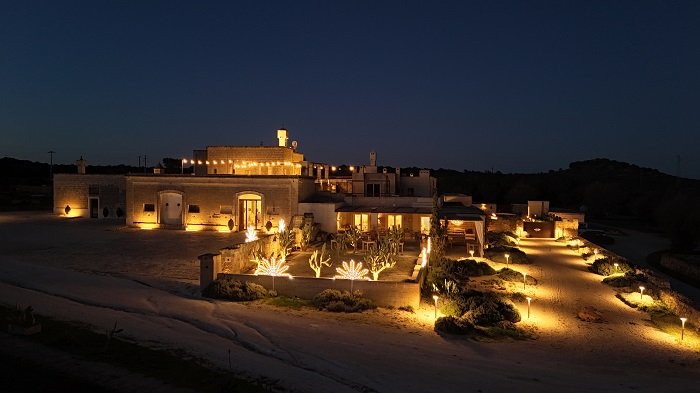
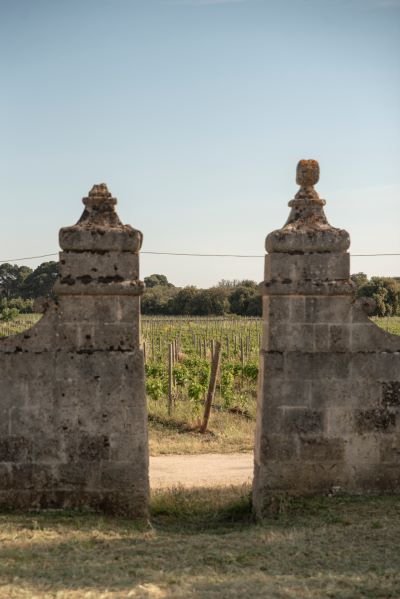
In Cuturi, nature is the master, it is surrounded by forest, vineyards, it is a short distance from the sea, and the soils are particularly fertile thanks to the water from the nearby Chidro River aquifer. The masseria is also a wine relais with a restaurant, Don Tumà. The helm of the kitchen has been entrusted to chef Giovanni Coppola. His is cuisine that looks to tradition but winks at the contemporary. Octopus with fava bean purée lacquered with peppers and spaghetti alla chitarra with lemon and carpaccio of Gallipoli purple shrimp are some of the signature dishes.
We interviewed Camilla Rossi Chauvenet, to talk together about territory, wine tourism, sustainability and more.
Embarking on this adventure, deciding to become a winemaker was her dream. It was a gamble against the odds not to retrace her family’s footsteps of dentists and lawyers. Tell us your story, from when you chose the faculty of agriculture and then embarked on this adventure?
 I chose Agraria with my heart, not my head. For me, wine is an act of kindness: it comes from the balance between nature, human knowledge and listening. With a dream: to do little, do it well, with respect. I have always been a concrete, operational person and wine has always fascinated me as the result of a collective knowledge based on a set of interactions between human and natural factors. It is a magical tool, a Three-way relationship between nature, land and community. I started with 1,000 bottles in 2003 and from there my adventure has grown, now we produce about 80,000 bottles in both companies but my desire remains to be an artisan and continue to produce only the best of my territory.
Enotourism, differences and similarities between the wine areas of Valpolicella and Primitivo di Manduria.

Wine tourism is encounter, storytelling, emotion. In Valpolicella, we offer tailor-made experiences – walks among the rows, thematic tastings, convivial events – that make wine part of a personal narrative. In Manduria, Cuturi Days invites you to discover the masseria, the biolago, the forest, the archaeological park. You taste slowly, walk among trulli and vineyards, reconnect.
Territories and production realities compared, how are experiential offerings and tourist targets changing?
Veneto is already an established destination, but Puglia has a rare energy. Here wine blends with the sea, with archaeology, with a cuisine that speaks to the heart. Visitors do not pass through: they stay. And they become ambassadors of the territory.
A zoning project in the estate area, a study he cares a great deal about, is in the works. The first most related publication, “Le vigne del Tarentino,” was in 2004, commissioned by the Province of Taranto. In your opinion, is zoning a fundamental tool for viticultural planning and the development of an area?


Balzac in 1862 in his “Dominique” was one of the first in France who spoke of terroir as an already widely used term. A few years later in 1881 Don Tommaso Schiavoni planted the first Primitivo vines in Manduria. Certainly at that time in France and Italy the meaning of winemaking was profoundly different. Terroir is a bounded geographic space within which a human community has built throughout its history a collective knowledge that must be guarded, preserved and communicated.
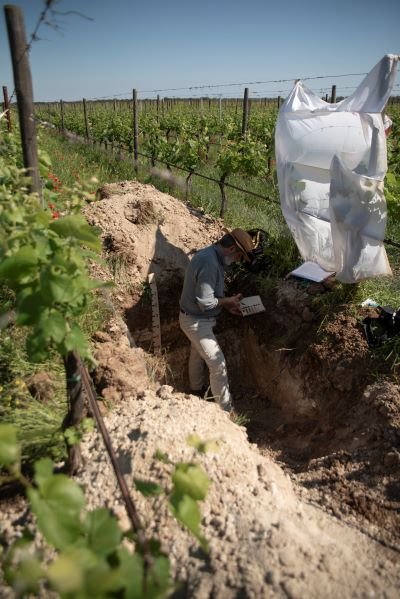
This knowledge grows from generation to generation; producers are not owners but custodians, and I believe they should do what they can to know their soils and their potential as best they can. Knowing the soil is the first act of love toward a land. We initiated a pedological study of our vineyards: the Masseria stands on the meeting point of three different lithologies, which generate a unique complexity. This is where the freshness of our wines comes from. Preserving this heritage means listening to it, studying it patiently.
In the wine world, fads come and go, dealcoholic wines are the latest trend. Have you ever thought about this kind of business to attract new consumer groups?
We respect new trends, but for us, wine is a bridge between soul and earth. Dealcolati wines are another thing, another category, another market. We work on elegance and drinkability, harvesting early, looking for verticality. It is our gentle revolution.
As artisans, we try to naturally reduce the alcohol in our wines by avoiding concentration at all costs. But wine remains a different product from any other beverage on the market.
How can a winery bring younger people closer to this fascinating world and to conscious drinking?
The best way to approach young people is by involving them. Real experiences, simple words, active listening: this is how to create a culture of conscious drinking even among the youngest.
You recently put out a new rosé, what is it?
Femì is our new Negroamaro rosé, it is a dry and very fragrant rosé. Sapidity, complexity and freshness. The name comes from the ancient Greek meaning “to communicate, to speak, to tell.” I would like this product to tell the story of all the women who have made Puglia important. Apulian women have given me an example of courage, consistency and tenacity, I would like to celebrate them with this wine and tell their success stories so that they can be an example for other young women.
We talk a lot about environmental and social sustainability and neglect economic sustainability. For some time the wine industry has been in crisis, is economic sustainability an achievable goal?
Economic sustainability must be the first goal of a winery; wine is not just poetry, it is work, it is enterprise, it is dignity. It is the silent engine of many territories.
What dreams are still in the drawer?

For me, all farms should become hubs where we can grow and learn, to meet people who believe in sustainability and the culture of an area, and to get back to slowness and disconnection. We have so many ideas, wine is not only a product but above all a tool to slow down, to reflect, to really connect. We have many projects, but the dream is always one: to make people feel good, in the sign of harmony.


