

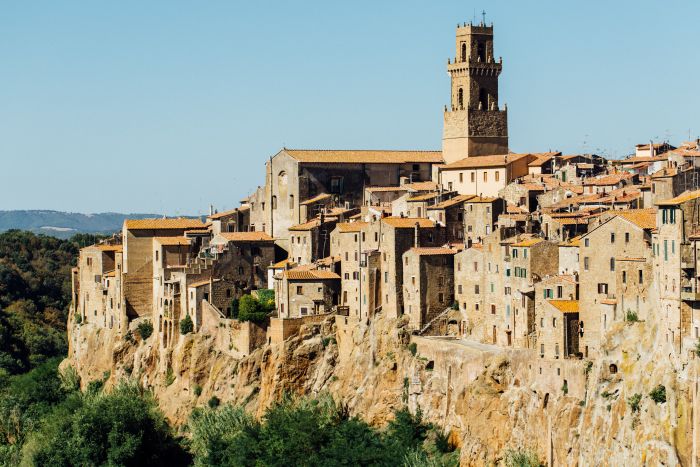

In the debate on the future of Tuscan white wine, Antonio Spurio, director of the Consorzio Bianco di Pitigliano e Sovana DOC, weighs in. He highlights the value of a millennia-old history, a unique ampelographic heritage, and scientific research. Because the greatness of a wine is not measured solely in hectares or market trends, but in its ability to reflect the terroir.
Dear Stefania,
First of all, I’d like to thank you for providing a platform and sparking the debate surrounding the research project on the “great Tuscan white wine”. And for featuring a contribution from Luca Pollini, director of the Maremma Toscana Consortium. Both articles raise an important and timely question. What will the future hold for Tuscan white wines, and what identity will they be able to express in a wine world increasingly focused on origin, authenticity, and a connection to the territory?
This debate is good for the Tuscan wine industry. Research, comparisons between regions, and the promotion of regional white wines represent an important opportunity for the entire Tuscan wine industry. Perhaps, however, before we even ask ourselves what the great Tuscan white wine of the future will be, we should ask ourselves where to start in order to create it.
The answer may lie precisely in the regions where a culture of white wine has developed over the centuries. Among these is the Pitigliano region certainly holds an important place.
An identity forged over the centuries
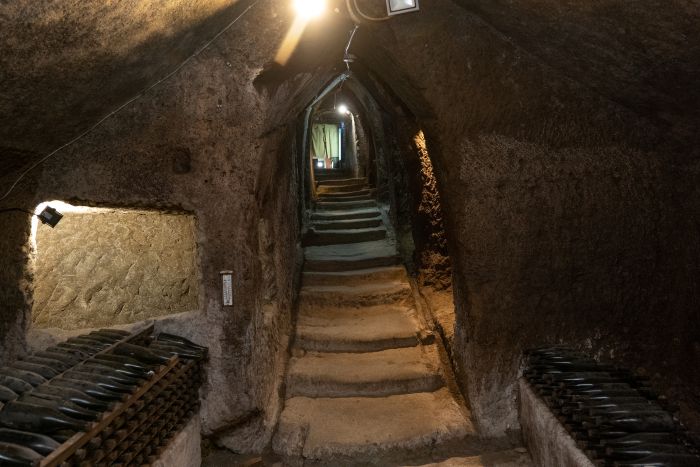
Here, the winemaking tradition has been passed down through the centuries, from Etruscan times to the Roman era, through the ups and downs of the Aldobrandeschi family and, later, the Orsini family. The numerous cellars carved into the tuff—still in use today—tell the story of a millennia-old winemaking tradition that has spanned generations. Adapting to change without losing its connection to the land. It is no coincidence that the Bianco di Pitigliano was among the first Denominazioni di Origine Controllata (DOC) designations recognized in Italy, in 1966—a full sixty years ago. It foreshadowed issues that are now at the heart of the wine debate, such as territorial identity, the promotion of traditional grape varieties, and sustainability.
Terroir Before Grape Variety
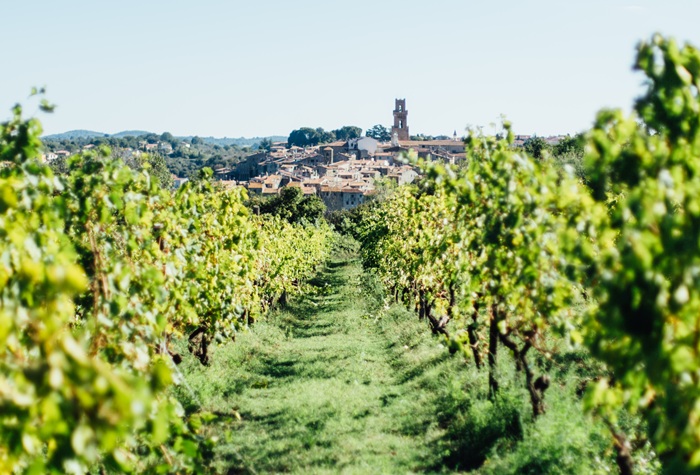
There’s been a lot of talk about grape varieties lately. It’s a legitimate and interesting discussion. But the history of wine teaches us that great wines are never born from just one variety. They are born from the interplay of grape variety, climate, soil, and human effort. It is the concept of terroir that Professor Mario Fregoni highlighted right here in Pitigliano, during the celebrations for the 60th anniversary of our DOC, held a couple of months ago. A concept that finds one of its most original expressions here, thanks to the tuff rock. A defining feature of the landscape and local viticulture.
The central issue, therefore, should not be merely which grape variety to choose, but which region to showcase.
A wealth of diversity and research
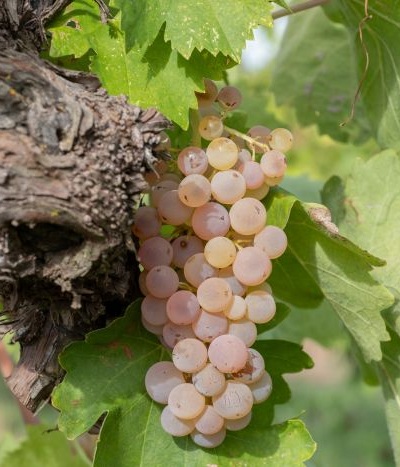
From this perspective, Pitigliano possesses immense wealth. In the 1980s, thanks to the collaboration between the Pitigliano Winery and the then Experimental Institute for Viticulture in Arezzo—now CREA. A major project to recover and preserve the local viticultural genetic heritage. A survey identified 25 traditional varieties in the area, totaling 85 different biotypes. Many of which were recovered from old vineyards and century-old vines. As many as 14 of these were white grape varieties.
An extraordinary legacy that demonstrates how research on Tuscan white wines—at least in Pitigliano—is not a new phenomenon, but a journey that began over forty years ago.
Also dialogue with the scientific community has consistently accompanied the evolution of the appellation. Studies on the Nutritional Map of the Pitigliano Vineyards, coordinated by Professor Fregoni, have deepened our understanding of the soils, agronomic characteristics, and environmental features of the area, confirming the strong viticultural potential of a territory that is unique within the region.
Power of Diversity
The success of the Vermentino is a significant phenomenon for Tuscany and, in particular, for the Maremma. The figures cited by Luca Pollini attest to significant growth and deserve attention. But the greatness of a wine is not measured solely in terms of hectares under cultivation or market trends: what also matters is the ability to interpret a territory.
That is why we believe that the future of great Tuscan white wines does not necessarily have to revolve around a single grape variety or a single production model. Tuscany’s strength has always been its diversity of its landscapes, communities, and winemaking traditions.
Among this variety, the Bianco di Pitigliano has a distinctive voice: a voice built on centuries of history and a unique varietal heritage, starting with the Trebbiano Toscano. Which has been the cornerstone of the appellation for centuries and on scientific research, which has led to the inclusion of other complementary grape varieties such asAnsonica. But it also rests on a community of producers who have successfully preserved their identity long before this became a strategic element of wine marketing.
A New Chapter for Bianco di Pitigliano
Perhaps, then, the question isn’t which wine will be the great Tuscan white of the future. The real challenge lies in recognizing and promoting the great white wine regions that Tuscany already possesses.
We want to continue doing our part. A a new phase. the nouvelle vague of Bianco di Pitigliano must stem from a new way of highlighting its identity and from a historical and winemaking heritage that few other regions can boast. In a particularly complex macroeconomic climate, we are convinced that we have what it takes to meet this challenge. Greater greater awareness and cohesion among producers should help us increase the value of Bianco di Pitigliano and strengthen the deep connection between wine, landscape, history, and community.

