

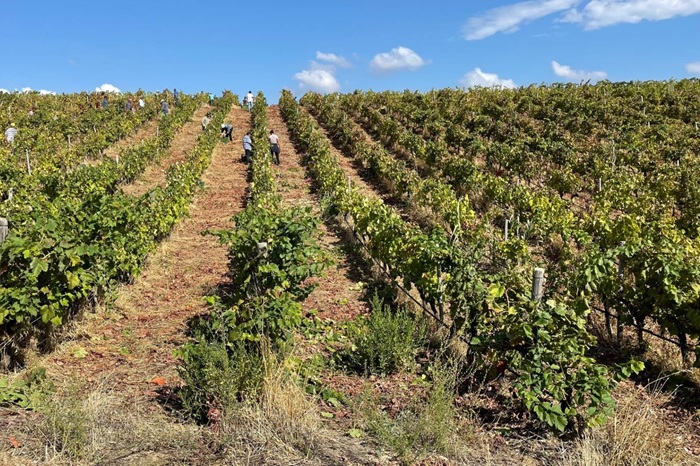
Most closely associated with the Cosenza area, Pecorello is a native white grape variety that is gaining popularity thanks to its fresh, savory, and well-structured wines. It is a variety with a long local history, now also being showcased through single-varietal wines.
Calabria’s wine region boasts a wealth of grape varieties that goes far beyond the best-known names. Among them is the Pecorello, traditionally grown mainly in the province of Cosenza but also found on the Ionian coast. Known locally since the late 19th century, it was entered in the National Register of Grape Varieties in 1971. Its earliest origins remain poorly documented; more concrete, however, is the work of revival and promotion carried out by Calabrian producers.
The Pecorello Regions
The main reference is the Cosentino, from the hilly area of Donnici to the Savuto Valley, at the foot of the Sila. Here, the Pecorello variety is also grown in vineyards at altitudes of 450–500 meters, such as those in Marzi, where the hilly terrain helps preserve the grapes’ freshness. Cultivation also extends to the the Ionian coast of Calabria, in the Crotone area and the Cirò region, where conditions are more distinctly Mediterranean. This widespread presence allows for an exploration of the wine’s character both in inland areas and in regions near the sea.
 A grape with a thick skin
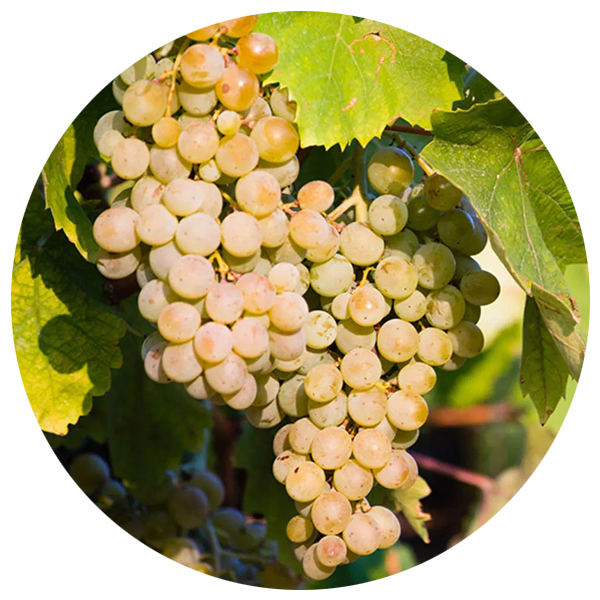
The Pecorello variety has elongated clusters and small-to-medium-sized berries with thick, pruinose skin, yellowish-green in color, which can take on amber hues in the parts exposed to the sun. Ripening normally occurs in the first half of September. It is suitable for compact training systems, such as the alberello and spurred cordon systems, but it is sensitive to drought and soil salinity—factors that must be carefully considered when selecting vineyard sites.
The result is white wines that combine good body with freshness. Bouquet ranges from citrus to yellow-fleshed fruits, with floral notes; on the palate, the alcohol is balanced by acidity and a pleasant savory note. The terroir and winemaking process help shape its character.
For wines: stainless steel or oak?
Unadulterated interpretations help us understand the wine’s potential. Fermented and aged in stainless steel, it highlights the fruit’s clarity, with citrus, yellow fruit, and a fresh, lingering finish. This is currently the most widely produced version—and perhaps the one best suited to expressing the variety’s characteristics. The oak-aged version—less commonly explored—offers a softer profile, yet one that remains underpinned by freshness. Two distinct approaches to showcasing a variety that remains relatively unknown outside of Calabria.
The Wines on Offer
Below are the wines that impressed us the most during the tastings for The Essential Guide to Italian Wine 2027—all wines recommended for their good value, as they are priced at 18 euros or less.
Alongside two versions made from 100% Pecorello, we also offer one that explores new (or ancient?) paths, in which Pecorello has been blended with Greco and aged in wood.
To read reviews of other wines from these wineries, download the free DoctorWine app:
- Android: Click here to download the app with the Essential Guide 2027
- iOS: Click here to download the app with the Essential Guide 2027
 Calabria Bianco Pecorello 2025 Ippolito 1845
 Rating: 93/100
Estimated price: €13.00
100% Pecorello. Steel. Straw-yellow. It emphasizes the clarity of the fruit, with notes of tobacco-scented peach, apricot, peanut, and a hint of floral. The palate is fresh and very pleasant, with excellent smoothness and a long finish reminiscent of a sea breeze.
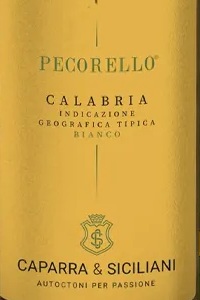 Calabria Bianco Pecorello 2025 Caparra & Siciliani
Score: 90/100
Estimated price: €10.00
100% Pecorello. Stainless steel. Straw-yellow. Nose of tobacco-scented peach, fennel, and broom. Fresh, taut, and briny on the palate, inviting with a pleasant finish.
 Calabria Bianco Essenzo 2023 Brigante Vigneti & Cantina
Score: 92/100
Approximate price: €16.50
75% Pecorello, 25% Greco. Aged for one year in 15-hl oak and cherry wood barrels. Bright, golden straw color. The nose features distinct notes of toast, walnut, yellow plum, and yellow spices. The palate is soft, round, fresh, and savory, with good structure and an enveloping finish.