


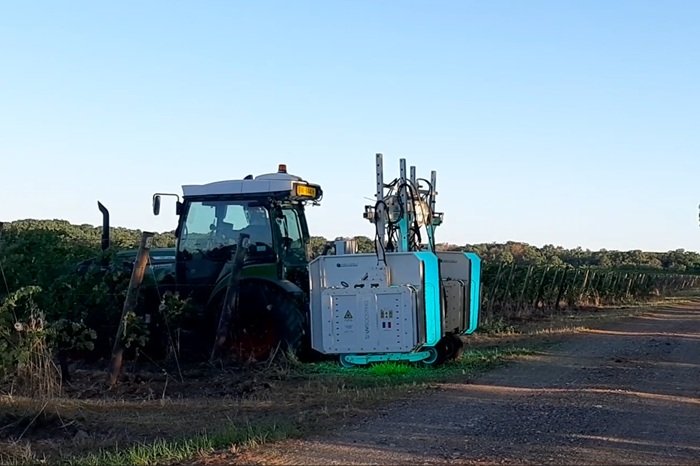
Research from theUniversity of Pisa, conducted in the vineyards of Tenuta dell’Ornellaia in Bolgheri and published in the scientific journal Plants, shows that targeted use of UV-C rays in the vineyard can improve grape quality. And it does not reduce production.
The controlled application of UV-C (ultraviolet) light during the ripening stage of Cabernet Sauvignon stimulates the vine to produce more anthocyanins and flavonols. These are the compounds responsible for color-as well as an increase in aromatic molecules. The result? Wines potentially more intense in color, more stable over time and with a more complex olfactory profile.
A particularly interesting finding concerns the absence of negative effects on productivity: the study showed no significant differences in vegetative-productive indices or in the quantity of grapes harvested.
A technology already in the vineyard
UV-C light is not new: it is already used to control some vine diseases, helping to reduce the use of fungicide products. Pisan research has experimented with a slightly different protocol, introducing additional, targeted interventions at the ripening stage. Objective: to increase the content of secondary metabolites related to wine quality.
A practical approach, close to the operational needs of wineries. Suggests how technologies already available can be used more strategically to combine quality and sustainability.
From experimentation to practice
“We knew that UV light can stimulate the production of molecules related to wine quality. But until now the effects had been observed mostly in the laboratory. – Claudio D’Onofrio, professor of viticulture at the University of Pisa and coordinator of the study, explains. ” We have shown that, even under real vineyard conditions, it is possible to increase color and aromas without penalizing production.
According to researchers, UV-C technology could become an additional tool for more sustainable viticulture . Capable of improving grape quality while reducing environmental impact in an increasingly complex climate context.

