



At Vinitaly 2026, the University of Milan brought projects and studies on innovation, health and climate. Goal: to make the wine supply chain more efficient, sustainable and resilient.
On April 13 and 14, the Faculty of Agricultural and Food Sciences of the University of Milan was the protagonist at Vinitaly with a series of meetings dedicated to the future of wine. A direct confrontation with the supply chain on innovation and sustainability, with the aim of strengthening the role of research as an engine of development.
Precision viticulture and sustainability
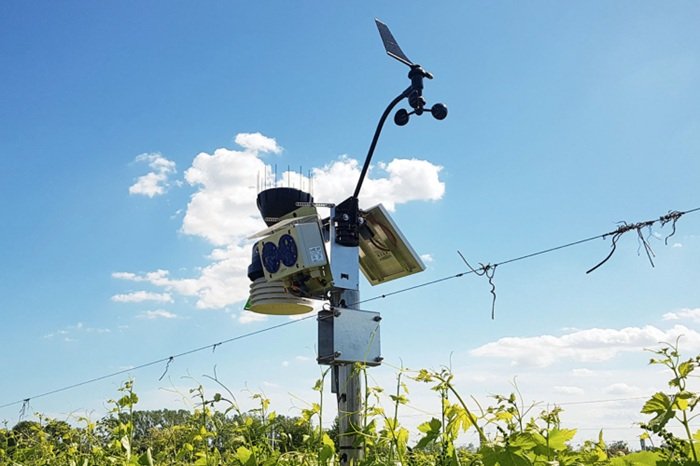
Key topics include precision viticulture illustrated by Viticulture professorLucio Brancadoro . Monitoring and management technologies enable targeted interventions, reducing waste and environmental impact. Variable-rate pest management allows treatments to be calibrated to the real needs of the vine, with up to 60 percent reduction in products used. Tools such as DSS also support soil management, with the goal of increasing soil fertility and improving vineyard resilience.
Wine, food and health
The relationship between wine and health was addressed by Professor Alberto Battezzati,professor of Physiology, who stressed the need for a scientific approach. Wine, part of the Mediterranean diet, should be evaluated in the context of consumption patterns: moderate intake may be compatible with health, while excessive or concentrated consumption, such as binge drinking, has negative effects.
Circular economy and innovation
The Grape4vine project has shown concrete applications of circular economy: waste from the supply chain, such as pomace and pruning residues, is transformed into molecules useful for vine defense. Experiments indicate a reduction in disease of more than 70 percent, paving the way for biodegradable and “zero residue” solutions.
The BluWine model
The second day featured BluWine, an international project coordinated by Professor Daniela Fracassetti, associate professor Food Science and Technology. Approach is inspired by the Blue Economy and involves the entire supply chain: from the vineyard to the winery and waste management. Main goals are to reduce pesticides, improve energy efficiency and develop wines with lower alcohol content, while maintaining quality and typicality.
Adapting to climate change
The issue of resilience was also explored in relation to climate. Viticultural productions are particularly vulnerable and require site-specific solutions, based on data, genetic innovation and advanced technologies, without losing the link to the territories.
Research and supply chain, a dialogue to be strengthened
The final discussion with VeronaFiere shows a willingness to build structured collaborations between universities, institutions and businesses. The goal is to accelerate technology transfer, create new skills and sustain the competitiveness of the sector in the long run.

