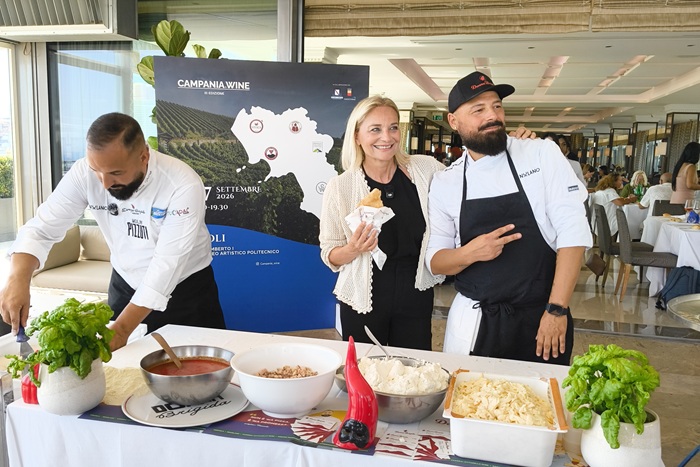

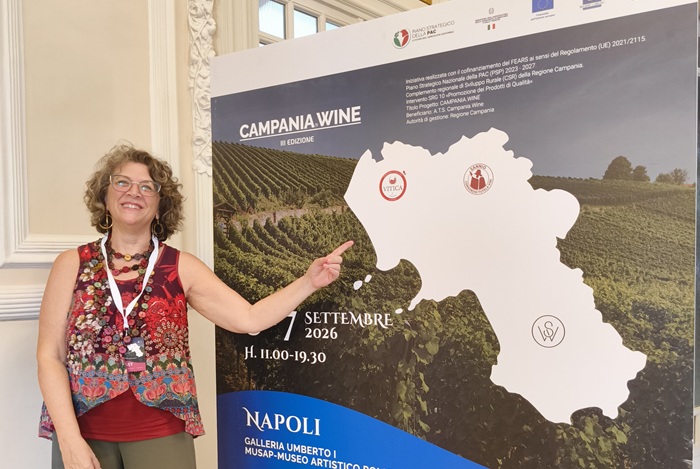
The third edition of Campania Wine brought together the five wine protection consortia and 101 wineries in Naples. The tasting area in the Galleria Umberto I and the two masterclasses for the press at MUSAP showcased a winemaking tradition with a history spanning millennia, in which soils, altitudes, grape varieties, and traditions vary significantly from one region to another.
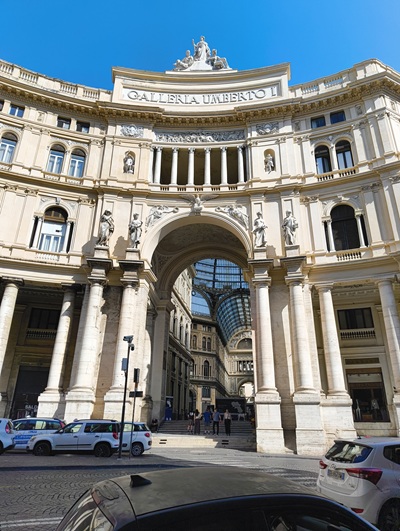 Bringing together five consortia, the Campania Region, and the City of Naples around a single project is no easy feat, especially in a complex and fragmented wine-producing region, where a shared identity coexists with very diverse territories. Now in its third edition, Campania Wine has sought to piece together this mosaic by bringing 101 wineries to the Galleria Umberto I and hosting in-depth presentations at MUSAP—the Artistic Polytechnic Museum of Naples.
The walk-around tasting provided a broad overview of the region’s wine production. However, it was above all the two masterclasses reserved for the press that offered insight into Campania’s wine industry, exploring the connections between wine, geology, archaeology, and three thousand years of agricultural history.
Bianchi: Between Archaeology and Landscape
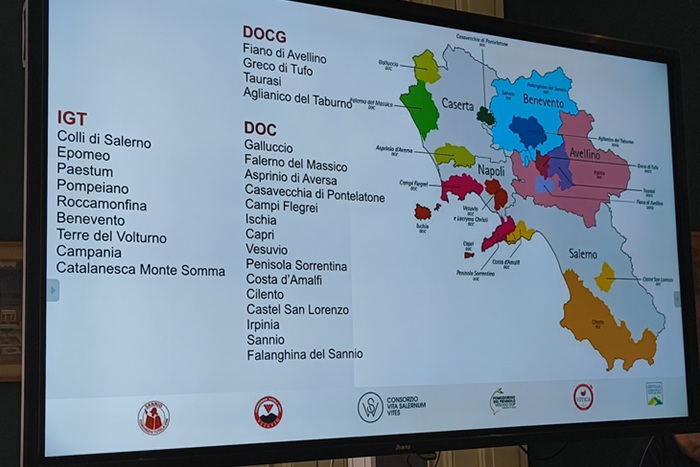
The Masterclass “From Classics to Off-the-Beaten-Path: White Wines from Campania”, led by Othmar Kiem, editor-in-chief of Falstaff Italia, was accompanied by presentations by archaeologist Girolamo Ferdinando De Simone. The focus was on the variety of climates, soils, and grape varieties, as well as the continuity of agricultural practices that have been passed down from antiquity to the present day.
The millennia-long rivalry between Bacchus and Ceres—that is, between vines and grains— has shaped the landscape of Campania. Some winemaking practices are still alive today, such as theAversana trellised vineyard—the vines trained alongside poplar trees, as described by Pliny, which can reach up to thirty meters and provide the grapes with better ventilation and a lower risk of mold.
TheAsprinio d’Aversa Spumante Brut Trentapioli by Salvatore Martusciello, made using the Martinotti method, is very dry and supported by pronounced acidity, with notes of Golden Delicious apple, mint, and saffron. More complex is theAsprinio d’Aversa IX Denari 2023 from Cantina Palazzo Marchesaleis more complex: orange peel and a distinct smoky note precede a taut and flavorful mouthfeel.
The Volcano and the Return of the Vineyard
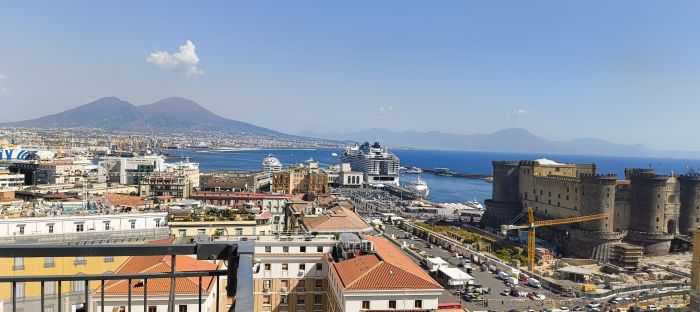
Mount Vesuvius and Mount Somma form a complex landscape: the four slopes alternate between maritime and inland influences, and land ownership is highly fragmented. After being abandoned in the wake of postwar industrial development, viticulture has made a comeback over the past two decades. Propagation by suckers and pergola cultivation preserve techniques deeply rooted in the area’s history.
The Lacryma Christi del Vesuvio Bianco Vigna del Vulcano 2023 from Villa Dora, made from organically grown ungrafted vines—50% Coda di Volpe and 50% Falanghina—features aromas of lemon and white flowers and a full-bodied, fresh, and distinctly briny palate. On the northern slope of Monte Somma, meanwhile, grows the Catalanesca grape, which—according to tradition—was brought by the Aragonese in the 15th century and was long used as a table grape. The Catalanesca del Monte Somma Summa 2024 from Cantine Olivella—aged in stainless steel and amphora—combines yellow fruit, mint, and subtle hints of maceration with a palate that surprises with its breadth and savory intensity.
From the Sannio to the Cilento
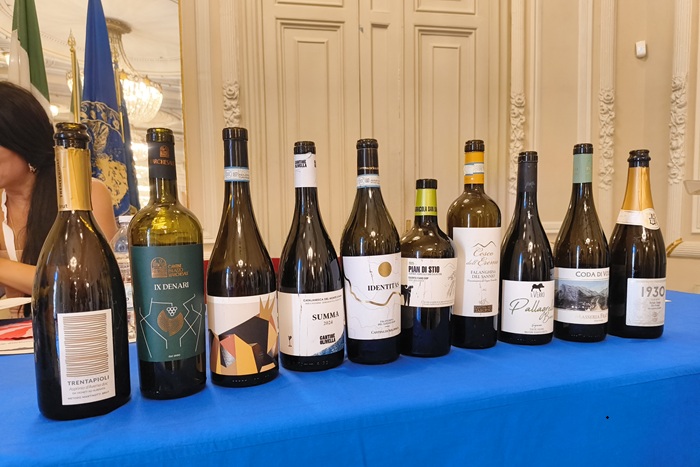
The Falanghina del Sannio Identitas 2025 from Cantina di Solopaca—a century-old cooperative comprising some 600 members and 1,300 hectares—comes from the cooler areas around Lake Taburno. Floral and citrusy, with green and white almond notes, it is flavorful, with a growing salinity on the finish. The Falanghina del Sannio Taburno Cesco dell’Eremo 2022 from Cantina del Taburno, made from overripe grapes and aged in oak: ripe yellow fruit and subtle oaky notes, but also freshness and a pronounced salty edge.
The San Salvatore’s 1988 Fiano Paestum Pian di Stio 2025, from a vineyard at about 600 meters, has drawn attention to Cilento, an area with very diverse environmental conditions. Plum, melon, and hints of balsamic notes lead into a fresh, briny mouthfeel with a citrus finish.
From Caserta to Avellino via Benevento
From the province of Caserta, the Il Verro’s 2025 Pallagrello Bianco Terre del Volturno displays breadth, generous fruit, and a subtle tannic grip that extends the finish and highlights its pairing potential. More vertical is the Campania Coda di Volpe 2025 from Masseria Frattasi, from pre-phylloxera vines at about 750 meters in the Benevento area: reserved on the nose, taut, dry, and flavorful on the palate.
Closing out the 1930 Metodo Classico Brut Nature from Cantine di Marzo, a 100% Greco di Tufo. With a fine, creamy effervescence, it has good freshness but a rather restrained aromatic profile.
Rossi: Between Fire, Mountains, and Parks
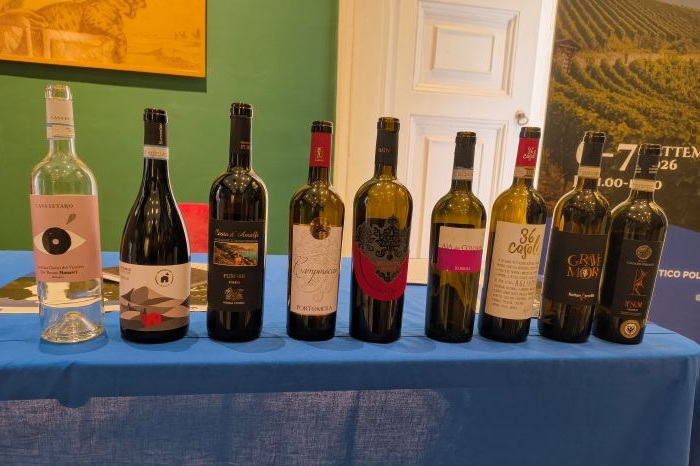
The next masterclass “Among Peaks, Parks, and Volcanoes,” led by Filippo Bartolotta, explored the region’s red wines, beginning with the fire of Vesuvius. Here, Aglianico and Piedirosso play complementary roles: the former brings structure and body, while the latter adds agility and vibrancy.
The Lacryma Christi del Vesuvio Rosato Munazei 2025 from Casa Setaro, a ungrafted Piedirosso, is light and juicy, savory and lively: a wine that is only seemingly simple, capable of translating volcanic complexity into immediacy. More structured is the Vesuvio Piedirosso Settemoggi 2024 from Sorrentino Vini, aged for twelve months in a combination of tonneaux and barriques, is more structured. Gunpowder and plum jam accompany a full-bodied and energetic palate, where the tannins gradually soften.
The Amalfi Coast Furore Rosso Riserva 2022 by Marisa Cuomo, made from Piedirosso and Aglianico, brings the limestone, the slopes, and the sea breezes of the Amalfi Coast to the glass with a fresh take on these two grape varieties. Dark fruit and balsamic notes; full-bodied, smooth, and robust on the palate.
The Forgotten North
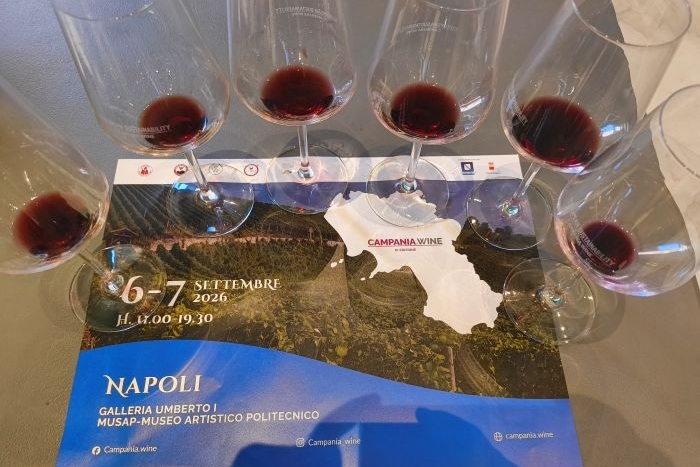
As you travel away from Vesuvius toward the border with Lazio, the landscape changes once again. In the area around Roccamonfina—a now-dormant volcano—marl and tuff-based soils produce more robust wines. The Roccamonfina Rosso Camporoccio 2023 from Porto di Mola—made from Aglianico, Camaiola, and Montepulciano—offers notes of ripe dark fruit, humus, tobacco, and chocolate, with a freshness that balances its structure
The Sannio Barbera Camaiola 2025 from Aia dei Colombi, made from the Camaiola grape variety—long confused with Barbera—is distinguished by the purity of its dark fruit and hints of rose syrup, with a lively acidity that lends dynamism to the palate.
With Aglianico, we finally enter the regions of Taburno and Irpinia, characterized by clay, sandstone, and limestone soils. TheIrpinia Aglianico Velluto Rosso 2021 by Nativ, a sort of rich and ripe late-harvest wine, expresses blackberry and chocolate, body, glycerin, and substantial tannins, while retaining the vitality of the higher elevations.
The36 Casali’s 2021 Aglianico del Taburnois sharper—warm, earthy, and spicy, with firm tannins and a distinct savory edge. TheFontanavecchia’s 2019 Aglianico del Taburno Riserva Grave Mora has already developed aromas of humus, moss, and tamarind, yet remains fresh and vibrant. The Tenuta Cavalier Ferrante’s 2020 Taurasi, finally, notes of charcoal and tobacco accompany a substantial structure, enlivened by freshness.
Wine tourism beyond the usual formulas
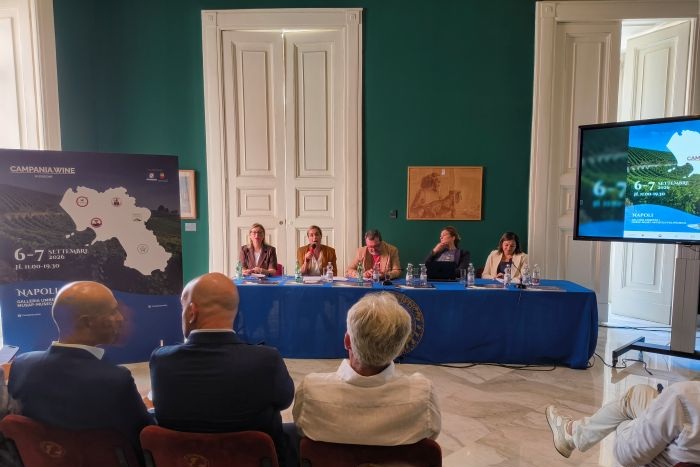
The Campania Wine Forum has shifted its focus from production to hospitality. Wine tourism means services, communication, transportation, and experiences—not just opening the doors to wineries. The sector generates approximately 3.1 billion euros in Italy and accounts for an average of 21% of the revenue of companies involved in it; by 2026, an estimated 18 million Italians are expected to be interested in it.
What emerged most clearly from the discussion was the gap between Campania’s potential and its current organizational capacity. Angelo Radica, president of Città del Vino, pointed out that simply talking about the network isn’t enough: awareness, training, services, and structured offerings are needed.
Violante Gardini Cinelli Colombini, president of the Wine Tourism Movement, urged every winery to identify its target audience and highlight its unique characteristics. Virginia “Ginger” Di Gaetano of Lonely Planet warned against empty slogans: tourism is not a panacea, and visitors must not be allowed to take precedence over residents.
This may be the most useful conclusion for Campania Wine as well. Working together as a system does not mean standardizing a region marked by profound differences, but rather to develop the tools to make those differences understandable. The strength of Campania’s wine lies precisely in the contrast between a tree-lined vineyard in Aversa and a terraced vineyard in Furore, between the sands of the Campi Flegrei and the limestone of Irpinia: a complex heritage that can become a unified narrative only if it preserves all its distinct voices intact.