

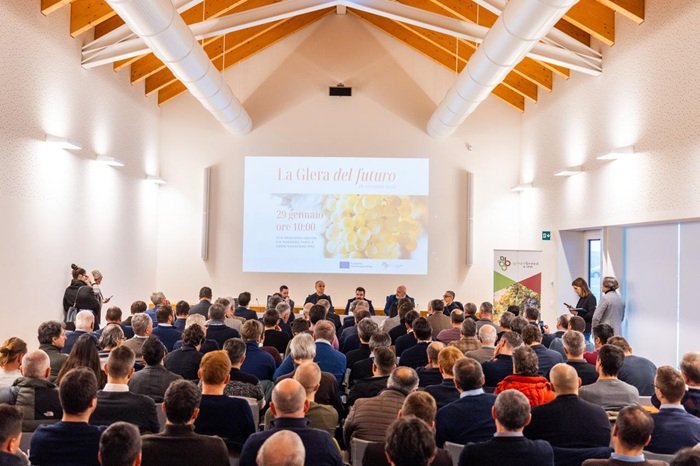
The event La Glera del futuro si svela, hosted at the VCR Research Center in Rauscedo, compared market data and genetic research to address a central question: how to ensure sustainability, quality and typicality in the world of Prosecco in a changing context. From our correspondent Francesco Scalettaris.
The numbers of economic reports show a rapidly evolving market: Prosecco consumption continues to grow significantly (United States +27.2%, Italy +21%, France +6.5%). From 2010 to 2024, sparkling wines in Italy increased from 8.3% to 15.2% of consumption, while in just seven years the Charmat buckets scored +170%. New generations reward lightness, sustainability and more flexible modes of consumption.
PiWi descendants of the Glera
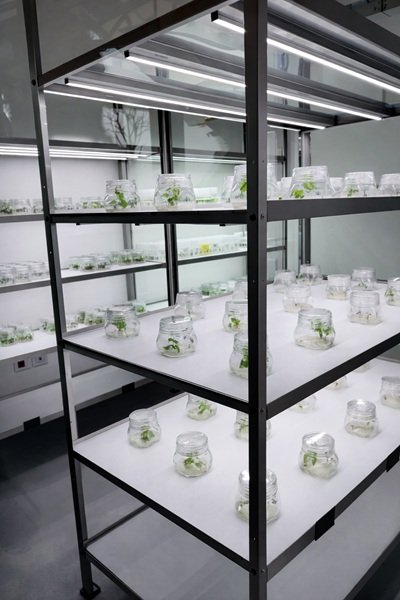
Against this backdrop is the Grapebreed4IPM project, which has led to the development of new daughter varieties of Glera. Resistant mainly to powdery mildew and downy mildew and capable of making reduce treatments, while maintaining sensory profiles consistent with the original grape variety.
Of 400,000 new varieties created, only 20 will be put on the market in the next 6-7 years, and of these as many as 7 are descended from Glera. Four of these varieties originate from the autonomous genetic improvement program of VCR and are at an advanced stage of registration in the National Varietal Registry, with availability expected between February 2026 and the end of 2027. The other three are derived from the research activities of the CREA Viticulture Enology in Conegliano, Italy. (TV) and will be available from the end of 2027.
The chalice test
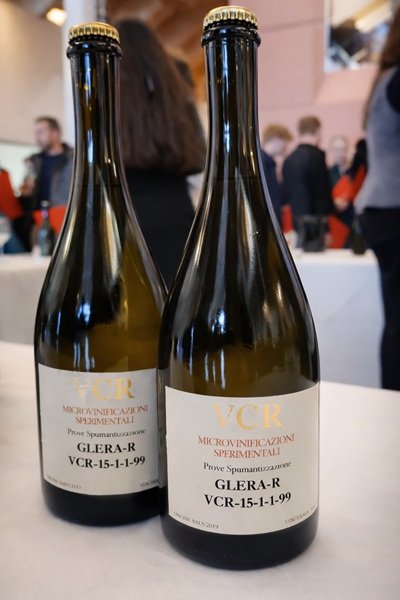
In the goblet, the differences between the different selections emerge clearly, but always within a recognizable perimeter, consistent with the Prosecco style.
- pronounced acidity,
- very moderate alcohol,
- typical aromatic complex.
However, these are experimental microvinifications.
Interest from the various Prosecco Consortia.
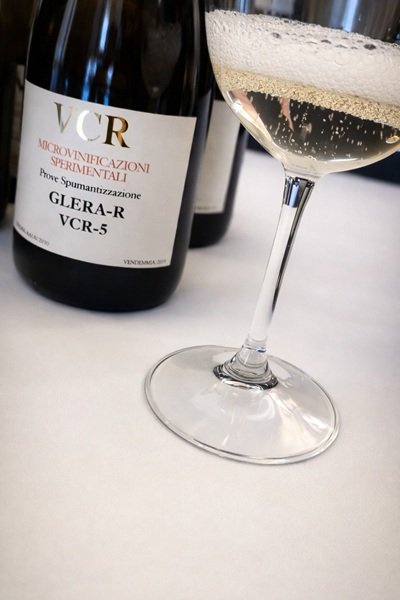
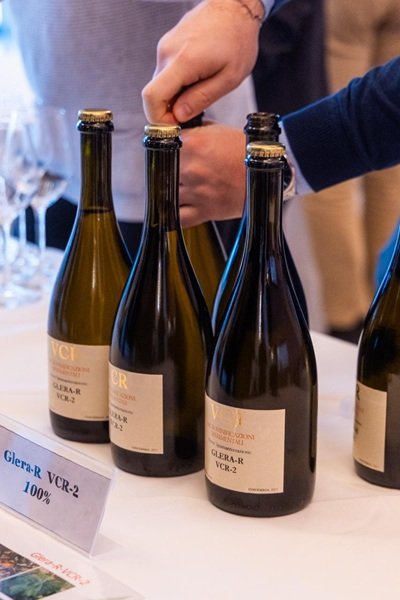
My final feeling, especially after tasting them, is that these new Glera will undoubtedly have tremendous interest from a market perspective. This is also evidenced by the cross-sectional participation at the event in all the consortia that protect Prosecco, between Veneto and Friuli Venezia Giulia, along with a significant number of producers, technicians, researchers.
Varieties capable of ensuring productivity, proper phenolic ripening, balanced acidity and sugar management. And, at the same time, effective resistance to major pathogens (powdery mildew and downy mildew) represent a technical value extremely solid that is difficult to ignore.
The legislative deadlock
At present, however, there is a legislative impediment. Today, Italy is the only country in Europe that does not allow the use of resistant varieties in DOCs, due to the restriction in Article 33 paragraph 6 of the Testo Unico della vite e del vino. A regulatory limitation, on which Parliament and Government have started a review process. The strong presence and attention shown by the institutions in Rauscedo bodes well for a regulatory update consistent with evolving research, environmental needs and market expectations.
A cultural reflection…
One has to wonder how much this value is perceived and understood by those who choose a bottle on the shelf. Public opinion has not yet clearly grasped the discourse of the resistant vines and so a possible friction emerges with the very idea associated with these types of varieties, which are perceived as “lab-born” and therefore “unnatural.” Without taking into consideration the benefit that these bring with the cancellation or reduction of pesticide treatments in the vineyard.
There is thus a risk of conflict with an often simplified imagery of “naturalness,” but one that is still very much ingrained in consumers and indeed overwhelmingly demanded by new generations. Whereas, on the contrary, “the resistant varieties – as pointed out by Denis Pantini of Nomisma – represent a concrete response to the growing demand for sustainability and lightness expressed by new generations of consumers around the world.”
…and communicative
Added to this, in my opinion, is an additional knot. Resistant varieties are complex to explain. And the explanation, in the world of Prosecco, is not a detail. We are talking about a wine that has built its global success on Immediacy, lightness, ease of reading and consumption. Insert a more technical and articulate narrative level may not go in exactly the same direction, assuming you decide to tell the story.
The challenge of the future
The real challenge then, in my opinion, will not only be agronomic or enological, but above all communicative: figuring out how to integrate innovation and complexity without losing that ease of understanding that is one of Prosecco’s great strengths.