

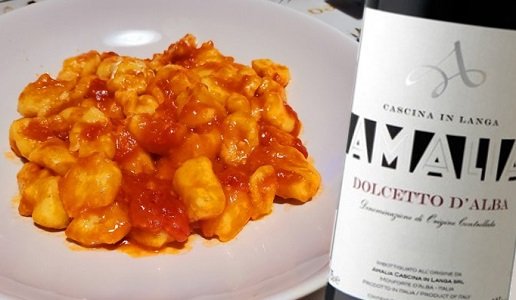

Classic winter dish enriched with lard that we pair with Dolcetto d’Alba 2021 Amalia Cascina in Langa.
Ingredients for 4 persons:
800 g floury potatoes, 160 g flour 00, 40 g potato starch, 1 egg white, 200 g lard, 1 golden onion, peeled tomatoes, basil, ½ cup extra-virgin olive oil, grated Parmigiano Reggiano or Pecorino Romano according to taste
Procedure:
Boil the potatoes in plenty of cold water. Once cooked, drain, peel, mash and spread on floured pastry board. Allow to cool.
Peel and chop the onion, slice the lard and beat with a knife until the mixture is thin. In a large skillet place the mince and sauté over low heat until the lard is totally melted and the onion wilted. Add the peeled tomatoes previously crushed with a fork and cook until the sauce is slightly reduced. Turn off and add a few basil leaves.
Quickly mix the mashed potatoes with the egg, salt, flour and starch. Cut out cylinders, cut into gnocchi and leave enlarged on a tray floured with durum wheat semolina.
In plenty of boiling salted water, pour in a little oil and boil the gnocchi. When they come to the surface, scoop them up with a skimmer, place them in a bowl, add the sauce and stir gently, dilute with a little cooking water if necessary.
Serve with grated cheese.

Wine pairing:
(Edited by Stefania Vinciguerra)
Dolcetto d’Alba 2021 Amalia Cascina in Langa
Intense purplish ruby. Typical, fruity, fragrant aromas with notes of violets, small berries and slight black cherry. Saline, full, warm flavor with barely noticeable tannins and delicious drinkability.
Production area: in the commune of Monforte d’Alba, 2.7 ha vineyard in the Sant’Anna area, mostly west facing, average altitude 450 m; very clay and limestone area; climatically windy. Soil of lequio formation from the Serravallian/Lower Tortonian period.
Vine: 100% Dolcetto, planted in 1971 with Guyot training system and planting density of 5000 vines/ha. Yield 60-70 q/ha. In organic conversion (certified from harvest 2022).
Harvest: grapes harvested by hand in boxes in the second decade of September.
Vinification: the grapes are started immediately for vinification. After destemming-crushing and the start of fermentation, maceration begins with daily pumping over for about 7 days. After alcoholic fermentation, the wine undergoes malolactic fermentation. Subsequently, the wine rests in stainless steel tanks for about 8 months at the end of which bottling takes place and, after a short period of refinement in the bottle, release.
Alcohol content: 13.5% vol.
Number of bottles: about 5,000 a year.
Serving temperature: 16-18°C.