


From a dream that began over thirty years ago to the official recognition of the subzone, Castellinaldo aims to carve out a distinct identity within the Barbera d’Alba landscape. Amid climate change, new agronomic challenges, and a vertical tasting of three vintages, the profile of a region emerges that finds its distinctive character in elegance and freshness. Luciano Pavesio tells us more.
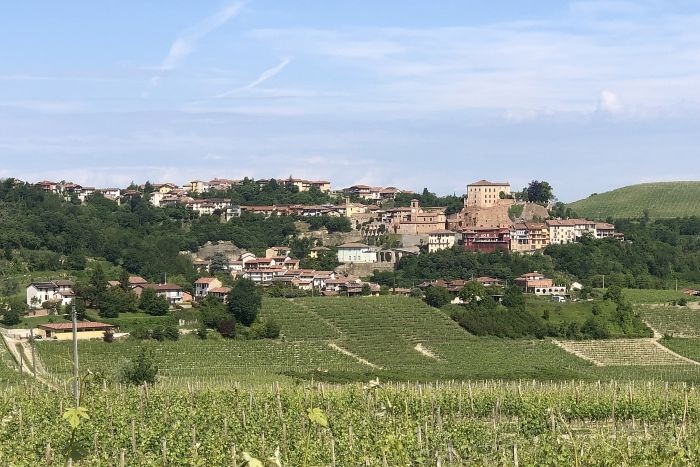
There is an unbreakable bond between a grapevine variety and the hills where it takes root. A bond that Castellinaldo, a small town in the Roero Characterized by a striking series of mountain peaks that shape the landscape, it has given rise to a visionary project. Founded in 1992, this journey went through years of ups and downs before reaching a decisive turning point in 2016 with the creation of a collective trademark. From there, it was a short step toward official recognition: in 2019, the process for registering the subzone began, culminating in its publication in the Official Gazette on August 21, 2021.
Today’s Feature “Castellinaldo” Barbera d’Alba is finally a reality on the label, proudly championed by an association of about twenty producers, currently chaired by Riccardo Grasso of La Granera.
An important milestone for a wine that, according to its production regulations, requires a mandatory aging period of 14 months starting on November 1 of the harvest year, of which at least 6 in wooden barrels.
Climate Challenges: From Water Reserves to New Vulnerabilities
While the problem has been kept in check so far thanks to ample underground water reserves, the changing and more problematic pattern of rainfall is turning the tables.
The lack of reservoirs makes the use of drinking water an unethical and financially unsustainable choice. This is another reason why the The current 20 hectares (with a future potential of one million bottles) are being redistributed: while the vineyards run from east to west, today the east-facing slopes are undergoing a major reevaluation, thanks to a less intense morning sun that protects the grapes from temperature fluctuations.
The subregion’s debut was marked by erratic weather: the first vintages were plagued by hail and summer drought, followed by a rainy and cold 2024. Its true recognition as a wine-producing region came with the The splendid 2025 vintage, which has finally reached 140,000 bottles of excellent quality.
The Vertical Tasting: A Comparison of Three Vintages
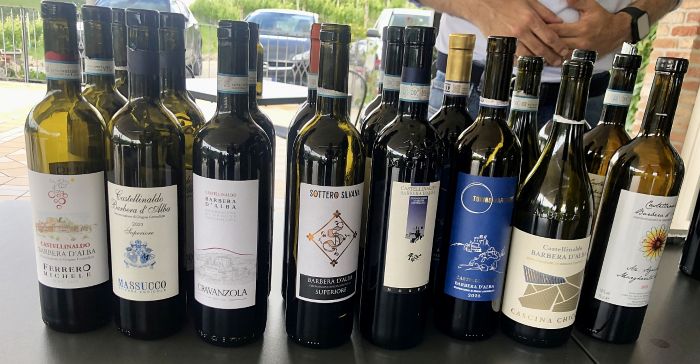
We conducted a blind tasting of 18 wines representative of the subregion, grouped by vintage. Here is a detailed account of our tasting notes.
The 2023 Vintage: Warmth and Readiness
A hot and particularly dry vintage that produced wines ready to drink, in which the freshness had to counterbalance the heat through moderate use of oak.
- Massucco Brothers: One of the best of the bunch. Pale ruby in color, with aromas of fresh red fruit. On the palate, it’s crisp and clean, with great freshness and pronounced acidity that invites you to take another sip.
- Cascina Chicco: A transparent, bright ruby color. A fragrant nose of fresh fruit enhanced by a lovely spicy note. Excellent length.
- Michele Ferrero: Deep ruby red. Notes of fruit and marasca cherries. On the palate, it is crisp, with still-prominent oak-derived tannins.
- Cravanzola: Bright ruby red; a crisp, fresh, fruity nose; and a moderately long finish.
- Silvana Sottero: A deep, opaque ruby color with slightly orange hues. An opulent yet austere wine, where the oak is still evident, ending with a slightly bitter finish and austere tannins.
- Morra Stefanino: A deep, brilliant ruby color. Pronounced woody notes on the nose; ripe fruit on the palate, supported by dense, wood-derived tannins.
- Tonino Marchisio: Classic ruby red. A slightly tart profile of fruit and vegetal notes, supported by very pronounced acidity.
- Margherita: Ruby red with violet hues. Notes of black cherry; the palate is dominated by great freshness.
The 2022 Growing Season: An Analysis of the Drought
A decidedly hot vintage, which highlighted the winemakers’ ability to manage extractions and sugar concentration.
- Cascina Torniero: The standout of the barrel-aged wines. A splendid ruby color, with an extraordinarily elegant nose featuring crisp fruit notes. Perfectly balanced, it displays subtle spice and excellent length.
- Cascina del Pozzo: Bright ruby red. A crisp wine with flavorful fruit and excellent balance. Remarkable drinkability and length.
- Teo Costa: Deep ruby red. Complex and marked by woody notes, with slightly astringent tannins on the finish.
- Nebbiolo Winery: Deep ruby red. An austere profile with notes of leather and spices. The finish takes on a hint of bitterness.
- Giovanni Allerino: Ruby red; the nose is dominated by crisp fruit and morello cherry. On the palate, it reveals firm tannins on the finish.
- Marchisio Family (biodynamic): Deep ruby red. An austere, woody profile, dominated by black fruits and plum. The tannins are decidedly dense, accompanied by spicy notes.
- Cascina Goregn: A delicate, brilliant ruby color. A sleek profile, with vegetal notes and vibrant acidity.
The 2021 Vintage: Balance and Maturity
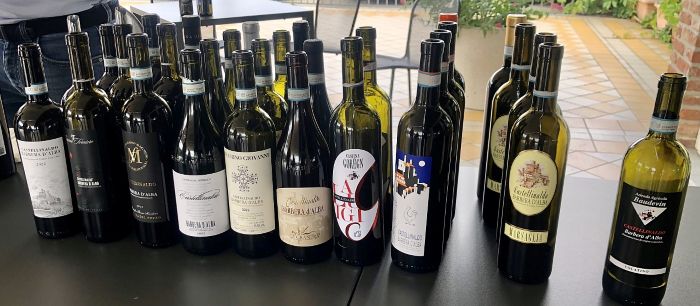
A vintage of balance. Only a few bottles remain on the market, but they showcase Castellinaldo’s true aging potential.
- Marsaglia: The absolute best of the entire tasting. A rich, deep ruby color. It offers a beautiful freshness, an extraordinary mouthfeel, and subtle spice, with a slightly and pleasantly bitter finish. Splendid.
The Verdict
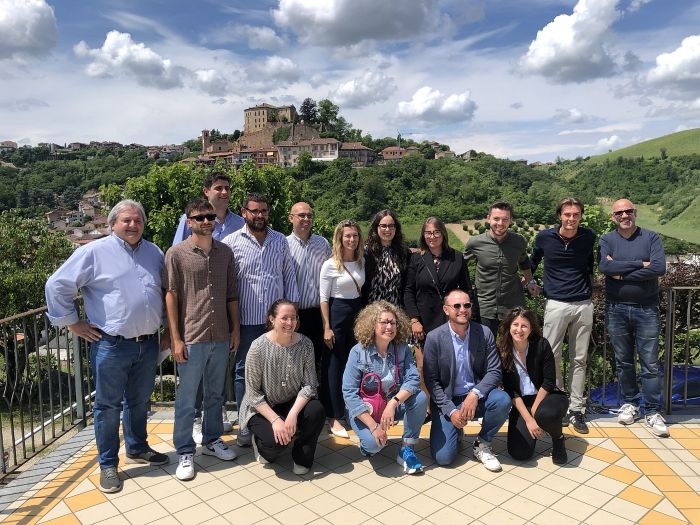
Castellinaldo Barbera d’Alba proves it has what it takes to take its place among the great Piedmontese wine appellations. The association is on the right track by focusing on elegance, freshness, and the purity of the fruit (as in the brilliant examples of Marsaglia, Cascina Torniero and Massucco), the terroir reveals a unique character, capable of withstanding the test of time and the challenges of climate change.

