

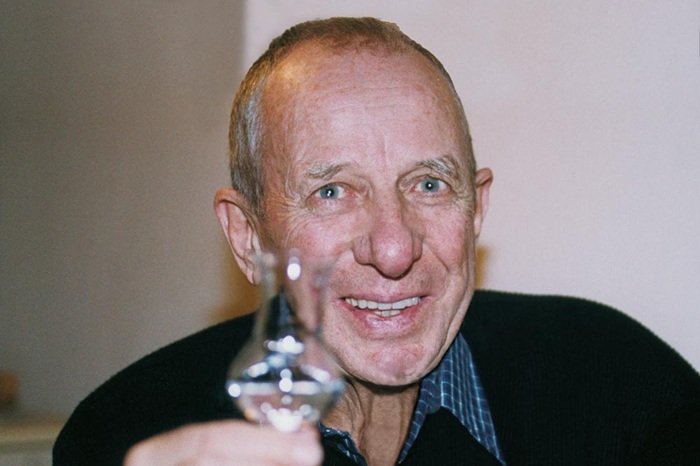

One hundred years after the birth of Gino Veronelli, a remembrance of an erratic and brilliant master who forever changed the narrative of Italian wine, launching talent, discovering producers and bringing wine into the country’s cultural debate.
Man, before the myth
He always said he would live until he was 103 years old, such as Countess Perusini of Rocca Bernarda. It was one of his sympathetically provocative “outings,” such as the obviously exaggerated one whereby he claimed to drink seven liters of wine a day. They would not let him get away with that today, I’m afraid. But those were other times, and Gino Veronelli (for friends he was not Luigi) was like that. Educated, sympathetic, controversial and courageous. It tasted of wine, but also of literature, philosophy, music and art.
The master and his students
He had an unquestionable charisma and believed in young people, so much so that he raised several of them by having them debut as wine and food critics and writers.
Any names? Alessandro Masnaghetti, Gigi Brozzoni (who still works for the Veronelli Seminar), Elio Ghisalberti. Then Daniel Thomases and Francesco Arrigoni, who are no longer here. Cesare Pillon claimed that without Veronelli he would never have written about wine. Edoardo Raspelli was also a member of the group of food and wine journalists from Milan and had controversies and rapprochements with him. Davide Paolini has known him well and frequented him for decades. Even Luca Maroni made a short run in his “magic circle” and also Franco Ziliani. Then Rocco Lettieri, Gilberto Arru, Alberto Zaccone, who was his editor-in-chief when he directed Wines&Liquors. I forget many, and I apologize to those I had not named.
The discoverer of winemakers
I met him in 1979, and until the birth of the Gambero Rosso, seven years later, I often collaborated with his publications, along with Stefano Milioni.
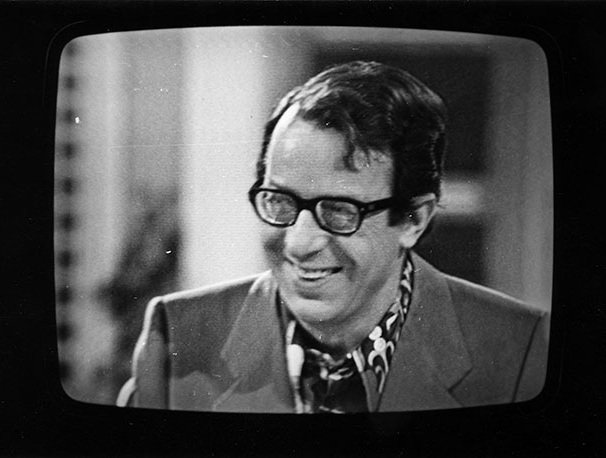
Many producers, in nearly half a century of activity, have been discovered, enhanced, launched by him. During the period in which he became a TV star, with very popular programs, he cleared customs on topics related to wine and food, which were considered “minor” by the culture of the time. I loved him, I always considered him a master, which he was, and he a student and then also a competitor.
When the Guide to the Wines of Italy of Gambero and Arcigola/Slow Food did not take it well. The comment, lashing out, was that she had not found a single winery that he had not already mentioned. Very true, by the way. But a few, Colle Picchioni, Teruzzi & Puthod, Stelio Gallo (now Vie di Romans), I had introduced him to.
His favorites? Giacomo Bologna (the Braida), Mario Schiopetto, Marco Felluga, Maurizio Zanella (Ca’ del Bosco), Giorgio Grai. Also Angelo Gaja, with whom he had a “dialectical” relationship as he put it. Also, Bruno Ceretto, Bruno Giacosa, Giorgio Lungarotti, Marta Galli, Piermario Meletti Cavallari, Paolo Panerai, who dedicated to him a beautiful selection of Sodi di San Nicolò 2021, I Sodi di Veronelli, for his centenary. Ugo Contini Bonacossi, Piero Antinori, Alberto di Gresy, Josko Gravner.
Finally, Giannola and Benito Nonino, for whom he collaborated on the Nonino Prize, a prestigious literary prize, then Risit d’Aur. Romano Levi, too, among the “grappaioli.”
Controversies, likes and dislikes
With the enologists got along less well. His controversies with Giacomo Tachis remain in the history of our world, as does his somewhat rough relationship with Ezio Rivella. Much better with Donato Lanati.
Gino had a humanistic culture; science, winemaking technique, did not fascinate him. He understood perhaps more about people than about wine tasting. Producers for him were creators and true protagonists of an endless wine novel with thousands of characters. His legacy is fundamental to truly understanding the world of Italian wine.
A legacy still alive
He would have recently turned 100 years old if he were still among us. But, on closer inspection, Luigi Veronelli is still among us. With his books, his guides, his films. With his somewhat “hen-pecked” voice, his unmistakable laugh and his prose, perhaps a tad “D’Annunzioan,” but which influenced a lot of his students and successors. A Maestro, anarchic, sometimes controversial, but absolutely brilliant. Thank you Gino for what you did and let’s all raise a glass to your 100th birthday.

