
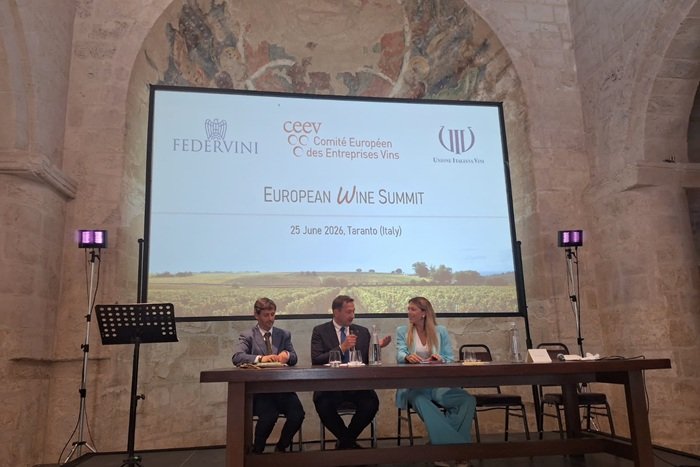

The European wine sector is calling for a policy that better addresses the new challenges of the market. At the European Wine Summit in Taranto, institutions, businesses, and industry stakeholders outlined the priorities for the next CAP: support for investments, open markets, proportionate regulations, and a scientific approach to health policies.
A rapidly changing industry
The European wine industry is facing one of the most challenging periods in recent decades. Declining consumption, climate change, geopolitical instability, rising costs, and increasing regulatory pressure are altering the balance of the sector. These considerations served as the starting point forthe European Wine Summit, organized in Taranto by the Comité Européen des Entreprises Vins (CEEV) in collaboration with Federvini and Unione Italiana Vini, which brought together over 130 representatives from European and national institutions, businesses, winegrowers, researchers, and industry organizations.
The event was opened by, among others, European Commissioner for Agriculture Christophe Hansen, ICE President Matteo Zoppas, MASAF Director General Damiano Li Vecchi, and—via a video message—Minister Francesco Lollobrigida.
Competitiveness and the CAP Take Center Stage in the Debate
The figures presented during the Summit illustrate the scale of the transformation. Global wine consumption has fallen from 242 million hectoliters in 2016 to an estimated 208 million in 2025, while the value of international trade is expected to decline from 38 billion euros in 2022 to 33.8 billion in 2025. Against this backdrop, the strategic role of the European wine sector was reaffirmed, as it is capable of generating approximately 130 billion euros for the EU economy.
The two roundtable discussions addressed the topics of the future Common Agricultural Policy and the relationship between wine, health, and science. Among the requests that emerged were more effective tools to support investment, greater access to international markets, more balanced regulations, and policies based on scientific evidence.
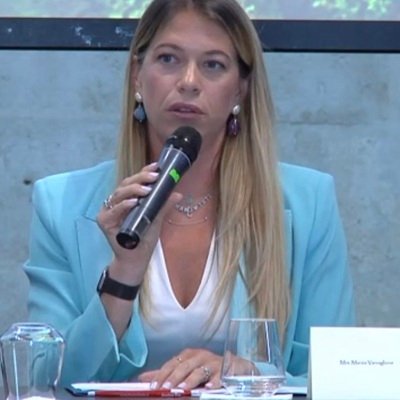
Varvaglione: “We need to win back consumers”
CEEV President Marzia Varvaglione urged the industry to look ahead without losing confidence: “We are not here to complain about our difficulties. We are here because we believe in wine. European wine embodies history, culture, terroir, craftsmanship, and conviviality. To ensure its future, we must rebuild our relationship with society, attract new adult consumers, and reaffirm the value of wine culture as an essential pillar of sustainability.”
Hansen: The Wine Package is just the first step
European Commissioner Christophe Hansen noted that wine is “much more than an agricultural product” and emphasized that direct dialogue with industry stakeholders is essential for developing effective policies. “We presented the Wine Package to provide Member States and the sector with concrete tools to support adaptation and competitiveness,” he said, reiterating the need to maintain an open dialogue between institutions and the industry.
The conclusions of the Summit will be incorporated into the discussion on the future European regulatory framework for wine and will guide the dialogue between the Commission, the European Parliament, and industry stakeholders in the coming months.

