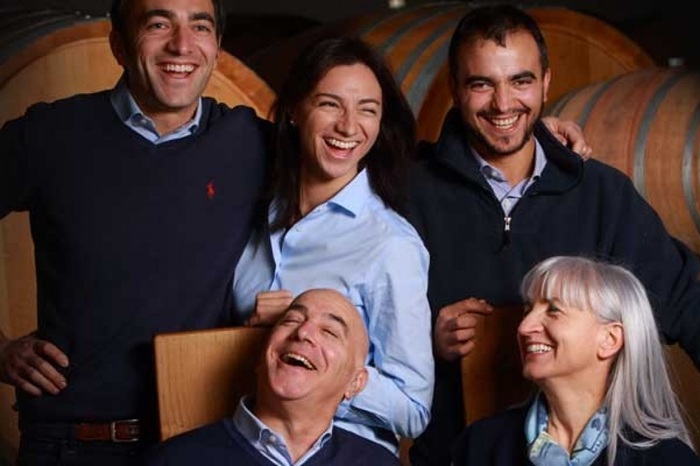

A family story, a vision forged over time, and absolute loyalty to the region. Erika Mantovan visited the G.D. Vajra winery and traces the choices that have made it a benchmark in the Langhe: from organic farming to the historic Barolo crus, all the way to managing the extreme 2022 vintage, which was tackled with unconventional agronomic and winemaking decisions.
A family that has chosen its own path
G.D. Vajra is portrayed as a family even before it became a winery. It all began at Bricco delle Viole, the highest vineyard in the municipality of Barolo, when In 1968, Giuseppe Domenico entrusted Aldo—who was just 15 years old—with the family’s first vineyards.
Paradoxically, not having been born in the Langhe would turn out to be an advantage. Aldo Vajra does not let himself be influenced by the prevailing schools of thought; he takes risks, seeks advice, and builds its own identity. The definition that would come to define him over the years sums up this approach well: “More modern than the traditionalists, more traditional than the modernists”.
The historian Marc Bloch argued that prejudices often lead people to believe labels more than facts. Aldo Vajra proved them wrong in practice: the “city boy” earned the farmers’ trust through hard work and consistency.
The insights that made all the difference
Many of the decisions that have shaped the company’s history were were made during the most difficult times. In 1971 Vajra obtained one of the first organic certifications in Piedmont, back when organic It was a gamble. Shortly thereafter, he introduced Riesling and focused on Nebbiolo in Serradenari, an area traditionally known for Dolcetto.
In 1972 He convinced his father to invest in a destemmer, a wine press, and a fermentation tank during a difficult vintage in terms of grape ripening. After the devastating hailstorm on 1986, the distribution of the vineyards across different areas and microclimates proved to be a forward-thinking decision.
In 1985, Together with his wife Milena, Aldo left teaching to devote himself entirely to the winery. Giuseppe, Francesca, and Isidoro were born; today, they are the leading figures of the new generation.
The winery now has more than 100 hectares of vineyards, to which are added the 3 hectares of the Luigi Baudana project, launched in 2009 in Serralunga d’Alba, in the Cerretta area. This growth, however, has not altered the family’s production philosophy: stylistic purity, respect for the terroir, and expressiveness remain the family’s guiding principles.
Barolo as a Story of the Region
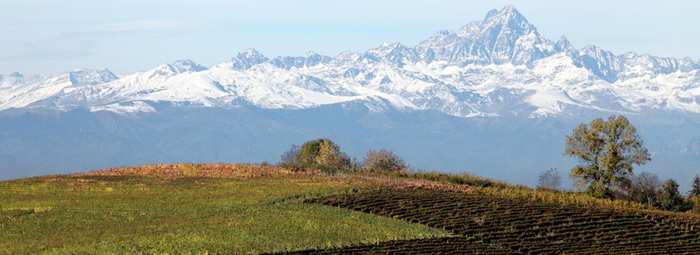
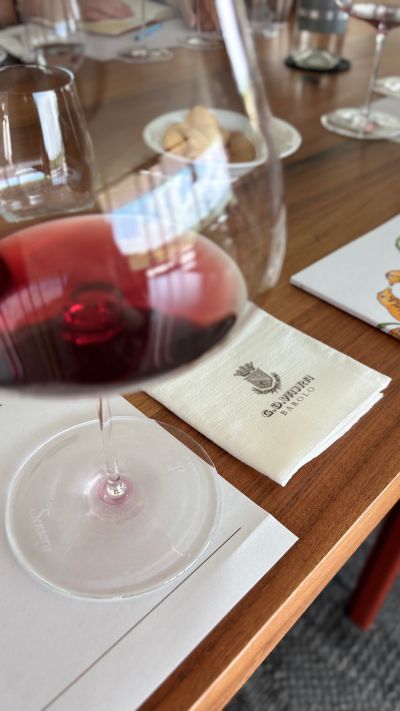
Giuseppe Vajra will guide us through the tasting and help us discover the company’s philosophy. “We don’t make wine to prove we’re the best, but to move people.”
The goal is to ensure the wines’ longevity, ensuring that a mature Barolo retains the character already evident in its younger versions.
The route starts at the Bricco delle Viole, a historic vineyard cultivated by the family since the 17th century. Located at an elevation between 380 and 480 meters, it is the highest and westernmost cru in the municipality of Barolo. A true promontory: the wind blows constantly, in the morning from east to west, and in the afternoon from the Alps toward the plain. That a cool breeze that cools the vineyard even at the end of the day is one of the true strengths behind the elegance we find in this MGA.
The oldest vines, planted in 1931 by Pino Bianco (who lived in the last house at the far end of the vineyard and wanted the Vajra family to continue managing it), still form the historic heart of the vineyard today. Maceration lasts up to 49 days, among the longest for Vajra Barolos.
Ravera and Coste di Vergne: Two Faces of Nebbiolo
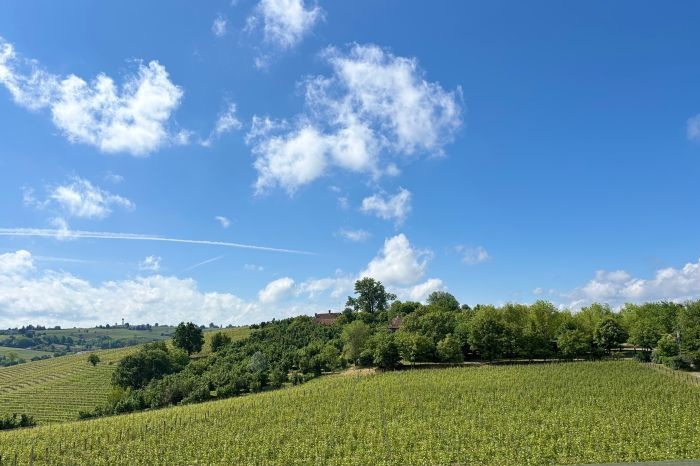
Not far away is the amphitheater of Ravera, between Barolo and Novello. Here, the afternoon heat lingers a little longer, and according to Giuseppe Vajra, it is precisely this topography that gives the wine a a particularly sweet fruit flavor and a more enveloping mid-palate. The geology reveals an interweaving of clay and marl; soil drainage has uncovered alternating layers with a precision that suggests an ancient geological origin—perhaps the point where the Monforte clay and Barolo marl converge. Here, the winemaking process involves 47 days of maceration with a submerged cap.
Of a completely different nature is Coste di Vergne, the estate’s sandiest vineyard, the one at the lowest elevation, and also the first to be harvested, as early as September. “As is the case in Roero or Lessona, the sand interacts with the Nebbiolo, opening it up and steering its aromas toward a fresher, lighter profile.”
To describe it, Giuseppe Vajra uses a musical metaphor: “It’s like the classic rock of the Beatles—upbeat music to listen to in the morning with the whole family.”. It is no coincidence that Barolo Coste di Vergne, first produced in 2015, is perhaps the cru that pairs best with those who are trying Nebbiolo for the first time.
The 2022 vintage, tackled early
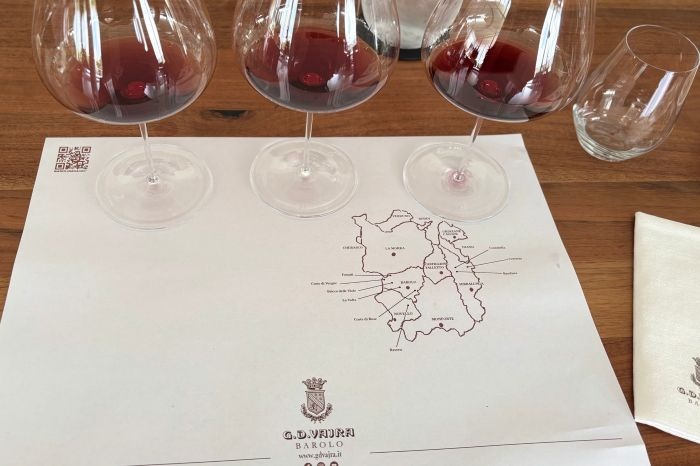
For Vajra the warmth of the 2022 vintage It didn’t happen all of a sudden. The first signs had already appeared during the winter. “An old Piedmontese proverb says that a full moon at Christmas heralds a drought.” They took it seriously and planned the entire season with the worst-case scenario in mind.
This conviction has led to a series of precise agronomic . “We’ve further delayed pruning to postpone budding, reduce the risk of frost, and extend the growing season ,” says Giuseppe. “We avoided topping so as not to drain the plants’ energy, while leaf removal was limited to the bare minimum, in order to protect the bunches from high temperatures,” he explains.
Even in the cellar Every detail has been carefully designed to preserve balance and precision. Grape selection was carried out using a vibrating grid table that automatically removes shriveled or underdeveloped berries before crushing. This allowed for extended maceration periods of up to 36 days with the cap submerged, without the risk of excessive extraction.
The latest decision concerned aging. To preserve the wine’s freshness and potential for aging, bottling was moved up by about two months from the usual schedule—from August to June. Giuseppe Vajra explains this with an image that is as simple as it is effective: “Arriving at a party with a bouquet that’s already fully bloomed makes an immediate impression, but by the next day those flowers are already wilted. Half-open buds are less eye-catching, but they last and bloom day after day.”
A metaphor that perfectly sums up the Vajra family’s philosophy: to produce wines meant to age over the years, without chasing immediate results.
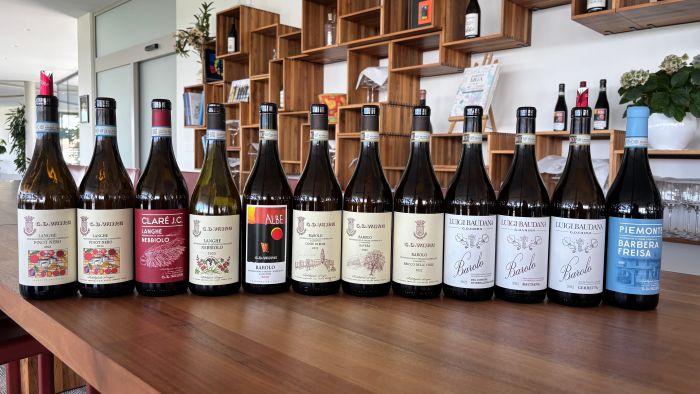
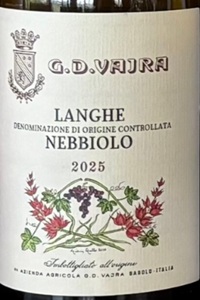 Langhe Nebbiolo 2025
Score: 92/100
Average price: € 19,00
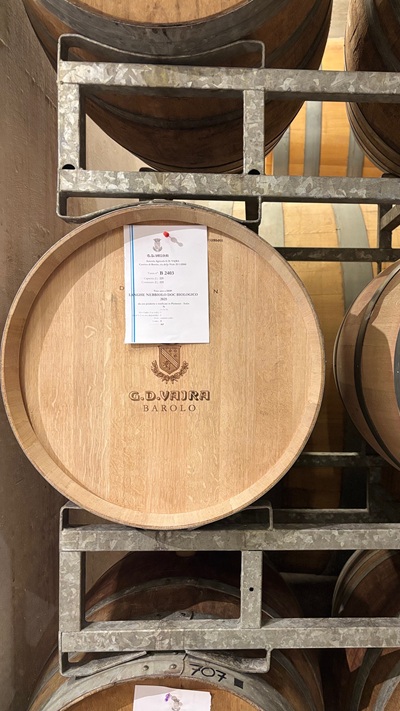
100% Nebbiolo. Aged for 8–14 months, primarily in stainless steel, with a small portion in oak.
Bright ruby red, with good clarity. Fresh, varietal aroma: peach, flowers, red berries. On the palate, the tannins are lively yet velvety, with a fine texture and a hint of iodine and minerality on the finish.
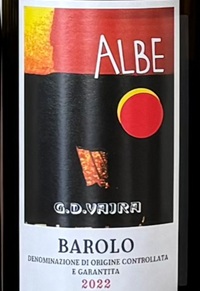 Barolo Albe 2022
Score: 93/100
Average price: € 40,00
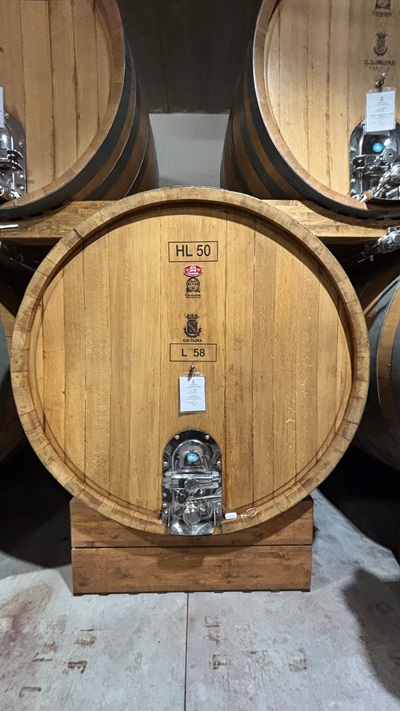
100% Nebbiolo. A blend from Fossati, Coste di Vergne, and La Volta. Aged for 23 months in 50- and 75-hl Slavonian oak barrels.
Ruby red with garnet hues. On the nose, balsamic notes, musk, and lavender. On the palate, a touch of austerity, lively yet refined tannins, good length, and body. Agile and smooth on the mid-palate. Extremely pleasant.
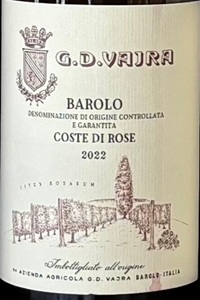 Barolo Coste di Rose 2022
Score: 93/100
Average price: €68.00
100% Nebbiolo. Aged for 22 months in Slavonian oak barrels, primarily 25- and 50-hl barrels.
Ruby red with garnet hues, transparent. Aromas of small red berries, violets, light mineral notes, and hints of balsamic notes. Lively, intense, very fresh, salty, and quite full-bodied on the palate. It unfolds elegantly, with subtle and delicate tannins.
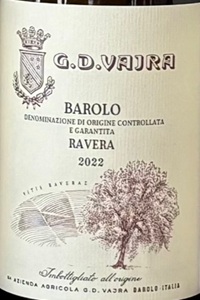 Barolo Ravera 2022
Score: 94/100
Average price: €74.00
100% Nebbiolo. Aged for 22 months in Slavonian oak barrels, primarily 25- and 50-hl barrels.
Ruby red with garnet hues, transparent. On the nose, intense and generous notes of flowers and red fruits. Rose hips and vanilla beans. On the palate, broad tannins with good body, well-integrated. A very fruity finish, expansive yet with good tension and depth.
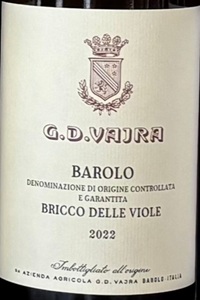 Barolo Bricco delle Viole 2022
 Score: 95/100
Average price: €88.00
100% Nebbiolo. Aged for 22 months in Slavonian oak barrels, primarily 25- and 50-hl barrels.
Bright, transparent ruby red. Aromas of violets, cherries, blueberries, and dried flowers. Juicy, luscious, and very rich on the palate, with acidity that supports the body. Beautiful balance and weight. Good body, a true reflection of the vintage: the finish closes with tannins that are still present but subtle, already fairly well integrated.
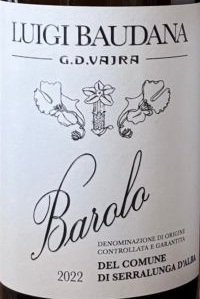 Barolo, Municipality of Serralunga d’Alba, Luigi Baudana 2022
Score: 94/100
Average price: € 50,00
100% Nebbiolo. Aged for 26 months in 15-, 17-, and 25-hl Slavonian oak barrels, with a small portion aged in small neutral barrels.
A ruby red of medium intensity, transparent. On the nose, chalky and rocky notes. Then blueberries and hints of balsamic aromas. Juicy, lively, and direct on the palate. Tannic grip is present but subtle, not sharp. A chalky, minty finish with a savory aftertaste.
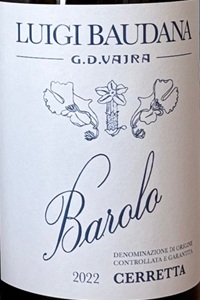 Barolo Cerretta Luigi Baudana 2022
Score: 96/100
Average price: €74.00
100% Nebbiolo. Aged for 26 months in 15-, 17-, and 25-hl Slavonian oak barrels, with a small portion aged in small neutral barrels.
Medium-intensity ruby red. A warmer, more textured nose: flowers, red citrus. Full-bodied tannins that still need to integrate with the body of the wine. Full-bodied, dense, warm. A balsamic and promising finish.

Barolo Baudana Luigi Baudana 2022
Score: 95/100
Average price: €74.00
100% Nebbiolo. Aged for 26 months in 15-, 17-, and 25-hl Slavonian oak barrels, with a small portion aged in small neutral barrels.
Ruby red of medium intensity. Balsamic, menthol-like nose with aromas of edelweiss. Great structure with a very fine tannic texture. Chalky, savory, persistent, with good body. Progressive and full-bodied on the palate, with more integrated tannins than the Cerretta. A very full-bodied finish with good acidity to support it.