


The five senses aren’t enough: they need to be trained. The same goes for that mysterious “sixth sense” that everyone believes is innate but that, in fact, can be cultivated. In gastronomy, it takes the form of a sense of discovery: a precious quality that can arise from curiosity or from illusion. And the results, inevitably, vary greatly.
Our five senses are an extraordinary resource, but they are of little use if we do not stimulate and exercise them. A sommelier’s sense of smell or a mushroom hunter’s keen eyesight are not innate gifts: they arise from the experience, from memory and the ability to categorize perceived stimuli.
The same applies to a faculty that is mistakenly believed to be innate: the sixth sense. “Either you have it or you don’t.” It is a saying that is as widespread as it is misleading, because it discourages people from cultivating it. Yet it can become a valuable tool for making life richer and more interesting.
You Can Train Your Sixth Sense
Unlike the five traditional senses, the sixth sense is like a magical Swiss Army knife. It offers the tool best suited to the situation at any given moment. In the world of food and wine, the most valuable aspect is the sense of discovery, an inclination that must be handled with caution and wisdom and that is driven by two opposing impulses: curiosity and illusion. The Curious and the Deluded
Those who let themselves be guided byillusion They seek confirmation of worlds they’ve already constructed in their own minds. Compulsive guidebook readers and TripAdvisor addicts fall into this category. They arrive at a restaurant with their minds made up and extremely rigid expectations, and even a minor change to the menu or wine list is enough to turn their anticipation into bitter disappointment.
Prepare the discovery
Those who are driven by curiosity, on the other hand, is constantly seeking—along with new discoveries—personal enrichment that is both cultural and sensory. They will achieve satisfying results, especially if they always avoid rushing in headlong: curiosity does not mean improvisation.
Every discovery should be explored, studied, and planned. Whether it’s the neighborhood next door or a destination on the other side of the world, We really can’t discover anything if we don’t know anything about the place we’re visiting.
Not to mention that the tentacles of globalization have reached everywhere, and even in the most remote corners of the world, we must keep our eyes and ears open to distinguish between what is real, what is fake, and what is an imitation.
Seeking the Truth
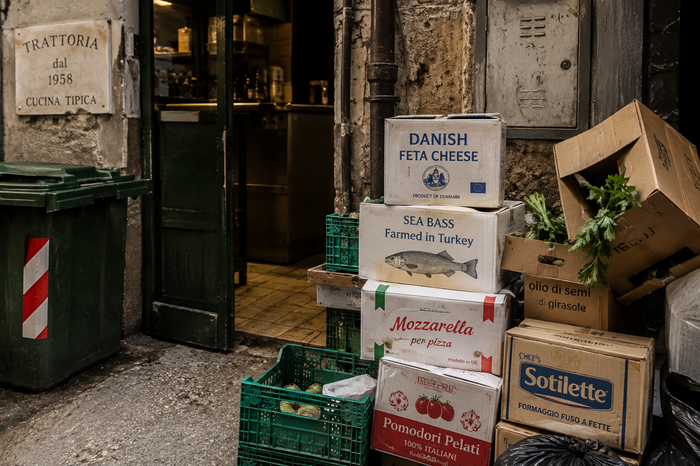
Often, a quick glance at the cardboard boxes piled up around the nearest dumpster or behind the farmhouse that houses the “delicious” country trattoria to discover that the “freshly caught” sea bass comes from a Turkish fish farm, that the feta in the Greek salad emerged from a box proudly bearing the words “Danish Feta Cheese,” and that the secret to the lasagna’s succulent creaminess lies in packages of an unknown brand of processed cheese slices.
We live in an age where chefs’ creativity reigns supreme, yet at their tables we may discover nothing more than their recipes. If we want to experience truly new atmospheres and flavors, we must explore other paths, guided not only by what our eyes see but, above all, by our ability to smell, taste, and listen.
New Life for Ancient Worlds
Let us never forget that our sense of discovery will fail if we go in search of something that did not exist before, while it will be heightened if we manage to find the key to entering worlds that were waiting for us. For the explorer’s destiny is not to discover new things, but to breathe new life into ancient worlds.