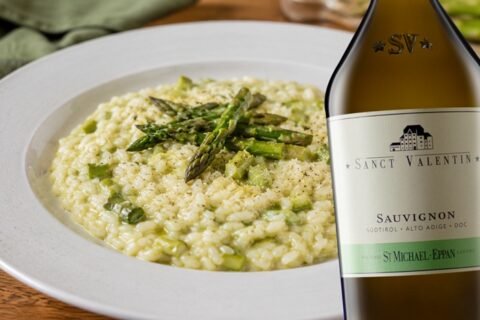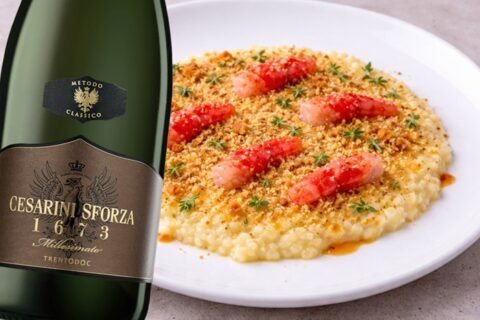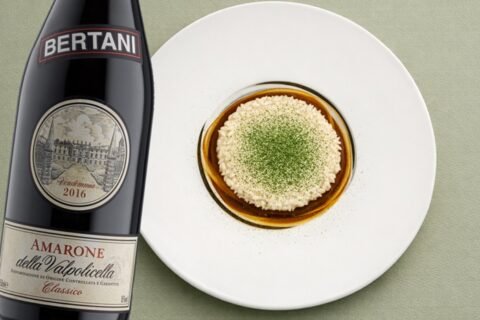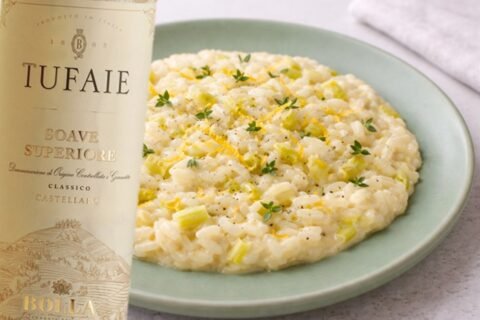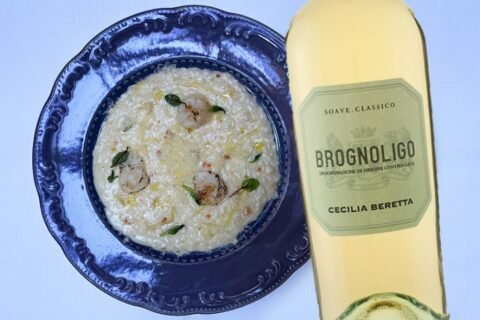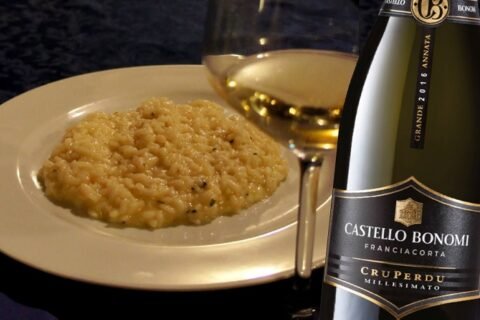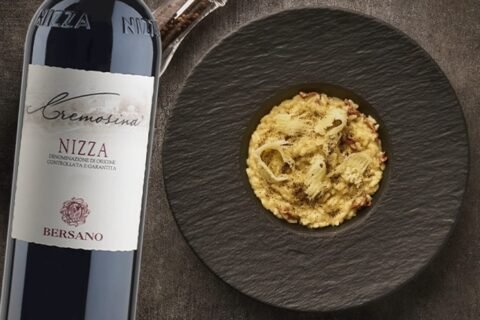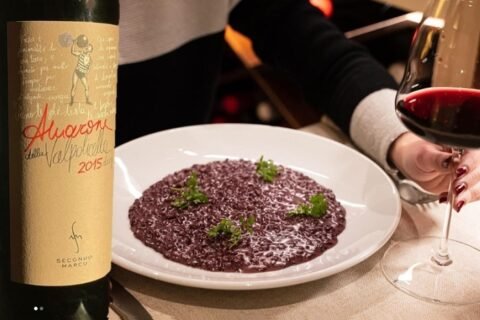

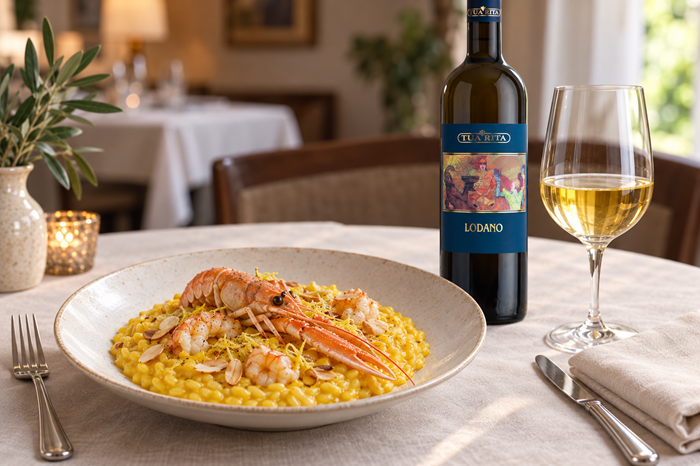

A recipe designed to pair with the Toscana Bianco Lodano 2024 Tua Rita: the sweetness of the langoustines and the notes of saffron complement the aromatic profile of Traminer and Riesling, while the creaminess of the risotto harmonizes with the Chardonnay and the wine’s aging in wood. The almonds add texture without making the dish too heavy.
Ingredients for 4 people
- 320 g Carnaroli rice
- 12 langoustines
- 1 packet of saffron
- 1 shallot
- About 1 liter of light vegetable broth
- ½ glass of white wine
- 30 g sliced almonds
- 40 g of butter
- 30 g of Parmigiano Reggiano
- 1 untreated lemon
- extra virgin olive oil
- salt
- white pepper
Procedure
Clean the langoustines , remove the intestinal tract, and set aside four whole ones for garnish. Coarsely chop the rest.
Toast the almonds in a dry skillet and set them aside.
Chop the shallotand sauté it gently in a little oil. Add therice, toast it, and deglaze with white wine. Cook until done, gradually adding the hot broth.
Dissolve the saffron in a little broth and add it to the risotto halfway through cooking.
Quickly sauté the langoustines in a pan with a drizzle of oil, salt, and pepper; stir them into the rice during the last two minutes.
Remove from the heat andstir inin with butter and a little Parmesan. Finish with toasted almonds and a very fine grating of lemon zest. Garnish each plate with a whole scampi.
In the glass, selected by Stefania Vinciguerra
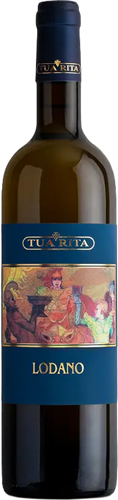 Toscana Bianco Lodano 2024 Tua Rita
Bright golden yellow. A very intense and intriguing bouquet of melon, broom, rose, and citrus, with a hint of white pepper. A savory, creamy texture—agile and lively—with good development and a sunny, persistent, and lively finish.
Production area: Upper Maremma, in the Colline Metallifere region. Soil type: clayey with a medium-to-high content of coarse particles.
Grape Varieties: Traminer, Riesling, and Chardonnay in equal parts. Guyot training system, planting density of 8,500 vines per hectare. Vineyard management: integrated pest management.
Grape Harvest: third week of August, with grapes harvested by hand into 15-kg crates.
Production Processes: Vinification Directly in the press, followed by static clarification and fermentation in stainless steel tanks. Aged for about 6 months in French barriques that have been used 2–3 times.
Average production: 3,000 bottles
Serving temperature: 10-12°C
Recommended pairings: grilled or fried fish, white meat main courses, vegetable dishes, medium-aged cheeses, and seafood.
PRODUCER

OTHER RECIPES.