
The climb to the crater, the view of the Gulf of Naples, the vineyards, and the traces of ancient history. The Vesuvio Wines Experience Tour showcased a region that deserves to be explored even before its wines are tasted. Two masterclasses—one dedicated to white wines, the other to rosés and reds—highlighted the diverse expressions of the region’s wines. Stefania Vinciguerra tells us more.
From the rim of the Vesuvius crater, the Gulf of Naples unfolds before your eyes, and the climb is well worth the effort. On one side lies the mouth of the volcano; on the other, the inhabited landscape that stretches along its slopes, the sea, and the islands: a breathtaking view that alone would make the trip worthwhile. For those here to learn about wines, it’s also a valuable vantage point for understanding just how close—yet different—the environments are in which the vines grow.

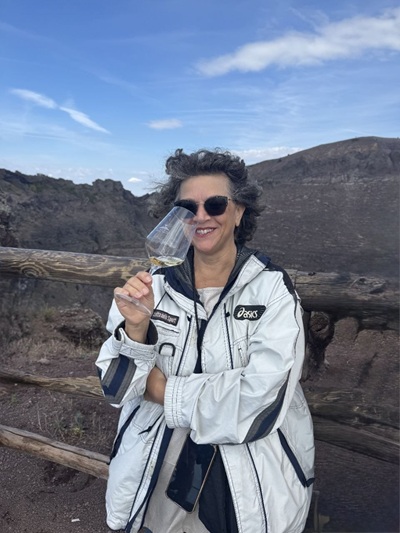

That’s how the first day of tours for the Vesuvio Wines Experience Tour, organized by the Consorzio Tutela Vini Vesuvio (pictured: President Ciro Giordano of Cantine Olivella). The guided hike along the Gran Cono trail, followed by a toast at the summit, was one of the most memorable moments of the trip. It’s an experience worth recommending even to those planning a visit to the wineries: reaching the crater offers a perspective that’s missing when viewed from below.
A region to explore
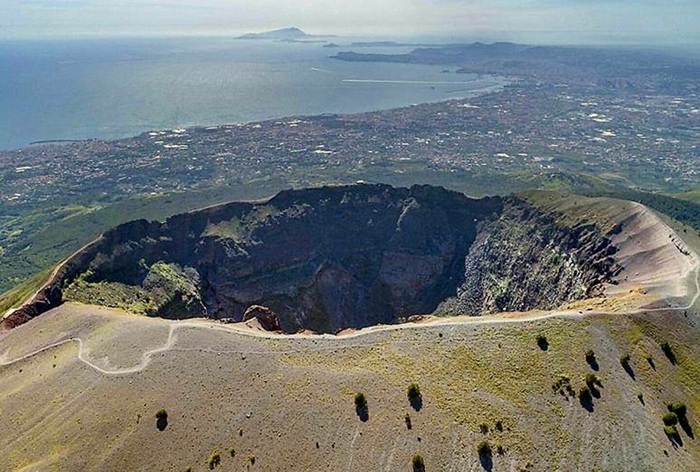
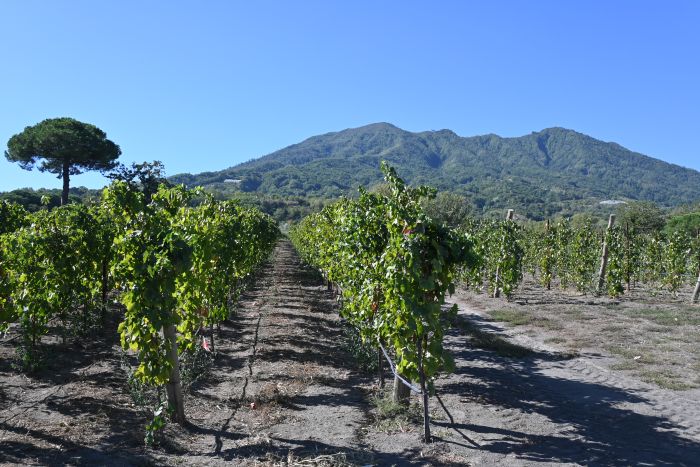
Under a name known throughout the world lies a diverse range of viticultural practices. The Somma-Vesuvius volcanic complex (which includes the volcano’s cone—Vesuvius, to be precise—and Mount Somma, which was once part of it) encompasses diverse environments in terms of exposure, elevation, and maritime influence. Warmer, more open slopes facing the gulf contrast with the cooler inland and northern slopes. The vineyards, often located between 200 and 600 meters above sea level, grow on soils where ash, sand, and lapilli have been layered through successive eruptions. Older Monte Somma and the younger Vesuvius cone are not interchangeable.
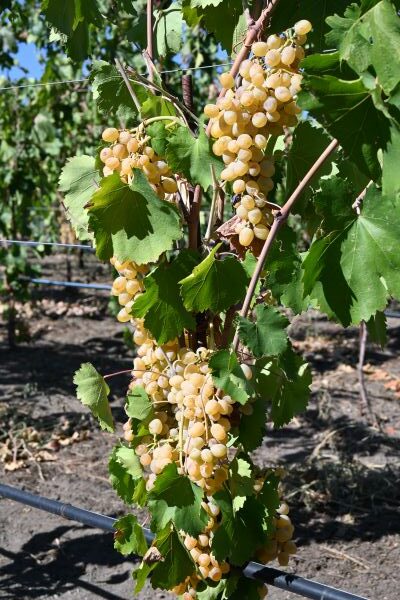
Among the rows of vines lies an important heritage of ungrafted vines, which were noted during the tour as accounting for about 90% of the total and are traditionally propagated by layering as well. Caprettone and Catalanesca, alongside Coda di Volpe and Falanghina, are the main varieties used for the whites. Piedirosso and Aglianico, along with other traditional varieties, are used to produce the reds and rosés.
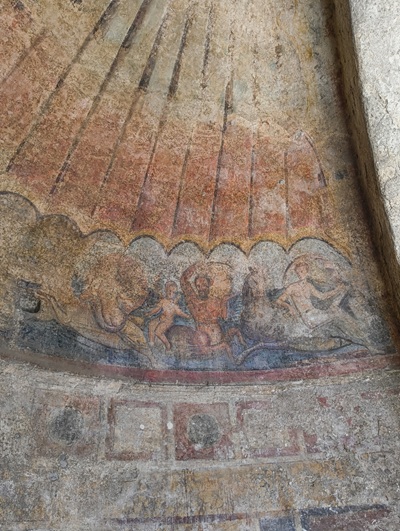
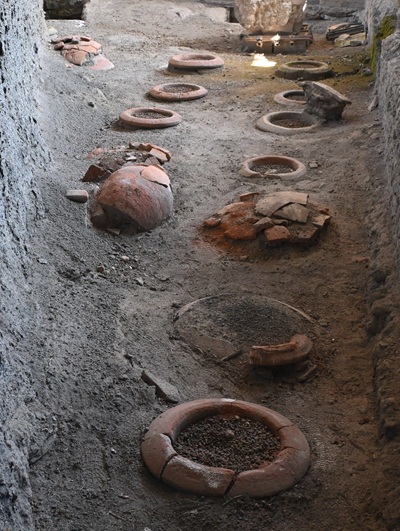
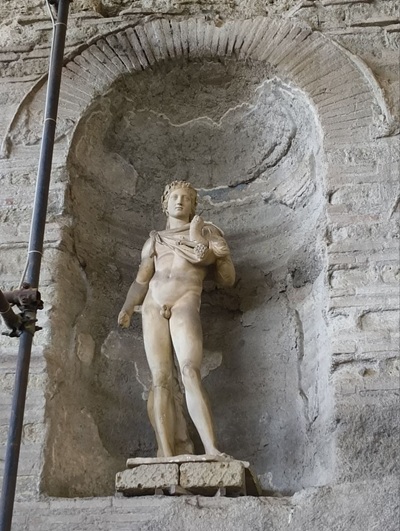
A visit to the splendid and unforgettable Villa Augustea in Somma Vesuviana, added an archaeological dimension to the tour. Highlighting a land where viticulture has very ancient roots. As the director of the excavations, the archaeologist Girolamo Ferdinando De Simone, as he guided us through the ruins of this vast complex—which is not yet open to the public but contains remains of immense interest even to non-specialists.
Two master classes to learn about wine
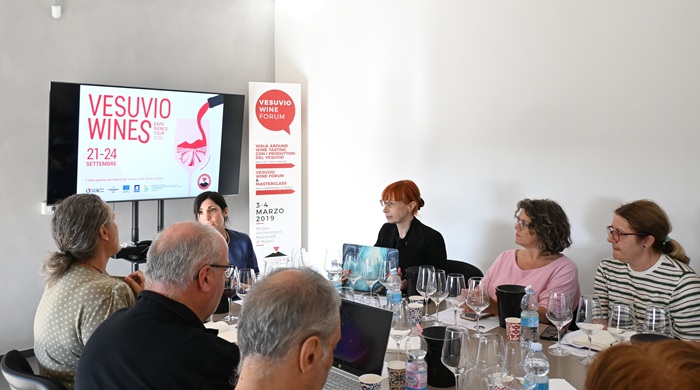
The tasting took place at the Consortium’s headquarters in Sant’Anastasia, featuring two masterclasses designed to help us understand the region, led by Chiara Giorleo, Vesuvius wine ambassador. A wine region with ancient roots, yet one committed to a process of renewal, marked by the Consortium’s reorganization in 2015 and the new production regulations adopted in 2017.
The abundance of potassium in the soil was one of the most interesting technical topics. It can help raise the pH of musts and wines, making it particularly important the pursuit of balance. In the glass, savory notes frequently emerged as a common trait, though with varying intensity and outcomes. This characteristic becomes particularly interesting when it complements the fruit and the progression of the palate, without overpowering everything else.
Caprettone and Catalanesca Take Center Stage
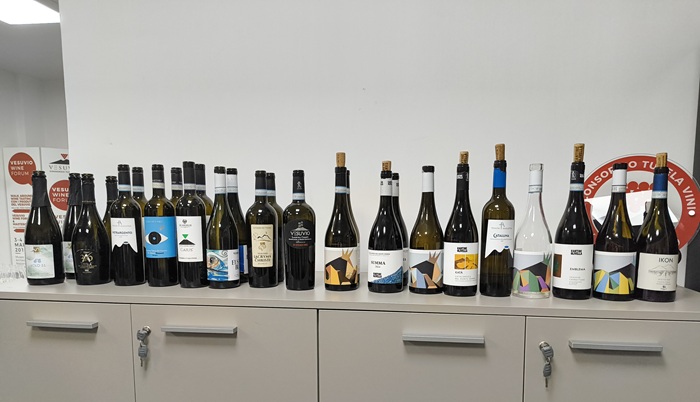
Overall, the white wines stood out the most—for me, they were the most compelling part of the tastings. The Caprettone, long confused with Coda di Volpe, revealed expressions that varied greatly in structure and intensity. The Catalanesca, found exclusively on Monte Somma, offered some of the most distinctive results. A late-ripening grape with thick skin, recognized as a wine variety only relatively recently, it can produce fruitier, full-bodied whites that retain their freshness. Winemaking processes—including fermentation in stainless steel tanks, aging on fine lees, and aging in amphorae—were alternated. Without the techniques obscuring the differences between the wines and their origins.
Among my best tastings
Catalanesca del Monte Somma Summa 2024 from Cantine Olivella, with part of the batch macerated on the skins and aged for ten months on the fine lees. In a combination of stainless steel and amphora. The aroma is reminiscent of jasmine tea and green tea, with balsamic and minty notes. On the palate, it is rich, flavorful, and full of character, with a distinctly briny finish.
The Lacryma Christi del Vesuvio Bianco Superiore 2024 from Cantina del Vesuvio, made from 100% Caprettone grapes. Aged in stainless steel, offers aromas of white flowers and broom, with a fresh, herbaceous note. On the palate, it is intense, briny, and well-balanced. The Lacryma Christi del Vesuvio Bianco Munazei 2025 from Casa Setaro, also made from Caprettone, combines yellow fruit, citrus, and white flowers with a rich yet dynamic palate. Very savory, almost briny—and a hint of lemon on the finish.
The blend has changed for the Villa Dora’s Lacryma Christi del Vesuvio Bianco Vigna del Vulcano 2023, with the addition of 20% Falanghina, confirming the quality of a winery that prioritizes the longevity of its wines. Notes of smokiness and yellow flowers are joined by lemon leaf and blond tobacco. Full-bodied and briny, it unfolds with consistency and pleasure.
Rosé and Red Wines in Search of Balance
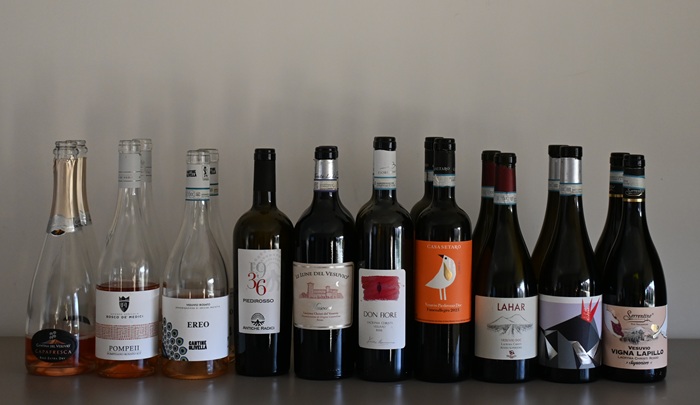
The second masterclass yielded less consistent results. The focus was on the Piedirosso, which here can express subdued color, fragrant fruit, moderate tannins, and an easy-drinking character. However, it is a delicate grape variety to interpret, partly due to its tendency toward reduction: among the samples tasted, some aromatic imprecisions, powdery tannins, or overly prominent oak limited their appeal. The best wines, on the other hand, struck a convincing balance between juiciness, freshness, and flavor.
Among these is the Vesuvio Rosato Ereo 2025 from Cantine Olivella, made from equal parts Piedirosso, Guarnaccia, and Sciascinoso. Light copper in color, it has a crisp profile, with red and yellow fruit and good structure. On the palate, it combines softness and freshness, finishing with good acidity and a slight hint of bitterness.
The Villa Dora’s Lacryma Christi del Vesuvio Rosso Forgiato 2022, made from Piedirosso and Aglianico, impresses with its clean fruit profile. Cherry, blackberry, and black cherry, with a hint of black pepper. On the palate, it is juicy, firm, and very well-balanced, even in its tannic structure. Meanwhile, the Sorrentino’s Lacryma Christi del Vesuvio Rosso Superiore Vigna Lapillo 2021, also made from Piedirosso and Aglianico, warrants a note. The two bottles tasted showed noticeable differences. In the more successful one, the fruit is accompanied by resin and basil, while the palate is full-bodied, rich, and juicy, with just a touch of tannin and a lovely, drinkable finish.
A little sparkling wine to finish off
 In the masterclass dedicated to white wines, we also compared two Metodo Classico wines. Volo 31 from Tenuta La Mura, made exclusively from Caprettone grapes. Full-bodied and food-friendly, with notes of Golden Delicious apple and honey. Català36 2021 from Montesommavesuvio, made from Catalanesca grapes. Which is fresher, rounder, and more structured, with notes of pineapple, hints of the sea, and smoky undertones.
Interesting insights emerged even outside the masterclasses. Hèbon Metodo Classico 2022 from Cantine Olivella, from Catalanesca, Caprettone, and Piedirosso, was one of the most compelling tastings of the tour. Fresh aromas of lychee and mint, a taut, lean, and energetic palate, menthol notes, and a salty, long, and flavorful finish. Also impressive was Casa Setaro’s Pietrafumante Brut 2023. A Metodo Classico made from 100% Piedirosso, disgorged in July 2026. Light copper in color, complex and intense with notes of yeast, mint, and red berries; creamy and lively on the palate, with good drive and a persistent finish.
With its crater, vineyards, archaeological sites, and cuisine, Vesuvius has shown just how much it has to offer wine travelers. The climb and the view of the gulf remain among my fondest memories, along with the discovery of white wines that deserve to be better known and a winemaking tradition best understood through its diversity. By exploring the different grape varieties, slopes, and producers.