
When Giuseppe Alberti, in 1860, perfected a recipe from the Benedictine monks to give birth to Strega liqueur, he certainly did not imagine that its success would be planetary. Antonella Amodio tells us the story of this magical liquor.
“The first sip fascinates, the second… Witchcraft.” The slogan of the 1960s, accompanied by the magnetic face of Sylva Koscina in a famous black and white carousel, marked the collective imagination linked to Strega liqueur, an unmistakable symbol of Italian excellence.
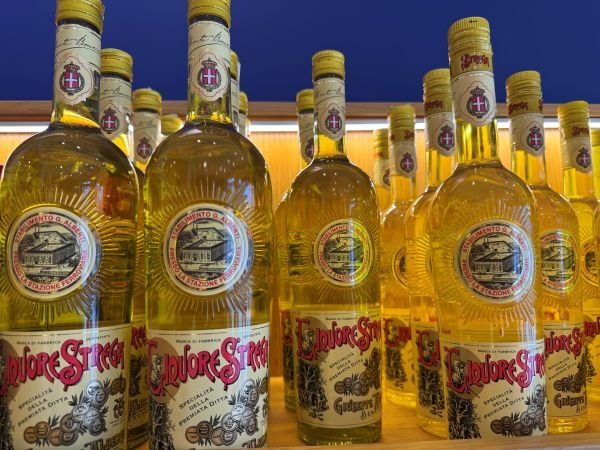
Produced since 1860 in Benevento by the Alberti family, Strega is today one of the best-known Italian liqueurs in the world. Its name recalls the ancient legends of beneventan witches, who traditionally gathered to dance under a large walnut tree near the city. It was this suggestion that inspired Giuseppe Alberti, an apothecary and chocolatier, when he perfected a recipe of the Benedictine monks and gave rise to a unique distillate with a deep yellow color due to the precious saffron tincture.
A secret and fascinating production process
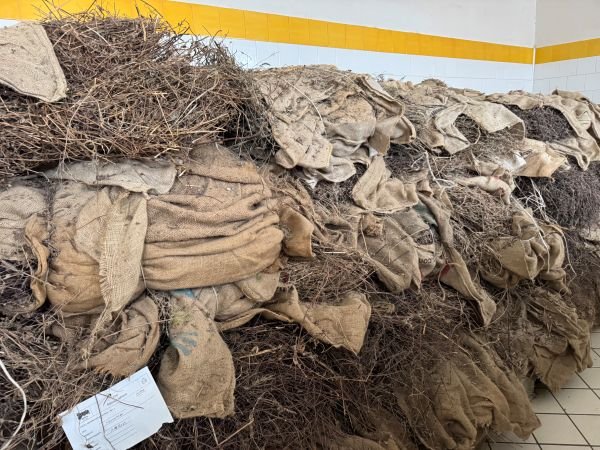
The heart of Strega liquor is its secret formula: a harmonious blend of about 70 herbs and spices from all over the world. Lavender, cardamom, cinnamon, dried orange peel, gentian, juniper, star anise, wormwood, Jamaica pepper, Florentine iris, Sannio wild mint and saffron are just some of the ingredients that determine its unmistakable character.
The precise dosage of flavorings is jealously preserved in an ancient wooden chest of drawers, and still processed according to traditional methods: by distillation, not maceration, so as to preserve the integrity of the essences. Completely natural, Free of artificial dyes and flavors, the liqueur ages at least six months in large oak or ash vats, where it develops complexity and aromatic harmony.
From initial vision to international success

Joseph Alberti immediately understood the potential of its liquor and decided to locate production near the Benevento train station, so as to facilitate its distribution. Success was swift, and after World War II the company expanded its operations, establishing Industria Dolciaria Alberti, specializing in chocolate, nougat and other delicacies.
Today, now in its sixth generation, Strega Alberti S.p.A. employs about 200 people, exports to 40 countries and continues to produce at its historic plant on the outskirts of Benevento. A family business that has been able to innovate without ever losing its ties to its origins. Over the years, the following have been born Over 450 imitations of the original liqueur, many of them on display inside the factory, testifying to its uniqueness and worldwide fame.
A cultural icon: between awards and books
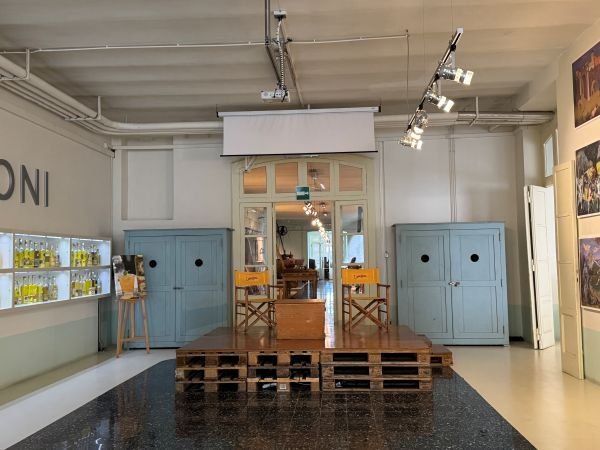
Strega liquor is not only a gastronomic product, but also a cultural symbol. In 1947, on the initiative of Guido Alberti, the writer Maria Bellonci and her husband Goffredo, the Strega Prize, destined to become Italy’s most prestigious literary award.
The link between the liquor and culture is still alive today, evidenced by the company’s exhibition halls and ongoing sponsorship of art events.
Witch and cinema: magic on the big screen

Strega’s unmistakable yellow bottle has also captivated the world of cinema, appearing in numerous Italian and international films. Its evocative name, golden color and elegant design make it perfect for symbolizing Italian-ness, passion and mystery.
In addition to the famous television carousel with Sylva Koscina, Strega liquor appeared in cult films such as Il sorpasso by Dino Risi, a symbol of lightheartedness and Italian style in the boom years. In several of Federico Fellini’s films, where he fits perfectly into the director’s dreamlike aesthetic. More recently, in The Great Beauty by Paolo Sorrentino, where he portrays the decadent elegance of bourgeois Rome.
In international productions, Strega is often used as an emblem of Made in Italy, on par with pasta, fashion and design. Even today, it is still chosen by directors and set designers as a narrative object loaded with symbolic meanings.
Beyond the liquor: signature desserts by Alberti
Although the liqueur remains the beating heart of the company, Strega Alberti has built a true gastronomic universe around it, made up of confectionery tradition, craftsmanship and selected ingredients. Among the best-known specialties: Strega nougat, made with honey, almonds, hazelnuts and, in some versions, enriched with liqueur. Chocolate and pralines, an artisanal line that includes bars, dragées, pralines and filled chocolates, many of them flavored with Strega. Benevento Croccantino, a local specialty made with almonds, caramelized sugar and chocolate, reinterpreted with Alberti quality and style. Handcrafted panettone and dove cakes, sugared almonds and baked goods, such as cookies, sweets and sugared almonds inspired by the Campania tradition, complete an assortment that celebrates the authentic flavors of the region.
Thanks to this diversified offering, Strega Alberti is now recognized not only as a synonym for quality liquor, but also as an ambassador of Italian pastry in the world, with each product telling a story, the territory and the passion that has lasted for more than 160 years.
Contacts and visits
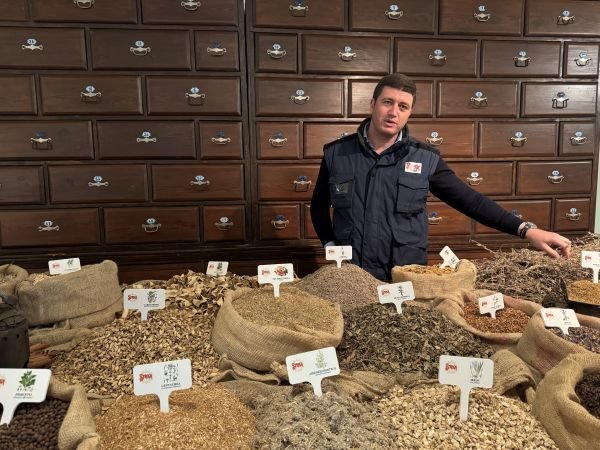
The company’s historic headquarters in Benevento is open to the public for guided tours, tastings and cultural tours between the distillery, museum and boutique. An opportunity to discover the Strega world up close and be enchanted by its timeless charm.
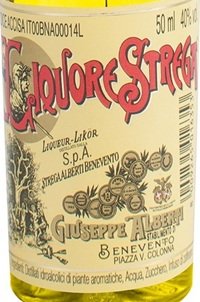 Alberti Strega Liquor
Price on the company e-shop for the 0.500 bottle: € 12,50
Natural liqueur made by distilling about 70 herbs and spices. Intense yellow color and enveloping, persistent aromas of cinnamon, juniper, wild fennel, mint and saffron. It is ample and velvety on the palate: the 40% vol. alcohol content is well balanced by the sweetness and gentleness of the sip. Excellent served chilled.