

A few simple rules inspired by the principle of color matching. A system based mostly on experience and common sense and that normally works. Daniele Cernilli‘s word.
With my longtime friend Silvano Prompicai, a.k.a. “the legendary Prompi,” we have been using it for years and we are very happy with it. I allude to what we call color matching and which consists of very few, very simple and intuitive rules with which to establish the right combination of wines and foods.
I don’t want to sneer at all those sommeliers who spend a lifetime of study on such matters, theirs are almost scientific systems, ours is just due to experience and common sense, but it makes no claim to infallibility. Few rules, I said, and inspired by the principle of chromatic harmony.
White and sparkling wines
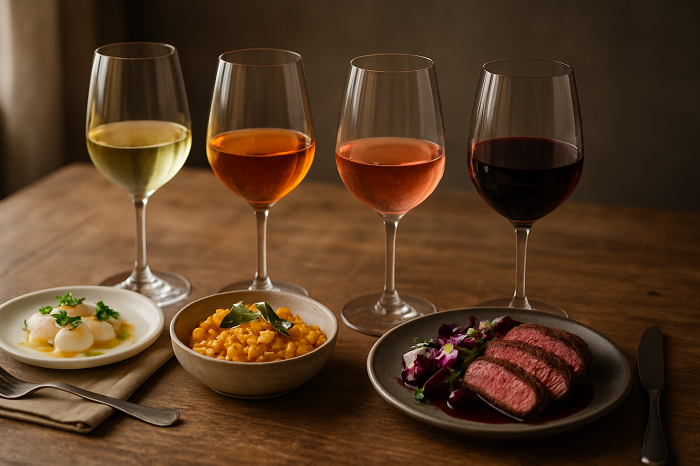
With white-colored foods, fish, fresh cheeses, risotto, white meats, it is best to choose white wines. Do you know fondue with Riesling? Or a Gavi with steamed fish? Fritters, where fragrance wins, “ask for” sparkling wines, equally fragrant. Also a Prosecco di Valdobbiadene (not a “prosecchino”). Then try burrata with Trentodoc blanc de blancs or a Champagne and see. Bianchissima with bianchissimo.
Reds and rosés
If we move on to red-colored foods, pasta with tomato sauce, fish soup, rare meats, then a young red wine, ruby in color. A Gragnano with pasta with “pummarola,” a fine Chianti Classico or Valpolicella Classico with a grilled steak, a Bardolino with bouillabaisse. With long-cooked dishes, roasts and braised meats, but also stews, which have richer, almost brownish colors, go the large aged reds, garnet-colored, somewhat brick-colored.
For the rosés is the same story. Lobster, salmon, even hams from Parma or San Daniele, and, depending on the more or less intense color, from rosé sparkling wines to Chiaretto del Garda, via rosati from Negroamaro and ending with Cerasuolo d’Abruzzo.
Sweet and meditation wines
With aged cheeses, parmesan, grana in general, oxidative wines, such as Marsalas or Sherries. They go well with traditional balsamic vinegar; wines made with the Solera system merely replicate those characteristics. And yellow and moldy cheeses with yellow and musty wines. Gorgonzola and Sauternes, for example.
If you notice. chromaticism reigns, dominates the scene, and is much easier to understand than the analysis of intrinsic or added fat, of tannins degreasing certain things to acidity offsetting others. Or the role of carbon dioxide and so on.
It may not always be perfect as a method, however, I assure you that it works very often and with Prompi we have a lot of fun scandalizing the well-matched.

