
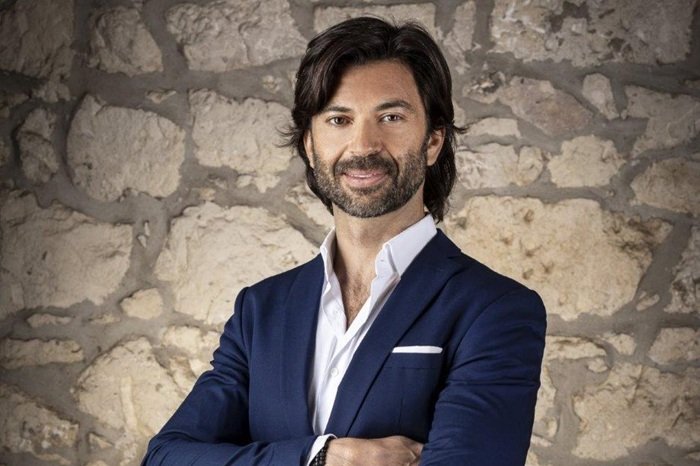
Annalucia Galeone interviewed Francesco Zonin, vice president of the Zonin 1821 group, to understand with what strategies a large 210 million euro turnover group faces the challenges of the future.
The Zonin Group was founded in Gambellara in 1821 and in more than 200 years has become an international business with a pull of companies throughout Italy. At the head of the group is now the seventh generation represented by president Domenico Zonin, vice-president Francesco and executive vice-president Michele. There are numerous questions about the future of Italian wine, the challenges to be faced and the need to find new solutions given the growing focus on wellness and more conscious consumption.
We talked about it with Francis. Here is the strategy of a company with a turnover of about 210 million euros in 2024.
Enotourism
In 2024, wine tourism contributed 24 percent to total industry sales. Among foreign bookings, the United States was the main source, followed by Germany and the Netherlands. In the Zonin1821 group, what is the estate with the greatest wine tourism vocation, which is less so, and what are the strategies to differentiate and enhance the offer from area to area?

In addition to wine production, the group’s estates offer structured hospitality experiences capable of conveying wine culture and the value of the land. Wine tourism, in fact, is central but also cultural: enhances the diversity of terroirs, promotes wine education, and supports the transmission of local knowledge and traditions.
Every year in our estates we welcome about 100,000 visitors. The most visited are Castello di Albola, in Chianti Classico, and Barboursville, in Virginia, which have flows that are less tied to seasonality, but Ca’ Bolani (Friuli), Masseria Altemura (Puglia), Principi di Butera (Sicily), Poggio Le Coste (Piedmont) and Rocca di Montemassi (Tuscan Coast) are also giving us good satisfaction. Last but not least, the historic headquarters in Gambellara (Veneto) has a museum itinerary open to the public, dedicated to wine culture, which includes a collection of more than 14,000 historical stamps as well as that of fine tasting glasses and a display of vintage corkscrews.
History
From 1821 to the present, the road traveled has been a long one. How did the adventure of the Zonin1821 group begin and what have been the most salient stages in the life of the winery?
From 1821 to the present, the journey has been long, intense, often challenging. Yet, each step has led us exactly where we wanted to be: here, with roots firmly planted in Gambellara and a gaze that embraces the world. As early as the 16th century, the Zonins were present among these hills, but it was in 1921 that my great-uncle Domenico, with great courage and vision, transformed a small farming business into an ambitious project of wines, dreams and the future. As we have grown, we have seen the company expand and take on new challenges, taking our passion beyond the borders of Italy with the acquisition of new estates. Each estate is a unique piece of land that tells a story, and each bottle we produce is the result of a balance between wine culture and different consumption needs.
Strategic countries
The group is increasingly international, among the top 5 wine producers in Italy grossing 84 percent of its turnover abroad, 37 percent of which comes from the US. In the wake of market indecisions, the crisis generated by Trump’s threats of tariffs, how do you think the market will evolve and which countries will be strategic in dealing with imbalances?
We ended 2024 with a turnover of about 210million euros and exports of more than 80 percent. Despite the economic-political instability in some crucial geographies for the development of the industry and the Global consumption slowdown, we remain confident about the evolution of our business model. With this solid foundation, we are optimistic about our ability to generate growth for the coming years. Our goals for the future remain clear and geared toward consolidating our leadership position in the international market. In particular, we aim to: strengthen branding, further enhance our estates, invest in research and development, and consolidate our presence.
In this changing environment, there are well-defined growth targets but, as you can well understand, we cannot make long-term forecasts with certainty. Economic-political instability in some areas requires constant analysis and adaptation of our strategy because, as we are learning, economic-political changes can be rapid and unpredictable.
Promotion
Responsible drinking is an act of culture for oneself and others. How should this approach be promoted with younger people, who are increasingly reluctant to drink wine and led instead to prefer spirits or dealcoholic wines?
Education in responsible drinking is an issue close to our hearts, especially when it comes to the younger generation. It is essential to understand that wine consumption is not just an act of pleasure, but an expression of culture, tradition and identity.
On the one hand, we need to promote a wine culture that is not only related to consumption, but also to knowledge of the product, its origins, characteristics and the territories that express it. Although wine should never be consumed in excess, it represents an important part of our country’s gastronomic culture and identity. That is why it is essential to start talking about wine as a component of a “balanced table” on which pleasure and awareness are at the center.
On the other hand, our company is working to make the wine experience more engaging for young people, trying to make them understand that wine is something that can be enjoyed slowly, appreciating its aromas, flavors, and its connection to the land. We are aware that the market is changing and that many young people are more attracted to spirits and options such as dealcoholic wines, which offer a more immediate or less demanding form of consumption. However, we believe that through a targeted digital communication and educational experiences – such as events, tastings, and educational paths related to the world of wine-we can stimulate greater curiosity about “authentic wine”: not fashion but culture.
Innovations
Two years after the launch at Vinitaly 2023 of two product innovations (a dealcolate and a ready-to-drink) what has been your experience?
The Zonin Zero, our dealcolated wine, was well received in international markets (including Germany and the United Kingdom) reflecting that growing interest in low-alcohol or alcohol-free products. Another success was the Lemon Grove Spritz, a ready to drink (RTD) based on wine, which has been particularly popular, especially in the US and UK markets. In general, we believe that. the future of wine will move toward greater diversification and innovation. As the dealcoholic wine market continues to grow, the RTD segment is also gaining more and more attention, especially among the younger generation.
Sociality
In a society that is increasingly social and increasingly less social, where connections now are no longer made vis a vis but through the mediation of screens, the social function of wine is diminished. Was this topic addressed in the #Zonin1821Academy or could it be a topic of study, since people are one of the pillars of the mission?
Reflection on the growing distance between people, who now interact more and more through screens rather than directly, is a topic that makes us think a lot, especially when it comes to the social function of wine. Historically, wine culture passed through family tables where Grandparents, parents, and children gathered to share meals: from there the discovery began. Wine has always been a symbol of conviviality, of bonding between people and shared moments, and we think that this social function of wine should not be lost; on the contrary, it should be preserved and enhanced.
Future
The future of the Italian wine world according to you.
Italy, with its immense variety of terroirs and winemaking tradition rooted in centuries, has an incredible opportunity to continue to grow and consolidate itself as a leader on the global stage. However, this future will depend on some key factors that are already in place today.
- Innovation and Sustainability: In this context, the future of Italian wine will necessarily have to combine tradition and innovation. Sustainability-both environmental and social-will always become one of the distinctive aspects of our wines.
- Export and Globalization: The international market represents a great opportunity for growth for Italian wine. Countries such as the United States, the United Kingdom and Germany will continue to be strategic markets, but there are also new areas to explore such as South America, Africa, Japan and Korea.
- New Generations and Changes in Oxnsumi: The biggest challenge, but also one of the most stimulating, concerns young consumers. The way new generations approach wine is constantly evolving. Many young people today are more interested in innovative, practical and low-alcohol products.
- Digitalization and Communication: Digital channels will play a crucial role in the promotion and sale of wine. The experiential aspect of wine will also need to be enhanced through new forms of communication and storytelling.


