
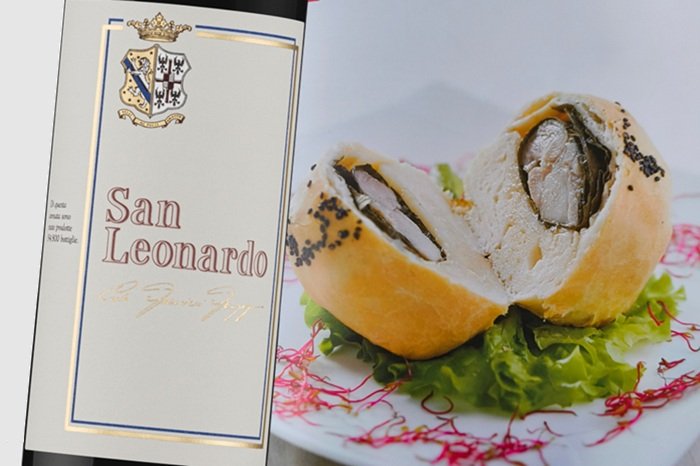

Chinese recipe from the book “I Grandi Cru d’Italia Meet the Cuisine of India, China and Japan,” where it is presented in combination with 2020 San Leonardo Vigneti delle Dolomiti, our red wine of the year 2026.
The Committee Grandi Cru d’Italia, which brings together the best Italian producers (to be a member, the wines produced must have been judged at the highest level for at least 20 years by wine guides and magazines from around the world) presented in Verona, during Vinitaly, this book showing the “love marriage” between the best Italian wines and some masterpiece dishes of Asian cuisine.
The proposed recipe is Chinese. In official texts the dish is mentioned only in the mid-18th century, but it was certainly already widespread in Marco Polo’s time and linked to several versions of the same legend. It stars a beggar who, lacking a kitchen and fires, was able to Cooking a piece of chicken by wrapping it in cloth, or perhaps in clay, using the heat of the sun to dry the skin is thus keeping the meat soft and fragrant.
We worked out the details of the recipe from the description provided.
Ingredients for 4 persons:
- 4 chicken thighs with skin on
- 2 slices of golden onion
- 1 stalk of lemongrass
- 1 teaspoon of sugar
- 1 teaspoon of “five spice”
- Salt to taste.
- 2-3 tablespoons of Chinese wine (Shaoxing or similar)
- Lotus leaves (or vine leaves as a more European substitute)
- Bread dough to taste. (like white bread, unsalted)
Procedure
De-bone the chicken, keeping the intact skin.
Prepare the marinade: sliced onion, crushed lemongrass, sugar, the traditional five-flavor spices, salt and wine.
Marinate the chicken for at least 2-3 hours (better 4-6 in the refrigerator).
Drain and wrap the chicken in the lotus leaves (To give a more “European” touch to the dish, you can use the vine leaves, which unlike lotus leaves are edible).
Enclose everything in a layer of bread dough, sealing it well.
Bake in a ventilated oven at 140 °C for about half an hour.
Serve hot, breaking the bread shell at the table to eat the chicken cooked inside. (The shell serves to retain moisture and flavors, simulating baking in clay).
In the chalice:
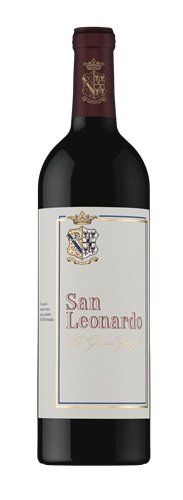 Vigneti delle Dolomiti San Leonardo 2020
Deep, almost impenetrable in its vital, thick red. Spicy fragrances, small summer fruits, and the breath of a lush autumn oak forest. The sip is even more enchanting than other memorable vintages: polished tannins, in tune with perfect acidity, for a persistence that has the inexhaustible.
Production area: The vineyards that give rise to San Leonardo are located within the ancient monastery walls. The soils are light and sandy for Cabernet Sauvignon and Carmenère; clayey with excellent draining power for Merlot.
Grape varieties: Cabernet Sauvignon, Carmenère, Merlot. Training system and planting density: Spurred cordon: 5,100 vines per hectare. Guyot: 5,100 vines per hectare. Double Trentino pergola: 1,800 vines per hectare. Simple Trentino pergola: 2,500 vines per hectare. Vineyard ages 25 to 75 years. Altitude 120-300 meters above sea level. Southwest-northwest exposure. Grape yield per hectare 50-60 q/ha for spurred cordon and guyot, 80-90 q/ha for double and simple Trentino pergola.
Production processes: Spontaneous fermentation in small concrete tanks for about 12 to 15 days with several daily pump-overs and délestage. Aging for 24 months 70% in barriques and 30% in medium toasted French oak tonneaux of first, second and third passage, followed by final blending. The wine is finally bottled and remains for at least 24 months in our cellars.
Alcohol content: 12.5% vol.
Serving temperature: 16 °C.
History: It was 1982 when Marquis Carlo Guerrieri Gonzaga devised an innovative winemaking technique, giving birth to what would become one of Italy’s best-known Bordeaux blends. He decided to parcel out the estate’s soils and vinify and age each variety separately to maintain its character. Only before bottling did he blend the wines that later gave birth to San Leonardo.