
We have received an interesting analysis from Luca Pollini, director of the Consorzio Maremma Toscana, regarding Stefania Vinciguerra’s editorial on the project to study a “distinctive” Tuscan white wine. We are pleased to publish it.
Hi Stefania,
I read your article with interest “Will Tuscany Have Its Own Great White Wine?” published a few days ago, and I find the topic you addressed to be extremely relevant even for a “red” region like Tuscany.
The Growth of Vermentino
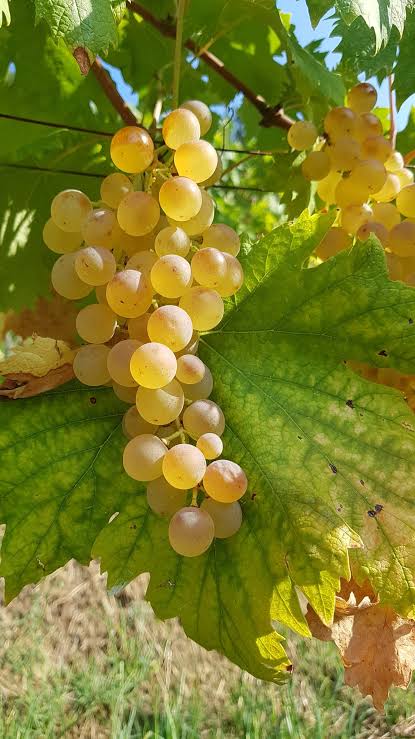 The Tuscan Maremma Consortium, as you well know, has already taken some steps in that direction by seeking to promote as best as possible what has become the second most widely grown grape variety in the Maremma, namely Vermentino. Therefore, we can only appreciate your valid point regarding the role that white wines may play in the future, even in Tuscany.
In the Maremma, the path has already been laid out. Vermentino is the most widely bottled wine in the appellation and accounts for nearly 32% of the entire DOC production. But the entire Tuscan coast is focusing on this variety as well, albeit with numbers significantly lower than ours. In any case, from Luni to Capalbio, all along the Tyrrhenian coast, the path toward creating a representative white wine already seems to be set.
My concerns arise when I think about the predominant part of the region—in terms of hectares of vineyards—where red grape varieties (first and foremost, of course, the Sangiovese) are by far the most widespread, and research and experimentation over the years have focused primarily on those grape varieties—especially Sangiovese—while almost completely neglecting the white varieties.
In my opinion, to better understand the path we should take, we need to understand the current situation, and that’s where the numbers definitely come in handy.
Understanding through data
In Tuscany, there are 59,200 hectares of vineyards registered in the vineyard registry (excluding all hectares used for nursery production and experimental purposes); of these, 50,792 are planted with red grape varieties (Sangiovese accounts for as many as 34,789, and the second most common variety—also a red grape—is Merlot with 5,050 ha), while white grape varieties cover only 8,408 ha (equal to 14.20% of the region’s vineyard area). Of this “white” area, the leading variety is Vermentino, with 2,242 ha, which, in 2026, surpassed Tuscan Trebbiano, which remained at 2,130 ha. Next, trailing far behind, are Chardonnay (852 ha) and Vernaccia di San Gimignano (771 ha), while Malvasia Bianca Lunga (also known as Malvasia del Chianti) now covers 443 hectares, and Viognier (the last white grape variety with over 300 hectares) stands at 336 hectares of vineyards.
Perhaps if we want to try to reflect on this a bit, we should start with these figures. Should we also bet on Vermentino in inland Tuscany? Or is it better to focus on “reviving” a traditional regional variety like Tuscan Trebbiano? Honestly, I’m not sure. I can only say that one of the native Tuscan white grape varieties that research has revived—by registering it in the registry and authorizing its cultivation starting in 2008—is theOrpicchio—which, in my opinion, is among the most interesting—doesn’t even cover 8 hectares of vineyards…
The situation in the Maremma
In closing, just a brief mention of the situation in the Maremma, which is somewhat different from the rest of the region. Of the 9,481 hectares planted with vines, white grape varieties cover 2,226 ha (23.48%). While red grape varieties cover 7,255 ha (76.52%). In the province of Grosseto, however, Vermentino, with 1,122 ha, is the second most widely cultivated variety behind Sangiovese (3,824 ha). But over the past 20 years (comparing 2006 to 2026), it has grown by 713%, while Sangiovese has grown by only 8%, so in the coming years the gap between the two grape varieties will certainly narrow further. And I think other white grape varieties will also gain ground, such as Ansonica and Viognierwill also gain ground. So I truly believe that the Maremma will increasingly become a region known for its white wines.