


An often underrated, but very tasty ingredient. We offer it in combination with Tedeschi's stunning Amarone della Valpolicella Marne 180 2019.
Ingredients for 4 people
2 fresh pork shanks; ½ liter red wine, rosemary, sage, 2 bay leaves, juniper berries, peppercorns, 1 carrot, 1 onion, 1 celery stalk, 1 clove of garlic, meat stock to taste, extra virgin olive oil, salt
Preparation:
Degrease the shank from the greasiest outer parts. Place it in a deep bowl with the herbs, spices and wine. Cover with food wrap and let marinate in the refrigerator for at least 6 to 8 hours.
Remove the shanks from the marinade and gently clean them. Clean the vegetables and cut them à julienne. In a saucepan, put the oil with the vegetables, add the shanks and brown them on high heat on each side until they get the typical crust. Then add the marinade and lower the flame. Cook slowly for another 10 minutes, then turn off and transfer to a baking sheet.
Meanwhile, turn on the oven to 160°C.
Place in the oven, add a few ladles of hot stock, and cook for about 2 hours, turning the shanks occasionally and checking that they never dry out. Add more broth periodically to prevent the meat from becoming tough. To check the cooking, look to see if the meat comes off the bone.
Once cooked, remove the shanks from the pan and serve hot with the vegetables and the cooking juices.
They can be served with roasted potatoes or polenta.
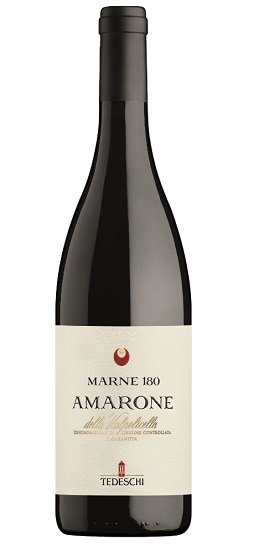 Wine pairing:
Amarone della Valpolicella Marne 180 2019 Tedeschi
Deep, bright ruby with a slight garnet hint. Gourmand, fruity nose with ripe fruit, blueberry, black cherry in syrup. Hints of mountain pine and rosemary. Attack the palate with fruit sweetness, then close dry with a nice persistence. Excellent drinking, memorable, modern character.
Production area: various vineyards located on the hills of Valpolicella.The different origin of the different grape varieties is important in order to obtain a well-balanced wine with good structure that only some individual areas of Valpolicella can give. Red clay and limestone soils rich in skeleton.
Grape varieties: 35% Corvina, 35% Corvinone, 20% Rondinella, 10% Rossignola, Oseleta, Negrara, Dindarella. Average age of the vineyard 20 years. Breeding the vines using the Guyot system. Planting density 5500 plants/hectare. Production 80 quintals/hectare.
Harvest:
late September, early October.
Production technique: Drying of grapes in fruit loft with humidity control of the environment about 4 months. Soft pressing. Alcoholic fermentation and maceration: 40/60 days/temperature 15° C. Maturation in Slavonian oak barrels for 30 months. Bottling and bottle aging minimum 6 months.
Alcohol content:
16.50% vol.
Serving temperature:
16-18° C.
Pairings: red meat. Aged cheeses.
Trivia:
the name “Marne 180” recalls the type of soil on which the vineyards are planted (marls) and their exposure from the southwest expressed in degrees (180).