
The sixth edition of the charity auction at Grinzane Cavour Castle raised 1,140,500 euros, plus 57,000 from the last barrel sold on November 8. The stars of the auction were the 2025 Barolo Vigna Gustava, the municipal lots, and the historic bottles. The proceeds will support social, healthcare, educational, and cultural projects, including initiatives benefiting vineyard workers.
The sixth edition of Barolo en primeur, a charity auction organized by the CRC Donare ETS Foundation and the Cassa di Risparmio di Cuneo Foundation, in collaboration with the Barolo Barbaresco Alba Langhe and Dogliani Protection Consortium. However, after some initially seemingly timid bids, at 8:30 p.m. on October 23, the event concluded with a new record: 1,140,500 euros raised. Added to this sum are the proceeds from the fifteenth and final barrique, which sold for 57,000 euros during the World Alba White Truffle Auction on November 8, also held at Grinzane Cavour Castle, via a live video link with Hong Kong.
The barriques from the Vigna Gustava vineyard and the historic bottles
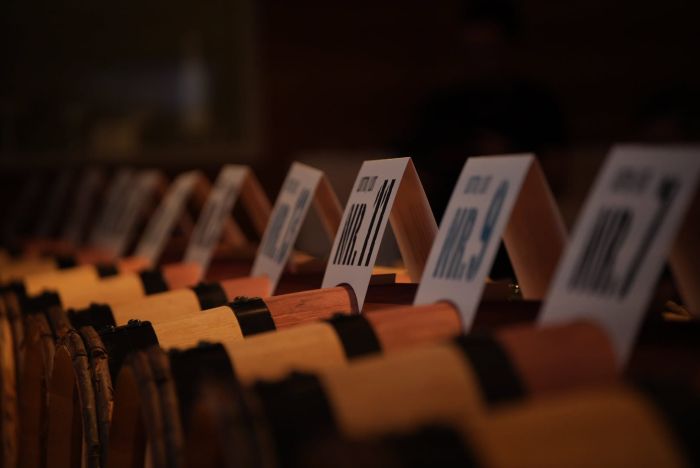
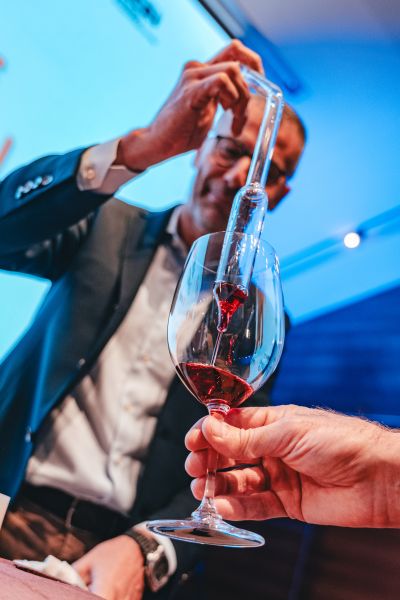
Philanthropists from Grinzane Cavour, New York, and London competed for 14 barriques of 2025 Barolo. The wine comes from the Vigna Gustava vineyard: nearly four hectares on the slopes of the castle, which were already planted with vines in the time of Camillo Benso, Count of Cavour, and have been owned by the CRC Foundation since 2019. The grapes were vinified by winemaker Donato Lanati, and each barrique will yield 270 bottles.
In addition to these, there were seven municipal lots of Barolo and Barbaresco, consisting of bottles, magnums, and jeroboams donated by 39 wineries in the Consortium: a total of 681 bottles, amounting to over 660 liters of wine. Among the new additions to this year’s event were also 31 historic bottlesfrom the vintages of 1996, 2004, 2006, 2009, 2010, 2011, 2012, 2013, 2014, and 2016.
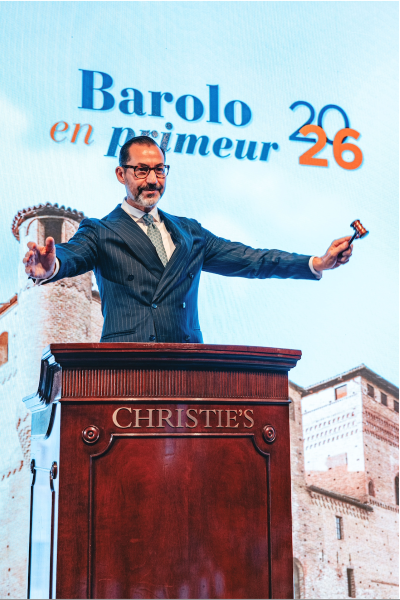
Once again, the person pulling the strings between the Langhe, the Big Apple, and the City was Cristiano De Lorenzo, director of Christie’s Italy. As is customary, the auction house waived its commissions for this charity event.
The auction reached its most intense moments with barriques number 6 and number 13, which sold for 90,000 and 70,000 euros, respectively, culminating in the tonneau, which sold for 370,000 euros. The project has thus the total raised since 2021 to 5,674,800 euros, in support of over 120 initiatives in the health, social, educational, and cultural sectors.
Supported Projects and Accommodations for Seasonal Workers

The funds raised will go toward numerous projects. Among the beneficiaries are the Alba School of Enology; the Cuneo Hospital Foundation, for the purchase of cancer diagnostic equipment; the HPL Foundation, for the creation of sustainable educational and social environments for families facing significant financial hardship; the Emporio della Solidarietà, which provides spaces where families in need can shop for free; and the PIME Foundation, to renovate a preschool in Cambodia.
Support is also provided to the Sandretto Re Rebaudengo Foundation, through an educational project for the elementary school in Guarene focused on preserving cultural heritage and protecting the environment; the IOM Association in Ascoli Piceno, which provides care for cancer patients, people with Alzheimer’s, dementia, or neurodegenerative diseases, and frail elderly individuals; the Maggie Foundation, for prosthetics and sports aids for children and adolescents with limb amputations; and Mother’s Choice, for support for pregnant teenagers in Hong Kong.
The CRC Foundation has specifically chosen to support two initiatives aimed at ensuring fair working conditions for seasonal vineyard workers.
- The first is the Accademia della Vigna, a program promoted by the social enterprise We.Co., which develops skills and promotes inclusion, with the goal of combining high-quality production with social sustainability.
- The second initiative is the opening of a temporary overnight shelter, in facilities provided by the City of Alba, for people experiencing homelessness and seasonal workers without stable housing—starting with those who work in the vineyards.
The label designed by Sol Calero
For the label on the bottles aged in barriques, which will be delivered to buyers in 2029, Venezuelan artist Sol Calero has chosen to depict a “Paisaje de vino”: a nighttime view of the Langhe, with hills and rows of vines stretching out in overlapping layers of green, turquoise, purple, and blue, a bright moon at the center, and golden and lavender shapes evoking stars and grape clusters.
The assessment of the 2025 vintage and the comparison with the climate
A result to which the quality of the 2025 vintage, which Donato Lanati considers the best yet produced for Vigna Gustava. Sergio Germano pointed out that, in the region, it was possible to harvest the Nebbiolo during the traditional October period, with moderate temperatures and a full, deep expression of the variety.
Lanati also emphasized the need to listen to nature and confront climate change on a daily basis. Knowledge and collaborative efforts are needed to preserve the identity of local viticulture and understand how the vines react to new conditions. This analysis also focuses on the cellular mechanisms and the activity of the enzymes involved in grape ripening, which, according to the winemaker, are responding differently than in the past.
The Gustava Vineyard and Cavour’s Legacy
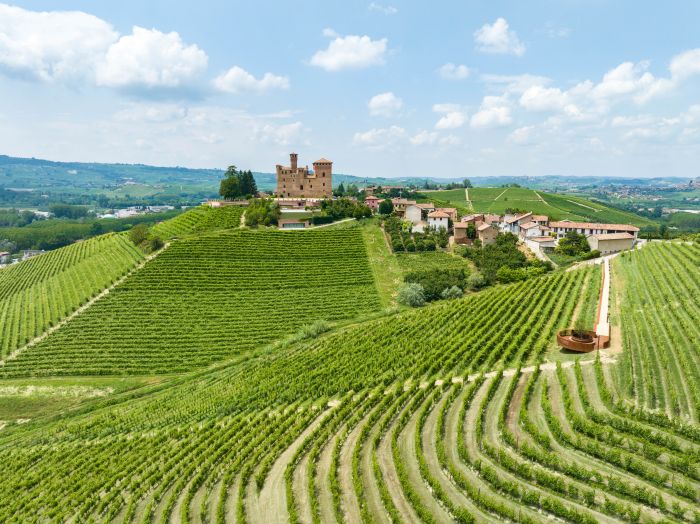
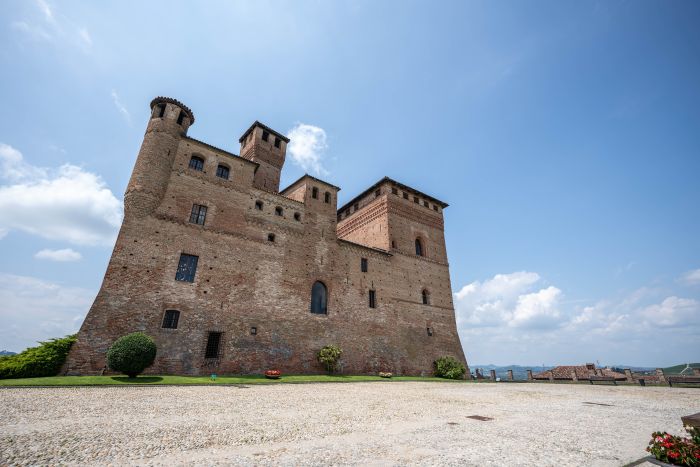
The Barolo produced at Vigna Gustava also reflects the connection to Camillo Benso di Cavour, in a documented history whose roots extend well before the unification of Italy. The castle in Grinzane is quintessentially a manorial castle, designed for work rather than war. Recent, as yet unpublished studies document the prominent role of viticulture in these lands as early as the 14th century, with the central importance of what is now the Vigna Gustava, historically known by the place name Vallone.
The following provide a “snapshot” of the historical landscape: “Notices sur le domaine de Grinzanne” dated November 1, 1818. They were written by Marquis Michele Benso di Cavour, Camillo’s father and administrator of the estate. They mention the “cinq anciennes fermes” and the “nouvelle ferme de Borsone.” Tpproximately 474 giornate in total, comprising fields, meadows, vineyards, and woods, within an agricultural system based on the relationship between pasture resources and livestock farming.
With Camillo, who had been in Grinzane since 1832, the nature of the landscape changed: it was no longer merely about managing what already existed. But an entrepreneurial vision that saw the vineyard as the engine of development and attention to detail as the means to achieve a larger vision, one aimed at the community. Innovations in vineyard management followed, such as the Guyot system introduced by Louis Oudart. Also introduced were Francesco Staglieno’s winemaking techniques, experimentation with French grape varieties, thousands of acacia and alder trees planted to benefit the vineyard, mulberry trees, and fertilizers.
A work that agronomist Lorenzo Fantini, in his “Monograph on Viticulture and Oenology in the Province of Cuneo,” in which he counts Cavour among the pioneers of Barolo. “The Count of Cavour produced a Barolo at his castle in Grinzane, using grapes from his own estate, that is perhaps no longer found today. That wine found its way to nearly every country in the world and was held in the highest regard at the time.”