

Paola di Mauro’s farm in Colle Picchioni is turning 50 years old. There will be celebrations and memories. But alongside the latter, Daniele Cernilli wants to reintroduce a story he wrote in 2014 that he has slightly revised, updating it a little. It was published in I racconti (e consigli) di DoctorWine, published by Einaudi Stile Libero. Paola left us in 2015, but her “soul” remains strongly linked to the incredible adventure that was the Colle Picchioni winery and its wines.
Encounter and an unexpected connection
Paola Di Mauro I met her in September 1979 and I remember the episode as if it happened yesterday. I had just finished my first lecture on tasting technique, given at a sommelier course in Rome, when an elegantly dressed lady approached me and asked: “Excuse me, but are you by any chance related to Alfredo Cernilli?” I immediately answered: “By chance, I am his son.”
I didn’t know it yet, but she and my father had been classmates at the Istituto Tecnico Commerciale Leonardo da Vinci in Rome for eight years, from 1931 to 1939. Then there had been the war, she had married, and they had lost touch. But most of all, I did not know that I was about to acquire a kind of second mother who, moreover, made wine and cooked like a great chef.
The difficult beginnings at Picchioni Hill
At that time she was really a novice as a winemaker. She was actually a lady from a good family, the owner of an established business, and Colle Picchioni, her small estate on the outskirts of Rome, was More of a vacation home than a winery. Making the wine was an old farmer unable to get anything that did not resemble vinegar for dressing salad.
She could take no more and one day told him: “If this is the wine she can make, then I’d rather try it myself, so much worse than that…”. He involved the trusty Bianca, a maid from Mantua capable of disassembling a truck in a couple of hours, armed himself with books and manuals and wine really made it. Much better than the farmer’s.
The turning point: study and decisive meetings
Her husband Henry, who left us several years ago at the fine age of 95, became seriously concerned: “But how, you’re almost a teetotaler, you’ve always been into hardware, now explain to me what’s involved in getting into making wine. Besides, you spend a lot of money and then it’s too much: you have to sell it. Do you realize?”
His attendance at the sommelier course was precisely because he realized that he did not even know how to taste wine. Besides. that course was attended by wine merchants and restaurateurs: lectured by Marco Trimani, a famous Roman winemaker, there was Severino Severini, a Michelin-starred restaurateur. In short, he was learning about wine and also risking selling what he was making.
The rise in the world of wine
I stumbled into this situation and became, of course, involved. I started hanging out with Colle Picchioni. Tasting the wines, giving advice, but mostly trying to convince her to use a wine consultant. He was in contact with Professor Michele Palieri, dean of the Experimental Institute for Oenology in Velletri, but he was more of a scholar than an operational oenologist.
So I introduced her to Giorgio Grai, legendary South Tyrolean winemaker. And the wines began to become excellent. I also introduced her to Gino Veronelli, who was enchanted by that energetic and determined woman, as well as an excellent cook.
A character out of the ordinary
Within a couple of years, that lady from the city’s good middle class had turned into one of the most charismatic and well-known of the small world of national vitienology. He met restaurateurs and journalists from all over the world, landed in the United States, and after a week the New York Times devoted a half-page article to her, an achievement that not even Angelo Gaja had managed to achieve.
Emanuela Audisio, one of Italy’s most brilliant journalists, wrote four major portraits of wine producers in la Repubblica. Piero Antinori, Angelo Gaja, Silvio Jermann and, surprisingly, Paola Di Mauro. Clear sign of an unusual personality.
The mature years
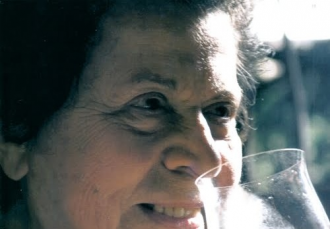 In the mid-1990s, after she turned seventy, her son Armando was able to “try” to give her a hand, and for a time there was a rather dialectical coexistence between the two. New wines were born, such as Le Vignole, an important white partly aged in wood, and the Marino Selezione Oro, which later became Donna Paola.
The winery became an indispensable point of reference for the wines of the Castelli Romani. In place of Giorgio Grai came Riccardo Cotarella, who more than a winemaker became a friend and adviser, so much so that he did not even get paid. “For Paola Di Mauro this and more.” he would say.
Legacy
Paola passed away in 2015, at more than 90 years of age. She had not set foot in the winery for some time. She merely sniffed the wines she made-and still makes very well. his grandson Valerio, with the afterthought, I am sure, that his were something else entirely.

