
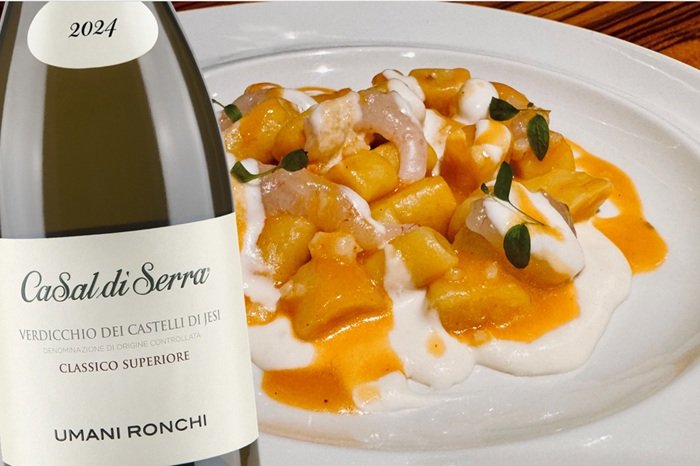
Embrace fresh ingredients and Mediterranean scents for Chef Giuseppe Mulargia’s recipe from theFH55 Grand Hotel Palatino in Rome. We drink together Verdicchio dei Castelli di Jesi Classico Superiore Casal di Serra 2024 Umani Ronchi.
A gnocchi recipe that transforms simple ingredients into a harmony of taste and color and first of all conquers with its enveloping fragrance: the sweet and slightly buttery of red potatoes intertwines with the intensity and delicacy of fresh pink shrimp, giving off marine notes reminiscent of the Mediterranean. The creamy velvety cream of buffalo from Campania DOP adds a touch of softness and freshness, while grated lemon zest gives a citrus explosion that lights up the palate, balancing flavors and textures in perfect balance.
Why we chose to pair it with the Verdicchio dei Castelli di Jesi Classico Superiore Casal di Serra 2024 Umani Ronchi?
- Lively and calibrated acidity → cleanses the mouth of creamy buffalo
- Citrus and floral profile → perfectly recalls lemon peel
- Net savoriness → enhances pink shrimp and bisque
- Medium structure → holds the plate without covering up its fineness
And this is the recipe:
Ingredients for 4 persons:
Gnocchi:
- 500 g red potatoes
- 200 g of 00 flour
- 1 small egg
- Salt to taste.
Pink shrimp bisque:
- 250 g pink shrimp (medium size)
- 50 g celery
- 50 g of carrot
- 30 g of onion
- 3 cloves of garlic
- 20 g of cherry tomatoes
- 100 g ice
- Extra virgin olive oil q.b.
- Salt to taste.
Mozzarella cream:
- 1 150 g buffalo mozzarella cheese
- 1 whole lemon
Procedure:
Prepare the gnocchi:
Boil red potatoes in plenty of salted water until soft. Drain them, mash them and collect them in a bowl. Add the egg, flour and a pinch of salt; knead until firm. Cover with plastic wrap and rest in refrigerator for 1 hour. Then form into strands, cut gnocchi about 2 cm thick and keep ready.
Try your hand at pink shrimp bisque:
Clean shrimp: keep the flesh aside and toast heads and carapaces in a 190 °C oven for 15-20 minutes with a drizzle of oil. Brown celery, carrot, onion, and garlic in saucepan with oil. Add roasted heads and carapaces, season, then cover with water and ice.
Bring to a boil, skim off foam, and reduce to half volume. Strain and reduce further to a concentrated bisque.
For the mozzarella cream:
Cut the mozzarella into cubes and blend until smooth and velvety. Adjust for salt.
Gnocchi cooking and presentation:
Cook the gnocchi in boiling salted water; as soon as they come to the surface, drain them in the pan with the bisque and toss with a drizzle of extra virgin olive oil.
On the plate, spread the buffalo cream, arrange the gnocchi in the center, add the pink shrimp and top with a grating of fresh lemon zest.
Advice from Chef Giuseppe Mulargia:
- Ensure that shrimp are culled before raw use.
- Those who prefer can add shrimp to the pan while stir-frying.
- The potato cooking water should be saltier than normal for perfect gnocchi.
In the chalice, chosen by Stefania Vinciguerra:
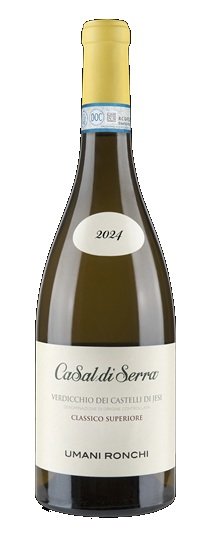 Verdicchio dei Castelli di Jesi Classico Superiore Casal di Serra 2024 Umani Ronchi
Straw yellow with bright golden hues. Essentially floral, wildflower, and fruity aromas of golden apple. Hints of lemon and fresh almond. Balanced and well-structured on the palate: full but not heavy. Well-calibrated freshness and savoriness accompany the sip toward a long, fruity finish.
Production area:
the Verdicchio Hills, initially only the Montecarotto vineyard and later with three other plots located in the most suitable areas. The vineyards, aged between eight and thirty years, extend on the two opposite sides of the Esino Valley, in the hilly strip ranging from 200 to 350 meters above sea level. The soils, which date back to Plio-Pleistocene formations, are very deep, loamy loam and medium limestone.
Grape varieties: 100% Verdicchio, grown organically, with Guyot training. The yield per hectare can reach 70 quintals.
Harvest: harvesting is done by hand, and normally takes place in the period from late September to the first decade of October. Particular care is taken in determining the time of harvest, which must coincide with the achievement of the best balance between sugar content, phenolic maturity and acidity.
Production processes:
After soft pressing, the free-run juice is rapidly cooled and then statically decanted. Fermentation, in temperature-controlled steel tanks between 16 and 18°C, continues for 10 to 15 days. The wine does not undergo malolactic fermentation. It ages in steel for about 5 months in contact with its own yeasts. This contact, during fermentation and in the aging phase, gives it richness and personality, without altering its balance and elegance. Bottled at the end of April, it rests further in bottle for several months.
Serving temperature:
10°C
Recommended pairings:
Ideal with fish dishes, stewed and grilled, shellfish and delicate but flavorful preparations. Roasted white meat and fresh cheeses.