


One hundred years of Paternoster: between the myth of Aglianico del Vulture, the new course dictated by the Tommasi family with Barone Rotondo 2020 and the recovery of an ancient snowfield, of great archaeological, social and geological value. Riccardo Viscardi tells us about it.
By now we all know: shooting stars do not really exist – they collapse and explode, sooner or later. But the image remains beautiful, romantic: the idea of tying them to a wish has always had something consoling about it, when wishes seemed like unattainable dreams.
Thus ends, on the Silver Arrow that takes me from Foggia back to Rome, our 24 hours dedicated to the hundred years of Paternoster, a historic and driving company in Vulture during the 30-year period 1985-2015.
The history and myth of Paternoster
The iconic Don Anselmo, dedicated to the founder, and the more modern Round represented two extraordinary interpretations of Aglianico del Vulture. They were born thanks to the volcanic energy of Vito Paternoster, initially with the collaboration of winemaker Leonardo Palumbo, then with his brother Francesco and nephew Fabio Mecca, still today the company’s winemaker.
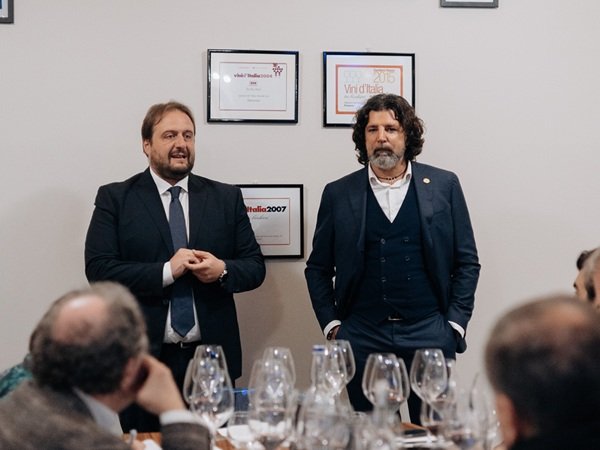
The first signs of some “production fatigue” were felt around 2010, but without affecting the quality of the two flagship labels. The subsequent Sale of the company to the Tommasi family (today Tommasi Family Estates) was supposed to bring new life and vigor, but the results, so far, are not visible. On the contrary, the opacities seem to have increased, thanks in part to the total exit of Vito Paternoster – a figure with an unwieldy character but evidently clear ideas.
The verticals of Don Anselmo and Rotondo
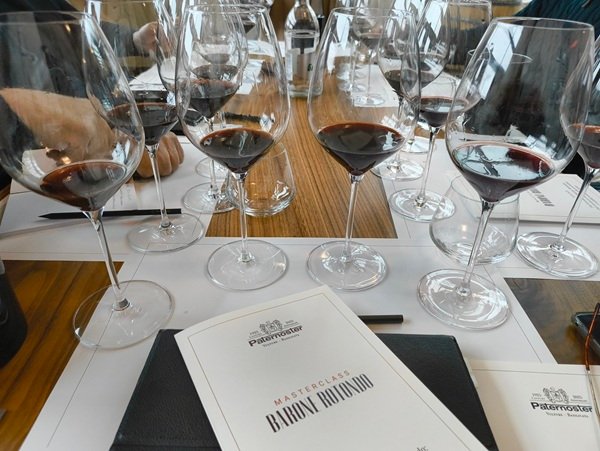
During the centennial celebration, two proposed verticals. One of Don Anselmo and one of Rotondo, designed to accompany the launch of the company’s new wine, theAglianico del Vulture Superiore Barone Rotondo 2020, which fully replaces the previous Rotondo.
The verticals showed considerable variability among bottles of the same vintage, probably due to uneven batches of corks, which is why it is difficult and misleading to describe them in detail.
In general, Rotondo has shown a better retention over time, especially on the olfactory level, while Don Anselmo, with its austere bearing, offered taste sensations that were deeply territorial and fascinating.
The new winery and receptive project
 The debut of Barone Rotondo 2020 was associated with an evocative “aging cellar” personal, the result of the beautiful recovery of an ancient neviera.
In addition to the archaeological and social value of the project, the structure itself is striking, allowing us to “read” the geological history of Vulture. From pre-volcanic origins, to eruptions, to collapse, to present times – as if one were leafing through a vertical book of rock and time.
I don’t know how functional the new cellar is from a technical point of view, but the excitement of entering is unquestionable. Also planned for the future is a accommodation facility in a beautiful villa within the estate, which is still being renovated today.
La winemaking cellar instead remained unchanged. Large, but somewhat confusing, with the fermentation, maturation and bottling stages concentrated in the same room-a now dated choice. The spaces, however, would lend themselves well to a more modern rationalization.
The dinner and the style of the territory
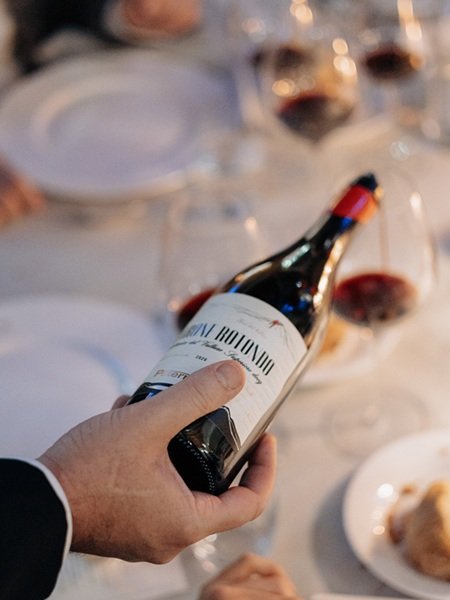

To end the day, in the company’s well-kept reception and shop spaces-which also house the offices-an extraordinary dinner. Created by Michelin-starred chef Vitantonio Lombardo, the region’s top chef.
A menu perfectly balanced between innovation and Lucanian tradition, with flavorful dishes designed to best enhance the house wines.

But what does Round Baron 2020 look like?
Only 2,500 bottles, offered at a price of approx. 85 euros.
A wine with few lights and many shadows right from the nose, which, although intense and sharp, is dominated by warm notes of jam, with slightly smoky, almost “bitter” hints, if I may be so bold. The taste texture is dense and compact, but lacks agility and adequate tannic support to balance the softness. In the finish, sensations of density and warmth, making it a wine suitable for those who like powerful and muscular styles, but not to those seeking elegance and freshness.