

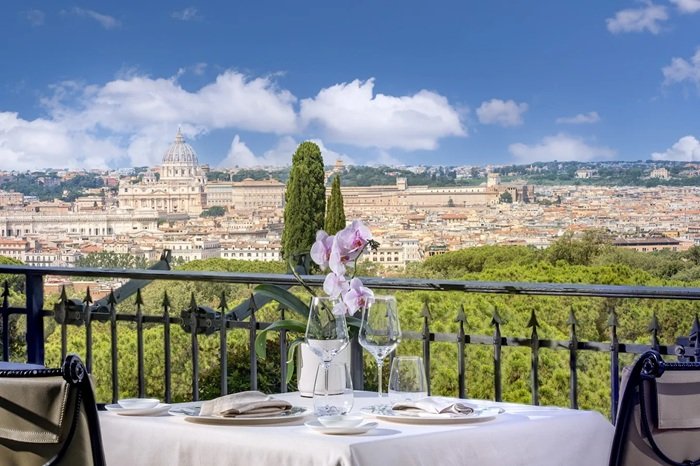
Different cultures are also grafted into the Capital in terms of cuisine: alongside the poor cuisine of offal-the so-called “fifth quarter”- we recognize in many recipes a Roman-Jewish matrix, ending with the country cuisine of the Castelli Romani. Daniele Cernilli tells us about it.
Rome has always been a patchwork of different cultures and its gastronomic traditions can only reflect its cusine.
There are in this regard at least three major gastronomic strands that can be traced back to a genuinely Roman-Latium tradition. These three matrices are the “fifth-quarter” cuisine. Typical of the Testaccio neighborhood, that Roman-Jewish of the Ghetto and the Romanesque cuisine of the suburbs and of the countryside of the Castelli.
The typical dishes of the fifth quarter (the offal cuisine)
The “fifth quarter” cuisine is one of the most interesting material culture phenomena in the city. It originated in Testaccio, historic site of the slaughterhouse, the“slaughterhouse”, where many of the neighborhood’s residents worked.
The “vaccinarians,” as they were called in the last century, were paid partly in money and partly with slaughter scraps. The “fifth quarter,” consisting of the Offal. Tail, stomach, intestines, liver, lung, heart, kidneys, sweetbreads, grains (testicles) and brain. Those parts of cattle, that is, that the wealthy of the time were careful not to consume.
Foods that were difficult to cook, which even induced revulsion in people with overly refined palates. Poor foods, above all, but very nutritious and therefore especially prized by those who worked hard and therefore needed cheap protein.
The gastronomic tradition of Testaccio was born precisely from the ‘need to make those discarded parts edible. Through long cooking or use of particular ingredients that hid in part of the strong flavors and not entirely pleasant.
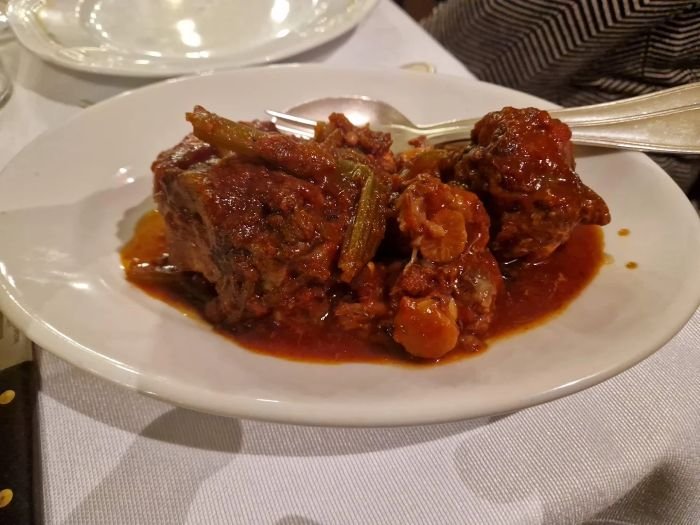
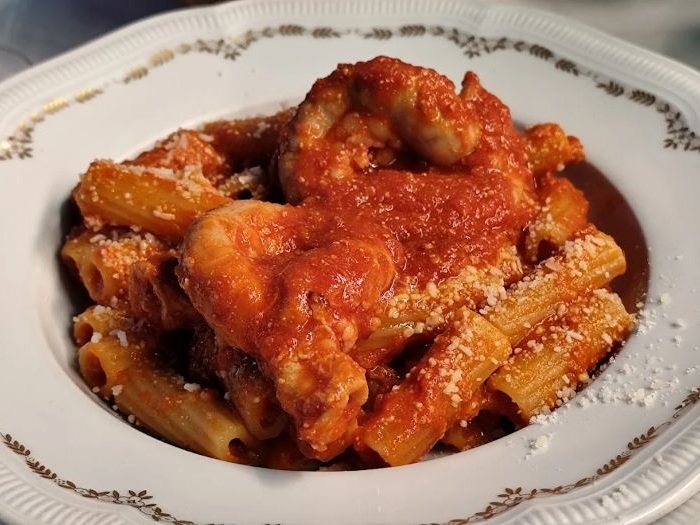
Dishes such as the coda alla vaccinara, browned first in lard and then stewed over very slow heat for hours in tomato. With added flavoring elements such as pine nuts, raisins, even bitter cocoa. Or like the ” pan“, made with all the offal of the “corata” cooked in a pan with wine and vinegar. Or even as the coratella d’abbacchio with artichokes and pajata (fasted calf intestines) cooked over charcoal or cooked in tomato and used to season rigatoni.

But the main dish of this neighborhood culinary tradition in all likelihood is the trippa alla romana. Boiled with herbs and then mashed in tomato sauce with added Roman mint, then served with a sprinkling of pecorino cheese-a real treat.
The Roman-Jewish traditional cuisin
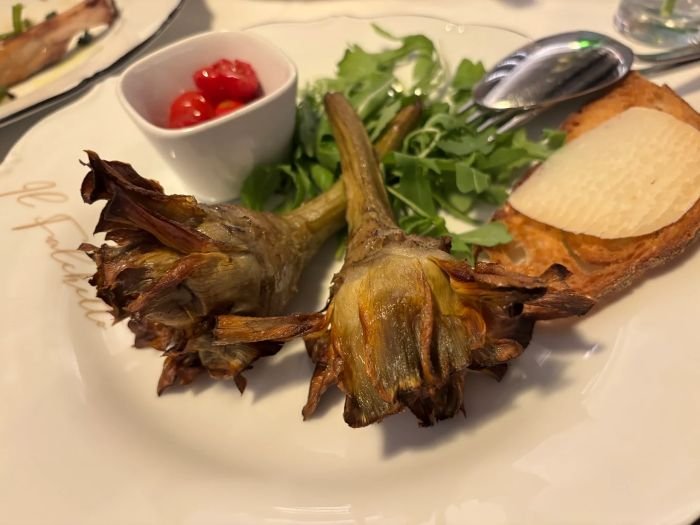
From Testaccio to the Ghetto one moves no more than a couple of kilometers, but the cuisine instead seems to come from another world. The somewhat crude flavors of offal are replaced by those more refined and fragrant fried foods. The sumptuous artichokes alla Giudìa, the zucchini flowers stuffed with mozzarella and anchovies, the cod fillets, and a range of recipes. Partly mediated by the Sephardic Jewish tradition, which are especially exalted in the field of dry pastries.
An example for all is the classic cottage cheese cake, a dessert of clear Jewish ancestry, representing the ultimate summit of the city’s pastry art. Even today in the bakeries of the Ghetto, in Piazza Costaguti or at the Portico d’Ottavia. Fragrant ricotta cakes make a fine display, especially early in the morning, and flood all the surrounding places with their fragrance.
Somewhere between Roman-Jewish cuisine and the more typical cuisine of the surrounding countryside is a dish as tasty as it is refined, the pasta and chickpea soup with rosemary and garlic, prepared in different versions, with classic cannolicchi but also with egg quadrucci or broken spaghetti. Another point of contact can be represented by the pasta cacio e pepe which, however, has entered the gastronomic use of other quarters so much with such different preparations (cheese simply placed on freshly drained pasta, or put as a binder for the mantecatura in the pan of the pasta itself) that it cannot be considered a unique recipe.
The cuisine of the suburbs and the countryside
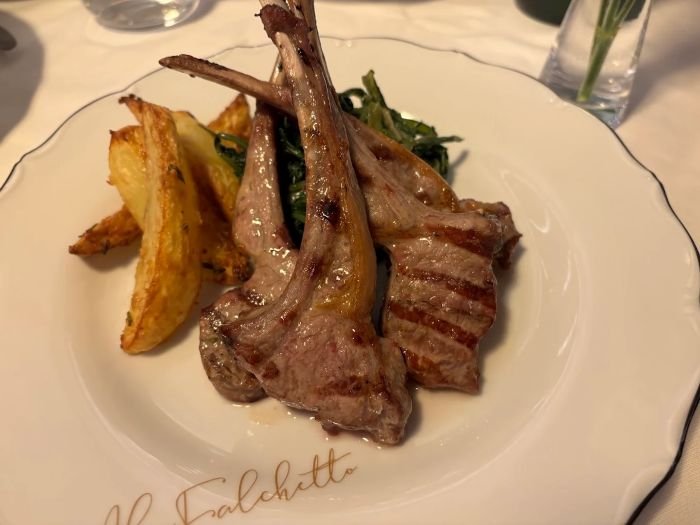
But let’s talk about the last of the three Roman cuisines, that of the suburbs and the countryside. This is the kingdom of abbacchio and chicken. Abbacchio alla cacciatora, with white wine and vinegar, rib eye a scottadito, abbacchio brodettato (in fricassee), baked abbacchio with potatoes. Chicken deviled, fried and peppered, chicken with peppers, roast chicken.
But there is also the realm of some very Roman pastas, such as those with the so-called “fake sauce,” without meat, even more so than the matriciana, which is more of an urban variation of Amatrice’s “gricia,” without tomatoes. Bucatini alla matriciana, and not “all’amatriciana,” then, because they originated in the late 19th century in the La Matriciana restaurant

While the discourse can only be different with regard to carbonara, which is a dish of dubious Roman-Latian origins and was probably “fine-tuned” by American soldiers, during the last war, who topped their spaghetti with a bacon egg, aclassic dishof Anglo-Saxon tradition.
Finally, some traditional and entirely Roman preparations should not be forgotten, such as the different versions of pasta e fagioli, rice with endive, puntarelle with anchovy sauce or tomato snails with mint, typical of the San Giovanni district where they are even celebrated with a specific festival on St. John’s Day, June 24.
And similarly, some beef recipes should not be forgotten, again more or less inspired by the need to recover the less noble and valuable parts of the butcher’s. Here, therefore, is muscle stew with stewed potatoes, brisket alla fornara, boiled beef tongue, and breaded and fried boiled meatballs and potatoes or minced meatballs.
Lack of fish
As can be seen in the Roman tradition there is a scarcity of the fish cuisine. Aside from cod fillets, aliciotti with endive that can hardly be found anymore, and ciriole del Tevere or cuttlefish with peas, other dishes almost of the allor disappeared, to find seafood cuisine one must draw on the traditions of the coastal towns of the province, such as Anzio and Civitavecchia, places famous for sumptuous fish soups.
And more or less the same thing happens with the mushrooms, widespread in the recipes of castle cuisine, but almost absent in the urban tradition proper.
