
Further “rescue” of an indigenous grape, this time from Lazio, by GRASPO‘s technicians, who have been studying it for years: it is the Uva Greca Puntinata, which has nothing in common with the Greco grape, but is a variety in its own right that was in danger of disappearing.
This is a story of many voices, where a fate common to so many Italian wine-growing areas and the stubborn determination of a group of prominent oenology professionals who, once retired, decide to devote themselves to the recovery, study and valorization of rare or abandoned grape varieties, especially in territories with little explored wine genetic heritage. In short, my ironic definition, those bad boys of GRASPO.
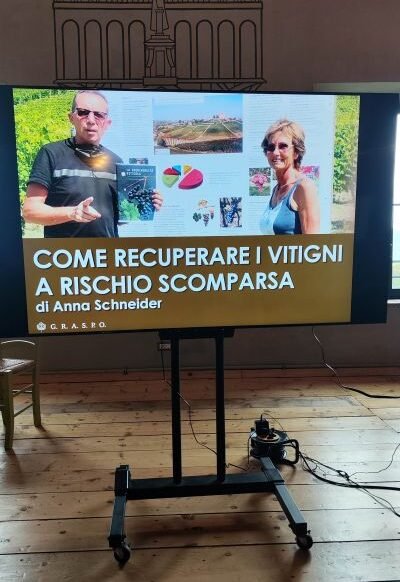 Now I’ll tell you: last spring my friend and colleague Carlo Zucchetti phoned me to invite me to S’Osteria 38, the realm of the very talented Elisa Calanca, in Acquapendente (VT), for a day of study dedicated to theGreek Pointed Grapes: a local grape that has almost disappeared and was once very successful. Could I have declined the invitation?
The room was packed, a few colleagues, some wine producers, a few regional technicians and two of the founders of “Ampelographic Research Group for the Safeguarding and Preservation of Viticultural Originality,” namely GRASPO, of which, before that moment I was also unaware of its existence. They were Aldo Lorenzoni and Luigino Bertolazzi. Two prominent retired winemakers who are overseeing the re-discovery of the local Greca Puntinata grape. A grape that until after World War II, called only as Greco, was cultivated and gave rise, with others, to a local white wine whose fortunes were undeniable, flooding the Roman market but also in parts of northern Italy. Then, the common story of the success of international grape varieties and the cooperative system meant that this grape in a few years practically disappeared, until it almost risked extinction.
Do native grape varieties respond better to climate change?
Now that the global warming raging and creating enormous problems for viticulture, a karst current of thought is emerging: could not our native grape varieties be the cultural answer to these problems? Could they not then respond better to these sudden changes?

Those bad boys from GRASPO, and not only them, think that yes, they could at least help. So they set out to find the forgotten, endangered native grape varieties, identify the rare vintners who still own a few and involve them in the project as Custodians.
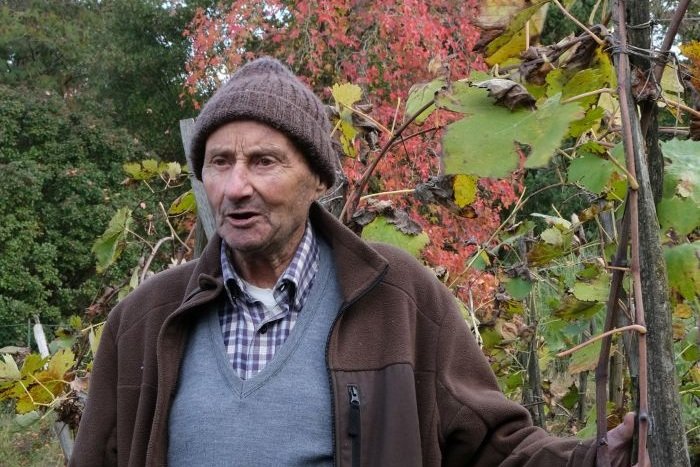
In Acquapendente, the janitor was Alvio Fusi, recently deceased, but now safely continues his son Andrea. The few vines that Alvio kept were identified by Massimo Bedini, former Director of the Monte Rufeno Nature Reserve, where that vineyard was planted. Alvio thus allowed GRASPO to prune, care for and make wine from his very few vines of Uva Greca Puntinata, of study its DNA, so much so that it was included in ARSIAL’s Lazio regional registry. Register created to To safeguard native genetic resources of agricultural interest. and which, so far, has 44 more wine grape varieties registered, with 10 more in the process of registration. Do you understand what genetic capital, what cultural wealth we are talking about?
Greca Puntinata Grapes are not related to the Greco grape variety.
I am obliged to point out that the Uva Greca Puntinata has nothing in common with the common Greco grape, not even from a genetic point of view. Only that the peasants of that time called it that and now, in order not to lose its memory the characterizing adjective Puntinata has been added, since its berry has an obvious dark navel.

Soon, hopefully within a few months, the existence of this grape should be nationally formalized, placing it on the appropriate National Registry, thus enabling its dissemination, cultivation and use. As the GRASPO people say: Grapes of the past for the wines of the future.
I will keep you updated on further developments and continue to follow GRASPO’s work. Because of these vanished grape varieties between northern and southern Italy, they have already saved more than a hundred (As we have written before, here e here, n.r.d.), they wrote a beautiful book on it that won a prestigious international award, they also made wines from it, of which I tasted a dozen. What do you say, do these previews tickle your interest?