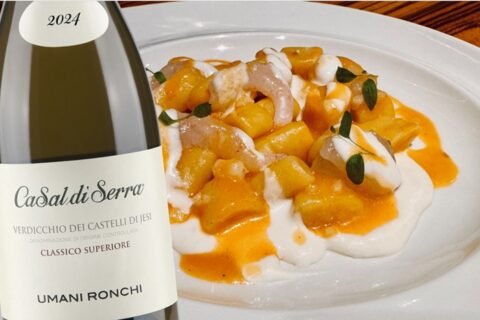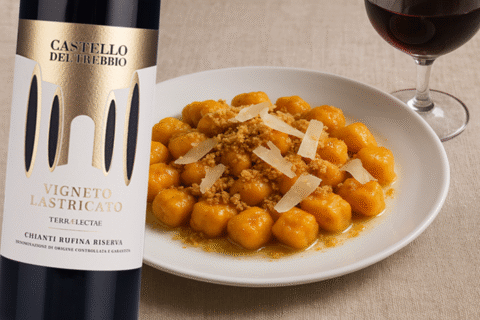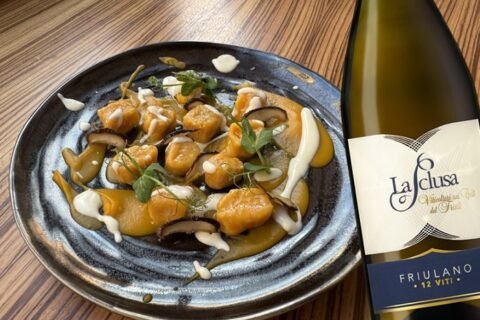

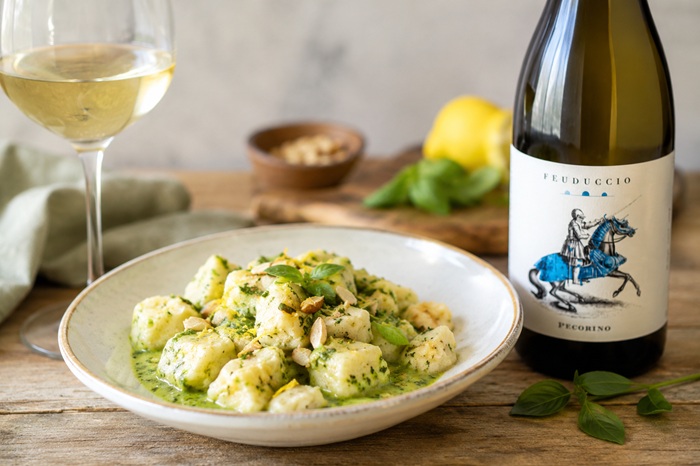
A summer recipe that’s not too complicated (it does require a bit of manual work to knead the gnocchi), which pairs very well with the Terre d’Abruzzo Pecorino Feuduccio 2025 Il Feuduccio. The zucchini cream and ricotta bring out its mellow notes, while lemon and fresh herbs enhance its freshness.
Ingredients for 4:
- 500 g of well-drained sheep’s milk ricotta
- 120 g of flour
- 1 egg
- 60 g of grated Parmigiano Reggiano
- fresh thyme and marjoram
- salt and pepper
For the cream:
- 3 zucchini
- 1 shallot
- extra virgin olive oil
- zest of 1 untreated lemon
- 40 g of sliced almonds
- a few basil leaves
- optional: burrata or stracciatella (for the Cerasuolo version)
Directions:
Mix the ricotta, egg, Parmesan, chopped herbs, and flour until you have a soft dough. Form the gnocchi, using a fork to help.
Sauté the shallot in a little oil, add the zucchini slices, and cook for about ten minutes. Blend with basil, a drizzle of oil, and a little of the cooking liquid until to achieve a smooth cream.
Boil the gnocchi, transfer them to the pan with the zucchini cream, and gently stir until creamy.
Top it off with grated lemon zest, toasted almonds, and ground pepper.
In the glass, chosen by Stefania Vinciguerra
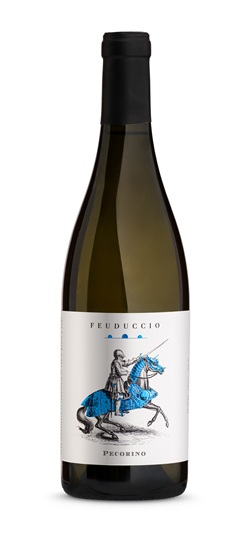 Terre d’Abruzzo Pecorino Feuduccio 2025 Il Feuduccio
100% Pecorino. Aged on fine lees in stainless steel. Pale straw yellow. A refined and crisp nose, with notes of white peach, cedar zest, rosemary, and subtle hints of wildflowers. A barely perceptible softness on the palate, immediately balanced by lively acidity. Dynamic texture, with savory notes that accompany the sip through to a finish with good length.
Production area: Vineyards on the cool, high hills of Orsogna, in the heart of the Annunziata Regional Park, in a stunning hilly area that stretches from the foothills of Mount Majella to the Adriatic Sea. Altitude of the vineyards: 432 meters above sea level; southeast and southwest exposure; soil with a mixed loam-clay and calcareous structure.
Grape varieties: 100% Pecorino, trained using the spurred cordon method. The number of vines per hectare ranges from 1,600 (in the older vineyards) to 4,000. The yield is 70 q/ha.
Grape Harvest: third ten-day period of August, with manual harvesting.
Production processes: Gentle pressing of the grape clusters in a press with low-temperature must extraction. Fermentation begins at a controlled temperature in small-capacity tanks. Aged on the fine lees in stainless steel tanks to ensure freshness, savory notes, and citrus/herbal aromas, followed by 3 months of aging in the bottle.
Alcohol content: 12.50%
Serving temperature:
10°C.
Recommended pairings: seafood appetizers, shellfish, pasta dishes with vegetables or seafood, ricotta gnocchi, baked and grilled fish, light fried dishes, white meats, fresh cheeses, and Mediterranean cuisine.