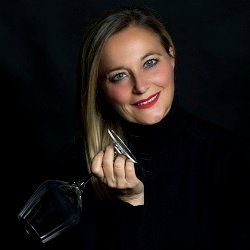
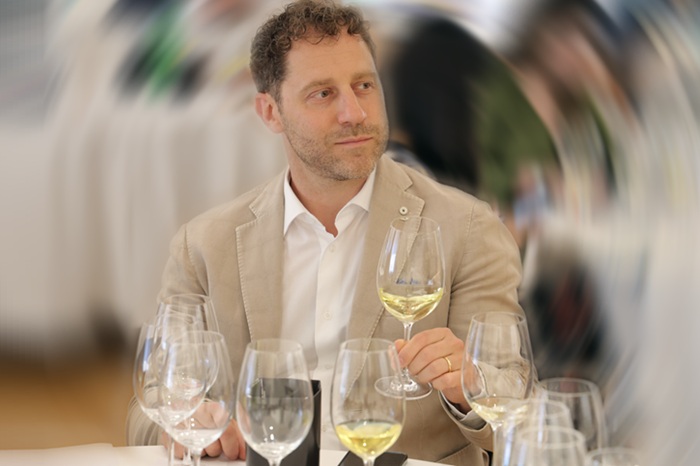
“At Cantina di Solopaca, quality and the identity of the region will be our top priority,” says the new winemaker Marco Giulioli, interviewed by Antonella Amodio about quality, sustainability, and the future prospects of the cooperative in the Sannio region.
After a career that has taken him to some of the most prominent Italian and international wineries, Marco Giulioli is the new winemaker at Cantina di Solopaca. After graduating with honors in Viticulture and Enology from the University of Tuscia, he gained experience in France, in the Médoc, in Umbria, and in Sardinia, before holding a leading role for over fifteen years at Cantina La Guardiense, where he oversaw the entire production process—from sparkling wines to still wines—while also working alongside consultant Riccardo Cotarella. Since 2023, he has been working as a consulting winemaker for various wineries.
Giulioli now faces a major challenge as the head of one of the leading wine cooperatives in Southern Italy. The Solopaca Winery It brings together hundreds of winegrowers who cultivate a vast vineyard estate spread across Solopaca and numerous municipalities in the Sannio region, making it one of the most significant organizations in Campania’s wine industry. It is led by the President Carmine Coletta, who was also recently elected president of the Sannio Wine Protection Consortium.
We spoke with the new winemaker about the region, quality, sustainability, and the cooperative’s future prospects.
What convinced you to accept this new position?
I was won over by the passion and strong drive for renewal that I sensed right from my first meetings with President Carmine Coletta and the entire team. I found an ambitious project, focused on innovate and improve without losing touch with the local community. It is this shared vision that prompted me to accept the challenge.
What impression did you get of the Solopaca Winery, and where do you plan to start?
The first thing that struck me was the human warmth of the people who work at the winery. I found competence, a willingness to help, and a strong sense of belonging. That’s why I want to start with the people: any change must be embraced and understood by those who are part of the company every day. Only then can it become sustainable and produce concrete results.
In a cooperative, the most important asset is its members. How do you envision building a dialogue with the winegrowers?
The members are the heart of the cooperative. They are the ones who preserve the region’s viticultural heritage and determine its quality. Dialogue must be ongoing and based on trust, competence, and shared goals. My commitment will be to highlight their work, so that their dedication in the vineyard is properly reflected in the quality of the wines.
What will be the priorities of your work in the first few months?
The priority is to understand. I don’t think a winemaker should arrive with ready-made solutions. Before the harvest, I want to gain a thorough understanding of the winery’s operations, listen to those who work in the cellar every day, and to observe every stage of the production process. Only then will it be possible to implement any improvements, always in a collaborative and informed manner.
How can we highlight the identity of a region through winemaking choices?
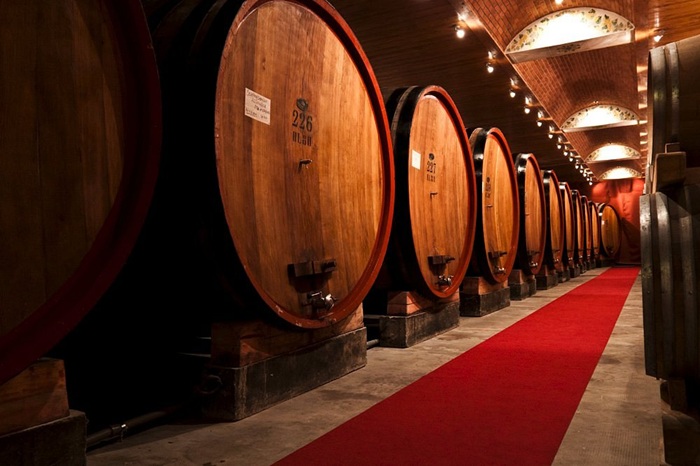
A cooperative like this brings together so many different identities. Every vineyard tells a story shaped by its soil, exposure, elevation, and human effort. Our goal is to highlight these differences through careful winemaking practices that bring out the identity of the grape varieties and the vintage, without making the wines uniform.
Innovation and tradition: Where do you think changes can be made without losing the character of the wines?
Innovation does not mean standardization. It means managing the production process with greater precision, while respecting the identity of the region. The goal will be to highlight the distinct vineyard areas through targeted winemaking techniques, so that each wine can express the unique characteristics of its place of origin.
Which grape varieties do you think still have great potential to be realized?
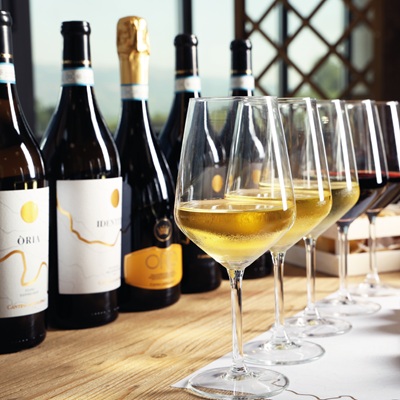 I believe that many grape varieties from the Sannio region still have plenty of room to grow, especially in terms of longevity. I’m thinking of Falanghina, Barbera del Sannio, and Aglianico—including the rosé version. These are varieties that can produce wines capable of evolving over time, revealing the terroir from which they come with ever-greater depth.
Sustainability is now a priority. What concrete actions do you plan to implement in the vineyard and in the winery?
In the vineyard, it will be essential to support our members with increasingly targeted technical guidance, optimizing our efforts and reducing unnecessary work. In the winery, on the other hand, we will aim for a more efficient management of production processes, while reducing energy consumption and prioritizing practices that better respect the natural course of fermentation.
What is your production philosophy, and how will it be reflected in the style of the cooperative’s wines?
At a winery like Cantina di Solopaca, the production process takes precedence over the philosophy of any individual winemaker. One does not come here to impose a method, but to understand its dynamics and bring out the best in them. My task will be combine skills and experience within an already established system, improving it where possible. I believe in A down-to-earth approach to winemaking, one that respects the terroir and produces authentic, distinctive wines with great character.
What goal would you like to have achieved in five years, from a quality and business perspective?
From a quality perspective, I’d love to open a bottle from the 2026 vintage and find that all its freshness and its ability to reflect the vintage remain intact. That would be a sign of work carried out with foresight. From a commercial standpoint, however, my goal is not simply to increase sales, but increase perceived value of the wines from the Solopaca Winery. I would like every label to be recognized as an authentic expression of the region and of the quality that this cooperative is able to offer.