

Located in Panzano in Chianti, one of the Uga’s where Sangiovese is powerful and structured, Tenuta Casenuove under the impetus of new owner Philippe Austruy and the drive of director Alessandro Fonseca-is looking fierce and ready for the challenges of the future. Sissi Baratella tells us about it.
Tenuta Casenuove has officially entered its modern era. This is only after going through “Middle Ages and Renaissance,” which run from 2015 to 2018 and 2019 to 2021, respectively. From 2022 to the present, we can finally consider ourselves to be. arrived in what for Tenuta Casenuove is and will be the future. As many as ten years of handover between the territory, the new ownership and the new team more tightly knit than ever.
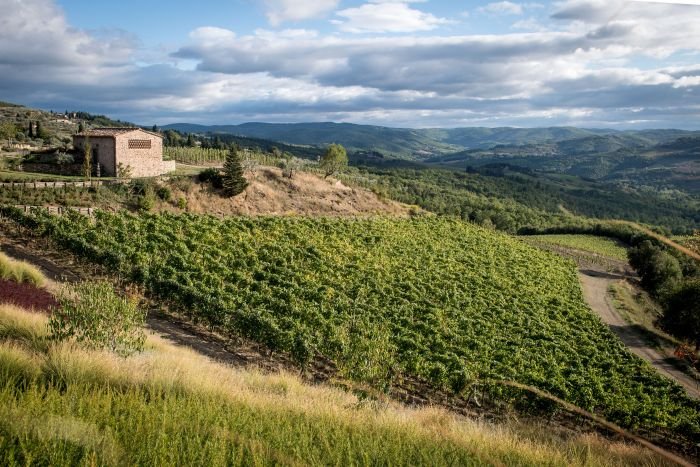
Tenuta Casenuove is located in the Chianti Classico Docg area. Halfway between Siena and Florence, in Panzano in Chianti. Technically we fall within the municipality of Greve in Chianti but Panzano claims its own identity and independence in the form of Uga. The most vine-growing in the area and the one that at the same time boasts of an excellent, and well-distributed biodiversity with presence of forests and olive trees. Here Sangiovese is powerful, gives alcoholic and structured wines, gives hints of red and black fruit and tannins that, depending on the varietal, can be more or less elegant but always present and tenacious.
The Estate
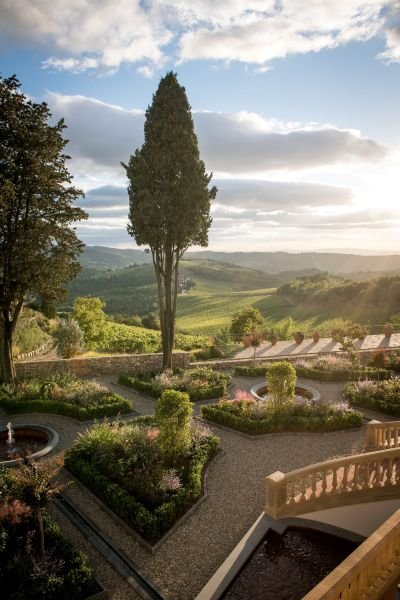
With its 120 hectares, the estate is purchased by Philippe Austruy in 2015: entrepreneur, art collector and lover of good wine, already the owner of other wine estates in Europe. So it was in 2015 that he began the revolution, immediately entrusted to Alessandro Fonseca. The director from the production side is supported by the young oenologist Cosimo Casini, in turn assisted in the winery by the stubbornness of Maria Sole Zoli, also an oenologist.
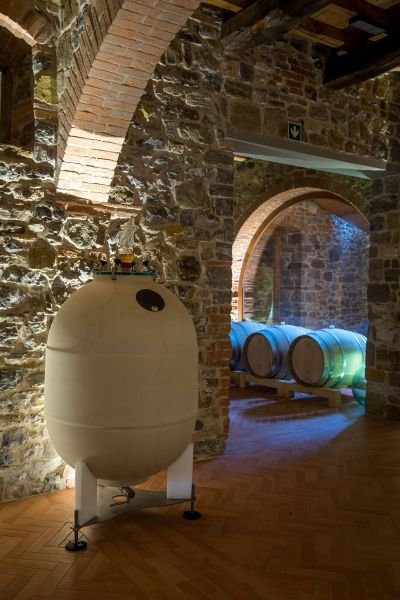
New vineyard plantings (from initial 14 hectares under vine to doubling), conducting organic certified, new spaces used for production where must reign order, technology, functionality and cleanliness. New materials, such as ceramics, and a lot of experimentation also in collaboration with university institutes.
The result today are wines respectful of the grape variety and the type of wine, necessarily the child of a geographical unit that is not afraid to tell its story with sustained alcohol degrees, but a lot of complexity and balance for a result that is not out of fashion but rather a solid reference.
Knowledge and the path to rebirth
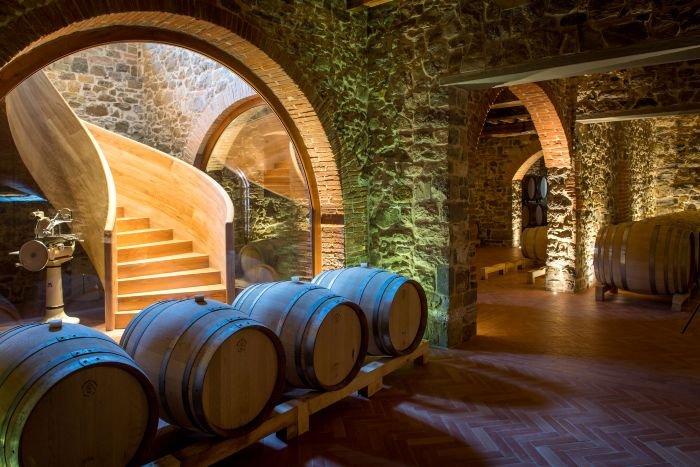
It took four years to get to know each other having to inherit vineyards and wines. The equipment was actually replaced and supplemented early on by inserting new woods, maintaining concrete, steel. Among the most significant interventions in the field was the change from cordon to guyot training form. The result: clusters with more homogeneous ripening, tending to be sparse and very balanced.
85% of production is berry Sangiovese, with naturally low yields around 40 q/ha. Among the revolutions in the winery certainly the introduction of complementary varieties such as the Canaiolo, the subject of studies and experiments also in collaboration with the University of Enology of Pisa. The use of partial carbonic macerations, the use of cold on the bunches, a valuable ally to ensure fruit integrity and optimal extractions. As for the increasingly larger woods at the expense of barriques.
Following the tasting of 10 vintages of Chianti Classico, typically vintage wine, the company’s path and direction are quite clear and very much in line with what is expected. The key word turns out to be. fruit, crispy, fresh. Tannin present and unfailing, but ripe. A real support to the structure that, thanks to solid foundations, is not intrusive. Emerging at times, depending on the vintage and its evolutionary state, are some balsamic hints homage perhaps to the use of wood, perhaps to the surrounding forests.
Production
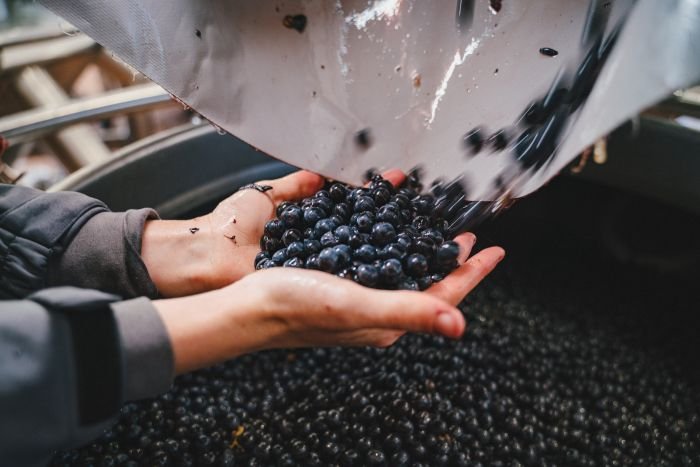
Attested at around 80,000 bottles per year or so. Focused on Chianti Classico, Riserva and Gran Selezione. Also peeping out is a more easygoing version of Sangiovese, in pink and refermented in an autoclave, pleasant and perfect for summer days. In fact, the estate is also hospitality with luxury rooms and suites.
 Chianti Classico 2022
Score: 92/100
Average price: € 25,00
95% Sangiovese, 5% Canaiolo. Selection, followed by fermentation in cement. Maturation for 12 months between cement and large wood. Intense ruby. Fruity nose with distinct plum and cherry notes. The palate is balanced with creamy sensations. Tough tannins persist pleasantly giving depth to the sip.
Chianti Classico 2023
Score: 92/100
Average price: € 25,00
95% Sangiovese, 5% Canaiolo. Selection, followed by fermentation in cement. Maturation for 12 months between cement and large wood. Intense ruby, the nose immediately gives balsamic notes. The attack also on the palate is spicy with notes of dark fruit. The overall sensation is of softness and at times sweetness given by a not inconsiderable complexity.