

In Florence, a tasting that shows how the goblet can completely redefine the perception of wine. Francesca Granelli talks about it.
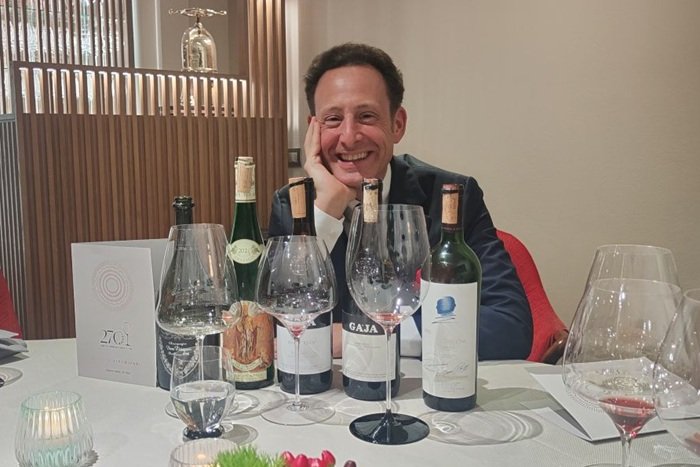
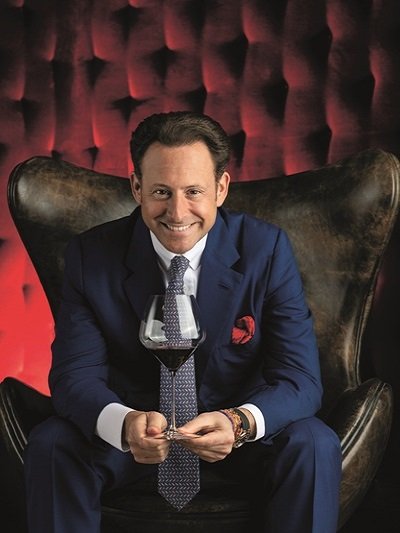
In the heart of Florence, in the spaces of Enoteca Pinchiorri, theory becomes practice. The tasting guided by Maximilian Riedel doesn’t just tell the story of wine: he puts it to the test, exposes it to variables that normally remain invisible, first and foremost the shape of the goblet.
Result is an experience that leaves no room for “romantic” interpretations, at least not only those: here we are talking about precision, the physics of taste, and the control of perception.
The chalice as a technical variable
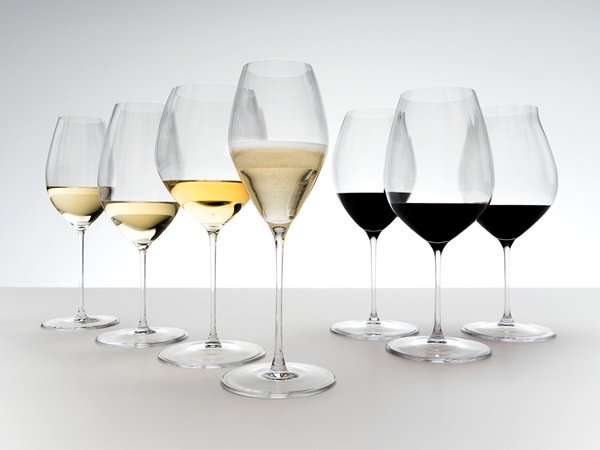
The tasting is developed through the use of different lines signed Riedel, each designed to interact with specific types of wine. Although aesthetics play a very important role, it is not just about that. Rather, we will call it sensory engineering: every curve, every opening, every volume changes the behavior of the wine in the glass and, consequently, in the mouth.
The question is no longer whether the glass affects the wine-but how much.
Wines: different trajectories, same principle
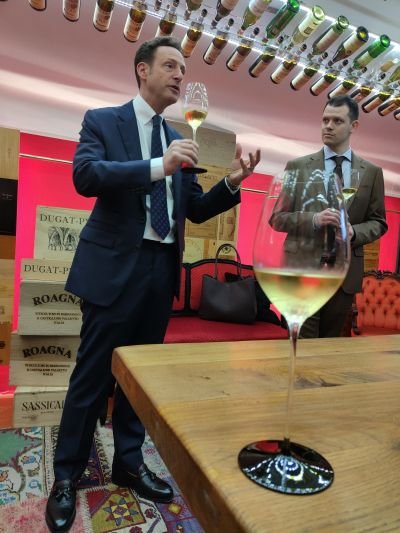
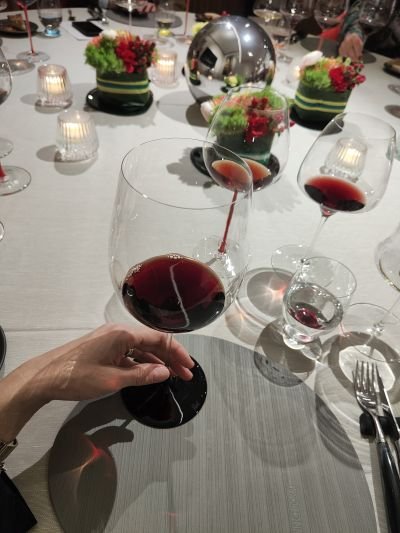
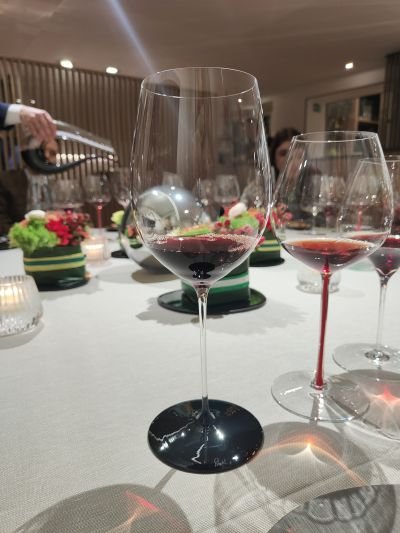
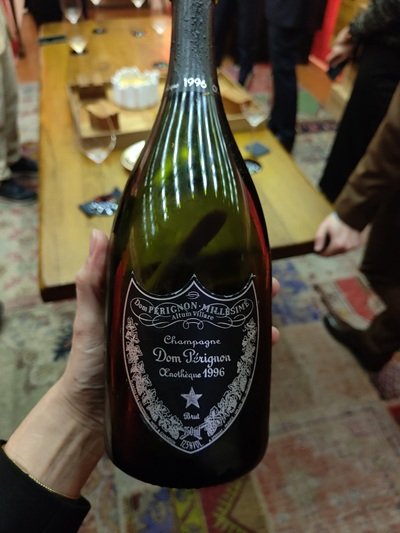
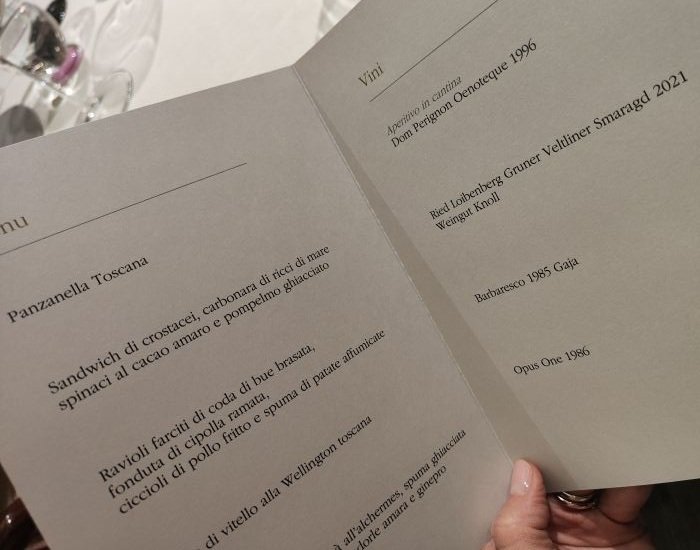
The opening is entrusted to. Dom Pérignon Oenothèque 1996, served in the Handmade Black Tie Champagner. Result is a Champagne that does not focus on aromatic exuberance, but on a continuous, almost silent progression: fine matter, long development, energy still well present. The glass accompanies this approach, keeping the wine compact and focused.
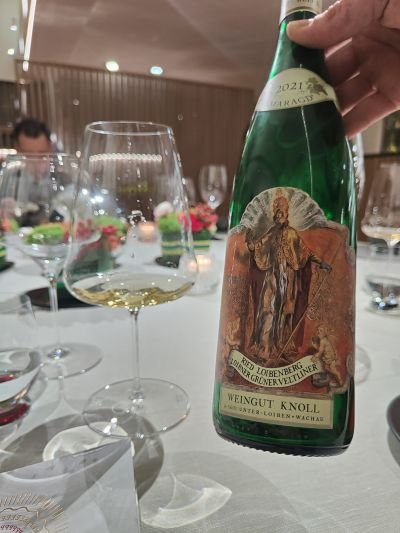
Ried Loibenberg Grüner Veltliner Smaragd 2021 Weingut Knoll in the Winewings Riesling changes register and plays definition with a sharp profile, without deviation, with a plot that privileges precision and tension. The sequence then includes a thrilling Barbaresco 1985 Gaja, served in the Riedel Manufaktur Pinot Noir. Layered complexity where the glass favors a gradual opening. Tertiary notes emerge, supported by a still vital, citrusy, saline sip.
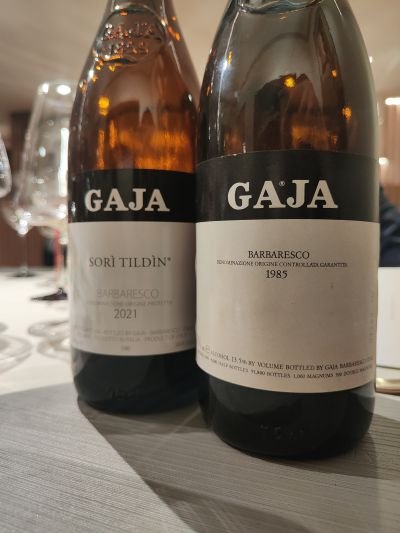
A jump of a few years brings us to the Barbaresco Sorì Tildin 2021 Gaja served in the Handmade Black Tie Bordeaux: clarity of fruit, notes of underbrush, freshness and velvety texture.
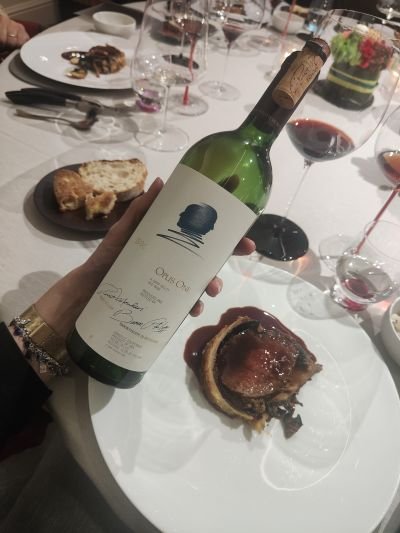
The closing finds in the chalices an Opus One 1986 in the Riedel Manufaktur Cabernet. In this case the glass works by integration: the aromatic components are recomposed into a more coherent whole. Smoothing out any unevenness and returning a wine that is more balanced in its overall perception.
The service is completed by the Small Handmade for water, consistent with an approach in which nothing is left to chance.
Beyond tasting
The menu married the wine sequence perfectly.
>>>>>>>>>>>>>>>>>>>>>>>>>>>>>>>>>>>Overall, what emerges is that the goblet is not a neutral medium, it is an active tool, and sometimes changing the glass also means changing the wine in its expression, in its legibility, in its ability to be understood.