

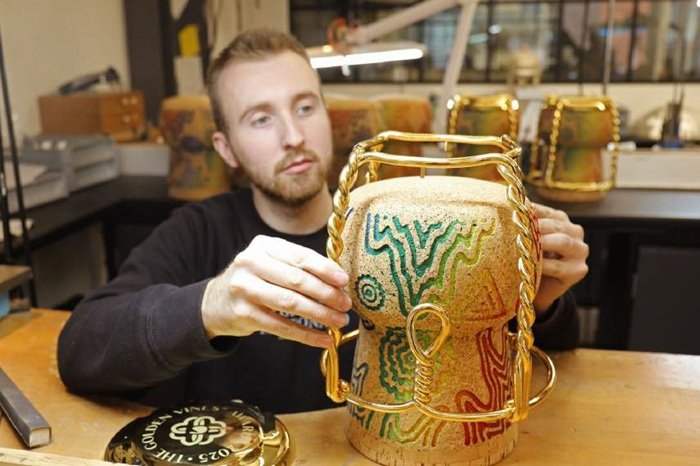

The Golden Vines ® Report 2025 captures a wine market that drinks less but chooses better: quality, identity and sustainability become central, while speculation recedes. In this scenario, Italy is confirmed as a silent protagonist, with Piedmont in the foreground.
The message that emerges most clearly from the Golden Vines ® Report 2025 is stark and now irreversible: we drink less wine, but we choose it better. It is not a slogan, but a structural transformation that spans markets, generations and consumption patterns. Wine is definitely entering a post-volumetric phase, where it is no longer the numbers that count, but the cultural, territorial and ethical value of the bottle.
The report-constructed on the weighted responses of more than 830 major wine professionals worldwide-photographs a sector that, despite geopolitical uncertainties and price corrections, shows surprising lucidity. Wine that endures (and grows) is the one capable of telling origin, authenticity and consistency, intercepting an increasingly aware demand.
The return to value (and the end of blind speculation)
 Premiumisation, sustainability and transparency are the three pillars of the new course. The consumer-and even more so the collector-accepts to buy less. But demands to understand why that wine exists, where it comes from and how it was produced. In this context, the price correction that has hit Bordeaux and Burgundy in particular does not appear to be a crisis, but a necessary normalization after years of speculative excesses.
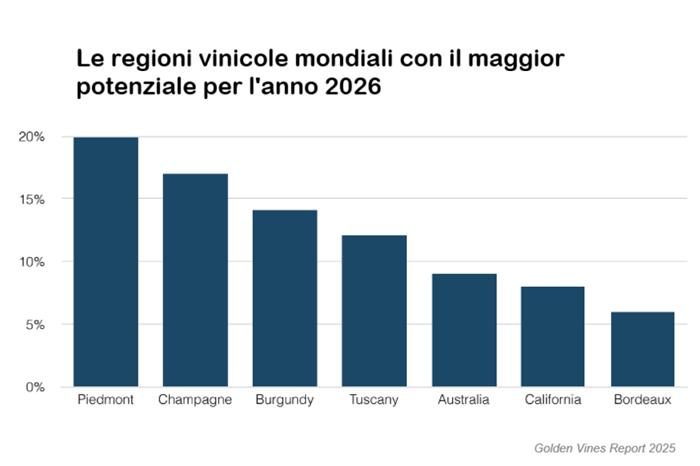
At the same time, attention to alternative regions, historic vineyards, and consistent producers over time are growing. Not surprisingly, Piedmont leads the ranking of regions with the greatest potential for growth in 2026, ahead of Champagne and Burgundy.
Italy silent (but very solid) protagonist
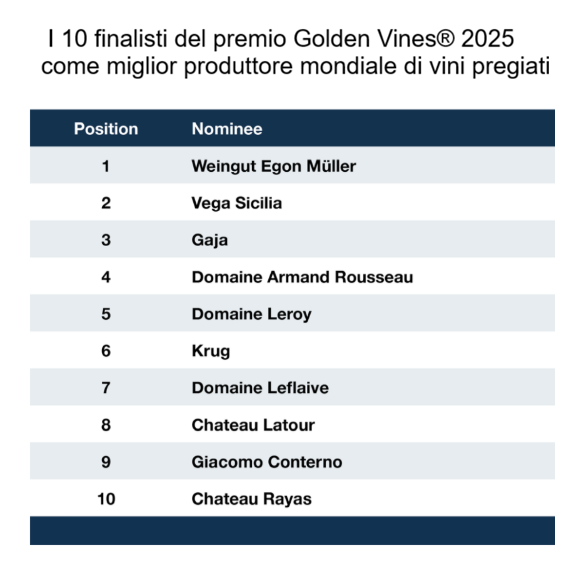
Significantly, two Italian names that perfectly embody this paradigm shift appear in the rankings of the world’s Top 10 producers: Gaja e Giacomo Conterno.
Both have never chased fads or shortcuts. On the contrary, they have built their reputations on longevity, stylistic rigor and loyalty to the land, becoming global references today precisely because they are perfectly aligned with new market expectations.
Sustainability: from added value to prerequisite
Another key element concerns sustainability, which the report now describes as a minimum standard, no longer a distinguishing feature. Packaging, vineyard management, biodiversity, and communication clarity have become decisive factors. Especially for new generations of enthusiasts and professionals.
In this scenario, Italy-strong with a heritage of historic vineyards and often traditionally virtuous agricultural practices-starts at an advantage, provided it knows how to better tell the story of what it already does.
A look at the spirits (just to understand the context)
A similar dynamic can be observed in the world of rare spirits. Less consumption, more value, strong interest in iconic and collectible bottles. But unlike wine, the spirits sector maintains a more markedly “luxury-investment” component. A comparison that reinforces, by contrast, the cultural specificity of fine wine.
In summary
The Golden Vines Report 2025 ® returns the image of a wine that has not lost centrality, but has changed language. Those who know how to be authentic, sustainable, recognizable win. In this new balance, Italy does not shout, but speaks loudly: and it does so through producers like Gaja and Conterno, who show how true modernity, in wine, often passes through fidelity to oneself.