
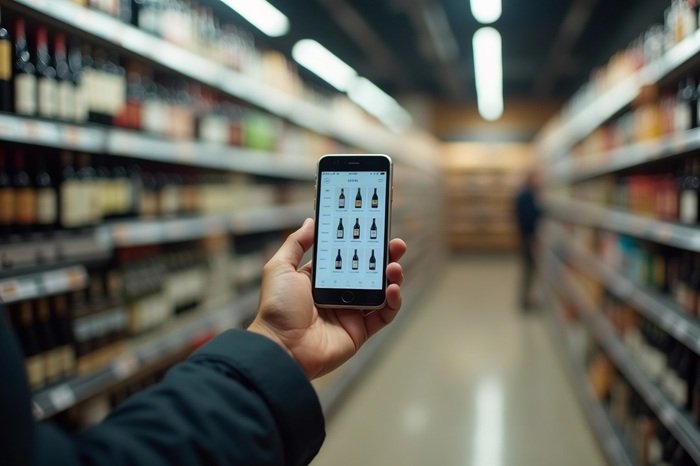

Data intelligence and market sensitivity: the new frontier of wine category management in GDO. Pietro Rocchelli tells us about it.
Retail has long since entered the age of data. But in wine, it is not the technology itself that will make the difference, but the ability to interpret it with commercial sensitivity and consumer knowledge.
In recent years, large-scale retailers have gotten to know their customers more than those who produce them.
Loyalty cards, apps, receipt data and CRM systems have transformed retailers into privileged observers of consumer behavior.
However, in the wine industry, this data-driven revolution is still just beginning. Many choices remain based on custom, perception, or personal relationships.
Accuracy of numbers and understanding of context
Yet it is clear that the future of wine category management will come precisely from the ability to to integrate data intelligence with market sensitivity.
The data tell what happens on the shelves: rotations, purchase frequency, performance price ranges, seasonal variations. But only experience and product culture can explain because it happens.
It is in the meeting of these two worlds-the precision of numbers and the understanding of context-that the new frontier of category management is born.
The evolutionary assortment
For retail, it means moving from a static approach centered on price lists and promotions to a dynamic logic of evolutionary assortment, which adapts to the actual behaviors and motivations of customers.
For manufacturers, it means becoming active partners in this process, not just suppliers.
Sharing insights, proposing analysis, offering tools for interpretation-all these enhance credibility and strengthen the relationship with the retailer.
A cultural innovation before technological innovation
Real innovation will not only be technological, but cultural. It is not enough to have the data: we need knowing how to read them, understand what they reveal about behaviors, consumption occasions, and the perceived value of different price ranges.
Data analysis must be accompanied by knowledge of the end customer and the ability to pick up on weak signals: changes in languages, desires, and contexts of use.
This is where commercial sensitivity becomes irreplaceable.
Emotional and symbolic elements
In wine, more than in any other category, the purchase decision is driven by emotional and symbolic elements.
That is why data should be interpreted with caution: they measure what has happened, but not always what may happen.
A change in rotation may result from a change in packaging, a cultural trend, or a simple seasonal effect. Only those who combine numbers and interpretation can build sound strategies.
The value of interpretive intelligence
For retailers, this means moving from retrospective monitoring to a prospective view of category: anticipating behaviors, not just recording them.
For manufacturers, it means learning to dialogue with distributor data in a structured and transparent way, integrating it with their own market analysis and information from the local area.
Information-based collaboration is the most concrete form of partnership today.
Retail now has a huge amount of information, but in wine it will still require interpretive intelligence: the ability to give numbers meaning, to connect them to people and consumer situations. Only then does data become value.
The future of wine in large-scale retail will not be decided by business intelligence systems, but by the human quality of those who will use them: by the ability to combine analytical rigor and commercial sensitivity, numbers and intuition, algorithms and customer knowledge.
Because, after all, the data tells all – but it is not enough to be able to read it: you have to understand it.
RELATED ARTICLES