
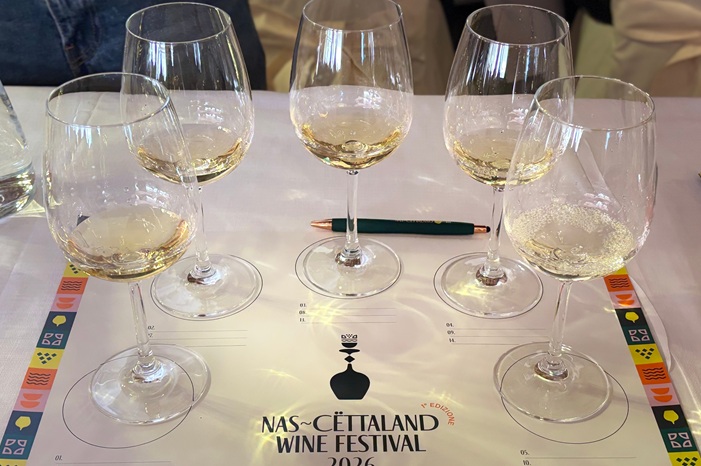
The first edition of Nascettaland, held at Novello Castle, turned the spotlight on Nas-cëtta, a rare native white grape variety from the Langhe. Through tastings, historical insights, and the presentation of the new map of Novello designed by Alessandro Masnaghetti, the profile of an increasingly mature wine emerged—one capable of combining territorial identity, longevity, and new prospects for growth.
From Rediscovery to Recognition
““If Barolo is the king of wines, then Nascetta is its queen.”“. With this evocative image, Liliana Allena, the newly elected president of the Enoteca Regionale del Barolo, opened the first edition of Nascettaland, the festival dedicated to Nas-cëtta, the rare semi-aromatic white grape variety native to Novello.
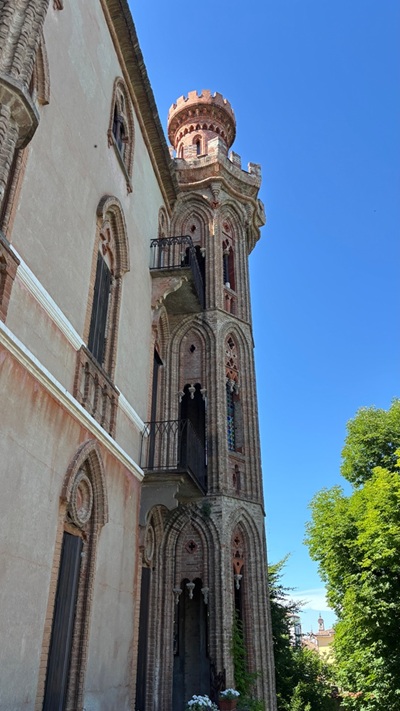
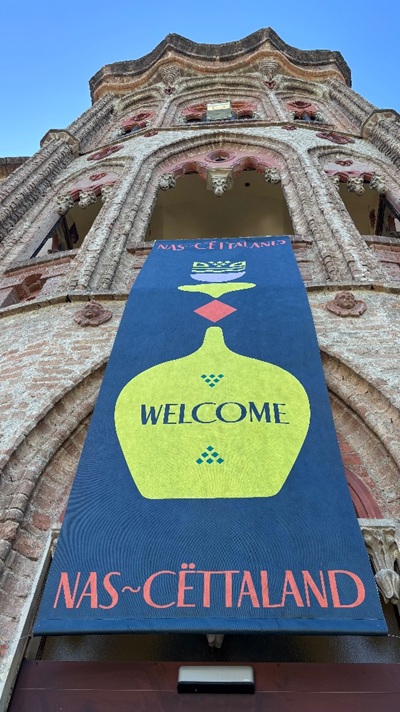
Event, held at Novello Castle, brought together producers, journalists, and enthusiasts through tasting sessions, masterclasses, and discussions focused on the history of the grape variety and its regulatory journey, which culminated in the recognition of the Langhe DOC Nas-cëtta subzone in the municipality of Novello, which protects the version made exclusively from Nascetta grapes. It is precisely in its single-varietal form that Nas-cëtta has established itself among the great white wines of the Langhe, grown on hills where fossil-rich Sant’Agata marl alternates with sandier soils, yielding diverse yet complementary expressions.
The Variety Langhe DOC Nascetta, on the other hand, requires at least 85% of the grape variety and certifies its cultivation even beyond the municipality’s historical boundaries.
A Grape Variety Saved from Oblivion
The revival of Nascetta began in the 1990s thanks to the vision of two companies in Novello, Elvio Cogno and Le Strette, who decided to make a single-varietal wine from it despite the irregular yield and low productivity, with grapes delivered by farmers in small baskets. First bottles were sold as simple white table wines, since the grape variety had not yet received any official recognition.
The scientific work of Maria Carla Craveroof the Experimental Institute for Oenology in Asti, which highlighted the grape’s high alcohol potential, the good stability of malic and tartaric acids during winemaking, and the presence of linalool, the terpene responsible for its typical semi-aromatic character.
Subsequently, studies by Anna Schneiderof the University of Turin helped establish its origin in the hills around Alba and its genetic relationships with other Piedmontese varieties, such as Grò blanc from the Susa Valley.
Its inclusion in the National Register of Varieties in 2001 and its subsequent admission to the Langhe DOC marked the beginning of the Nascetta’s definitive rise in prominence, which culminated in 2010 with the official recognition of the Novello subzone.
A white wine that stands the test of time
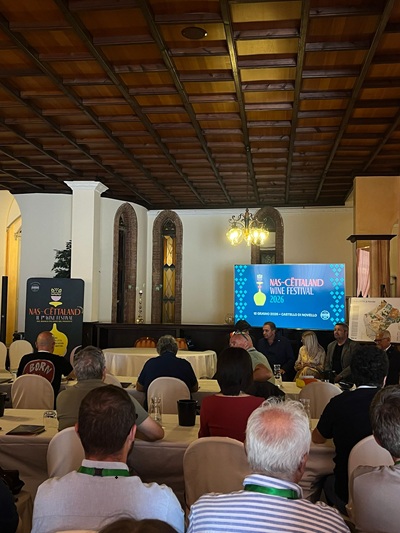
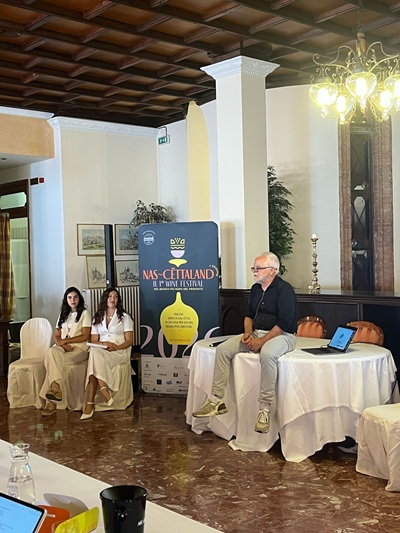
The tasting of fifteen wines, Using samples dating back to 2009, he has established a now well-defined profile of Nas-cëtta. It is a transverse white which, as it ages, gains body and complexity. The color evolves toward golden hues, while the aromatic profile ranges from acacia flowers to citrus, extending to tropical notes, ginger, aromatic herbs, and hazelnut. Also emerging are the typical semi-aromatic character, with hints of sage and balsamic notes, confirming the presence of the terpenes that characterize the grape variety.
On the palate, it combines savory notes, well-defined acidity, and a surprising capacity for evolution: it effortlessly withstands a decade of aging and hints at even greater potential, especially if producers choose to develop future Riserva versions.
Even the flexibility in the winery is one of his strengths. Stainless steel and concrete remain the most common solutions for preserving the wine’s definition, but there is no shortage of interpretations that make judicious use of wood to add more body and texture. These are complemented by winemaking techniques in amphora, sparkling and passito versions, as well as macerated or orange.
The New Map of Novello
 From an agronomic standpoint, the Nas-cëtta remains a challenging variety, amid inconsistent yields and the need to preserve acidity in an increasingly hot climate. These challenges, however, have not hindered its commercial success.
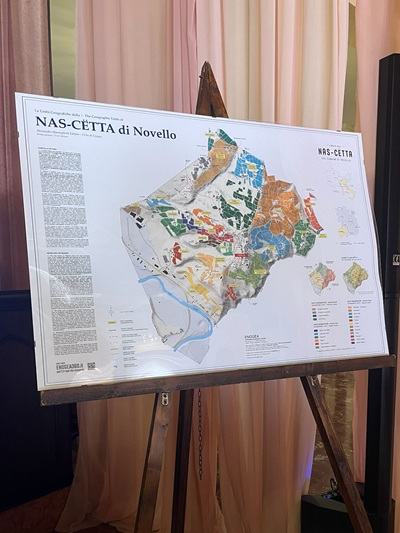
The first edition of Nascettaland also provided an opportunity to present the new map of Novello created by Alessandro Masnaghetti for Enogea. As is customary, Masnaghetti draws on the landscape to explain the character of the wines. Novello stretches along a “two-sided” ridge, which allows us to distinguish two clearly recognizable aspects.
A east and northeast are characterized by steep slopes and a pronounced limestone composition, with the marls of Sant’Agata Fossili which produce more taut and mineral-driven wines, characterized by vibrant citrus notes, a tight structure, and a slow but profound evolution. Among the key regions are Ravera, Sotto Castello di Novello, Panerole, I Merli, and La Volta.
On the west and southwest, on the other hand, the soils are more developed and sandy and the gentler slopes. The wines exhibit more open profiles, with notes of apple, pear, and tropical hints; the acidity is softer, making the wine more approachable and easy to drink. The key microzones are Pasinotti, Chiareno, Barricalino, Fornaci, Piano, Pezzole, and Tarditi.
Growth Figures
The numbers show steady growth. In the 2014, with the support of Strada del Barolo, there were just seven wineries who presented their first wines to the press at a geo-sensory tasting inspired in part by the model developed by French writer Jacky Rigaux. Today The Nas-cëtta del Comune di Novello Producers Association, which is celebrating its tenth anniversary, brings together twelve wineries and a vineyard area of nearly fifty hectares, nearly double the twenty-seven hectares recorded in 2017.
“The Nascetta grape is known and cultivated even outside the municipality of Novello, confirming that indigenous varieties and history remain the cornerstones of the story of Langhe wines,” said Paolo Bongioanni, regional councilor for Tourism and Sports.
While the decade from 2014 to 2024 marked the transition from the first geosensory presentations to the association’s qualitative consolidation and growth, the next chapter will unfold on three fronts: an increasingly precise agronomic management to mitigate yield variability and preserve acidity in warmer vintages, the creation of reserves to definitively demonstrate the aging potential of Nas-cëtta, and communication increasingly tied to the landscape, in which Masnaghetti’s map becomes an invaluable tool for producers and industry professionals. This is the perspective outlined by Ian D’Agata, a well-known wine educator, was invited to lead the tasting.
 Langhe Nascetta Pasinot 2015 Le Strette
 Score: 95/100
Estimated price: €40
100% Nascetta. Aged for 12 months in stainless steel on fine lees.
Intense straw yellow color with golden highlights. On the nose, aromas of hazelnut, dried fruit, Mediterranean scrub, and hints of sulfur. On the palate, it is very fresh, long, and persistent, with an enveloping body leading to a briny finish featuring ginger and hints of medicinal herbs. Complex and elegant.
The first wine was produced in 1997, while the first Pasinot single-vineyard wine was released in 2015 from a historic vineyard planted in 1948, with subsequent replanting in 2016.
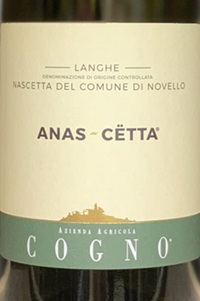 Langhe Nascetta del Comune Novello Anas-cetta 2016 Elvio Cogno
Score: 94/100
Estimated price: €19
100% Nascetta. Aged for 6 months in stainless steel, then 50% in Slavonian oak barrels for 4 months.
Intense straw-yellow color with golden highlights. On the nose, cedar and ripe citrus fruits (grapefruit, mandarin). The palate is full of tension and savory notes, with hints of toast, hay, and white flowers. It has great length and depth.
The first vintage was produced in 1994; the vines in the vineyards used date back to 1983 (Tarditi), 2005 (Merli), 2007–2017 (Panerole), and 2014 (Pasinot).
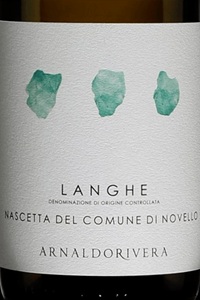 Langhe Nascetta del Comune Novello 2016 Arnaldo Rivera
Score: 95/100
Estimated price: €20.50
100% Nascetta. Aged on the lees for 8 months in stainless steel tanks.
Intense, bright straw yellow color; on the nose, notes of hydrocarbons, citrus, mandarin, mint, and sage. The palate is rich, juicy, and slightly savory, with a fragrant intensity that confirms this is the perfect moment to enjoy it, with hints of ripe pomelo and acacia lingering on the finish. Beautifully harmonious.
The first wine produced in 2016 from the 2011 harvest in the Beimonda and Ravera vineyards.
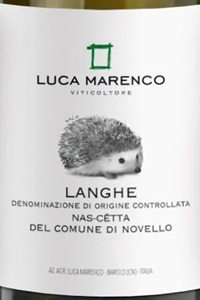 Langhe Nascetta del Comune Novello 2020 Luca Marenco
 Score: 94/100
Estimated price: €18 QP
100% Nascetta. Aged 6 months in stainless steel.
Bright straw-yellow color. On the nose, linden blossom, balsamic notes, citrus, and light smoky hints. Juicy, slender, and agile on the palate, with a very elegant mid-palate that is briny and more minty, with hints of wildflowers. Full of energy.
The first wine produced in 2018 from the Tarditi, Ciocchini, and La Volta vineyards (vines planted in 2010).
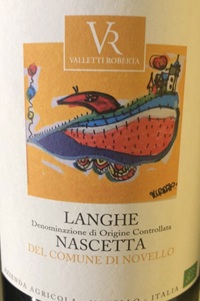 Langhe Nascetta del Comune di Novello 2023 Roberta Valletti
Score: 95/100
Estimated price: €18
100% Nascetta. Steel and 6 months in the bottle.
Intense straw-yellow color. A very typical nose, with notes of hazelnut, lime, grapefruit, acacia, and daisies. Rich, full-bodied, and assertive on the palate, with a salty flavor and structure that invites you to take a sip; pleasant and smooth, with excellent length. Dynamic.
The first wine produced in 2021 from the Bergera vineyard (vines planted in 2005).