
Wine, once a daily and central presence in Italians’ shopping carts, is becoming an occasional purchase. The cause is not only economic or health-related, but mainly related to the loss of relevance in contemporary life. Between disorientation, new consumption styles and competition from more immediate alternatives, wine must evolve: from a product linked to tradition to a functional solution for specific moments and needs.
How the role of wine is changing in Italians’ shopping carts
For decades in Italy, wine has been the permanent guest, the undisputed “head of the table” of every meal. Today, that place is no longer taken for granted. If once putting a bottle in the cart was an automatic, almost ritual gesture, today it is a more reasoned choice and often replaced by alternatives perceived as more immediate or more “functional” to the needs of contemporary life.
Wine is slipping from protagonist to occasional presence.
In order to bring it back to the center of the supermarket, we need to understand why a portion of consumers are moving away from it and how GDO and manufacturers can turn it around.
The crisis of the “everyday”: when wine loses its function
Declining consumption is not just a matter of health or budget: it is, first and foremost, a matter of relevance. The consumer pushing the cart between aisles today is often overwhelmed by:
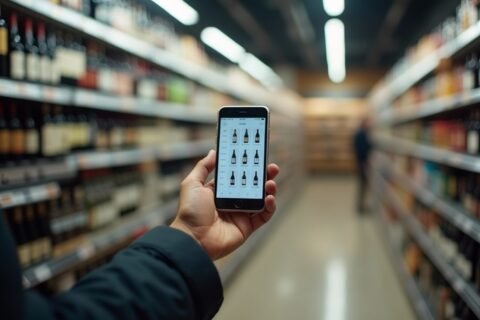
- Informational disorientation. Faced with shelves of hundreds of often similar labels, the inexperienced customer experiences classic “choice anxiety.”
- New lifestyles. Quick meals, lunch breaks away from home, fragmentation of convivial moments-all these erode the role of wine as a habitual companion.
- Competition of “solutions.” Craft beers, RTDs, ready-to-drink spirits or premium soft drinks communicate more easily and solve a function (relaxation, gratification, quick pairing) with fewer barriers to entry.
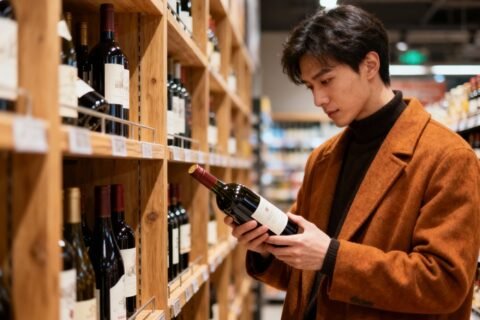
To summarize: if people who pass by the supermarket after the office at 6:30 p.m. do not understand what they are buying and especially how they will use it in two hours at home, they often end up buying nothing, or take refuge in the usual brand on promotion. And not infrequently comes out of the wine department choosing a premium beer or non-alcoholic beverage, because the use function is immediate and clear.
For years, retail has “sold” wine as a list of grape varieties, territories, sometimes awards. But for shoppers at the end of the day, the implied question is simpler: Why should this very bottle should end up in my cart tonight?
From “what” to “why”: wine must return to solving a need
The necessary transition is toward a more functional wine (and also, in part, emotional): a product capable of responding to specific moods and occasions of use.
It means imagining a department organized not only by “where” the wine is born, but by “when” and “why” it is drunk. For example:
- Gratification function: “I have worked hard, tonight I deserve a special cup.”
- Simplified pairing function: “What do I drink with this pizza/sushi/salad?”
- Wellness function: Smaller formats (375 ml), moderate gradations, reassurance elements for those sensitive to certain issues.
It is not a matter of erasing territoriality, but to place alongside it a key to understanding it that is hooked to the real (and current) motivations for purchase and consumption.
From logic of exposition to logic of solution
To bring wine back to the center of the supermarket, GDO and producers must move from a logic of mere display to a logic of solution.
The “wall of bottles” must become a pathway. It is no longer enough to show: one must lead.
- More talking visual communication. The shelf cannot remain an archive, a library of bottles sorted by regions and grape varieties. It needs clear indications of style (fresh, structured, aromatic) and suggestions for use that go beyond the usual “red meat/white meat” pairings.
- Packaging as barrier reduction. More legible labels, screw caps for everyday consumption, and alternative formats can lower the psychological threshold of “I won’t open a bottle if I’m alone.”
- Working on use value. Wine needs to be repositioned: not as a distant and cryptic product “for initiates,” but as a friendly ingredient that enriches different moments-from the daily meal to the aperitif, from after dinner to the evening for two or with friends.
Conclusion: rekindle the spark in the wine department
The risk of wine becoming a “recurring” product is real. For it to return to being a recurring purchase in large-scale retail outlets, we need to stop treating it as a “sacred” product (or worse, as a habit that drags on) and start considering it again for what it is: a fundamental piece of Italian food culture, capable – like cuisine – of adapting to the rhythms of 2026 and, hopefully, of the future.
The challenge for the supply chain is clear: Simplify complexity without selling out quality. Only then will wine stop being a question mark in the supermarket aisle and once again become a natural answer to the question, “How do we liven up our table tonight?”
RELATED ARTICLES