
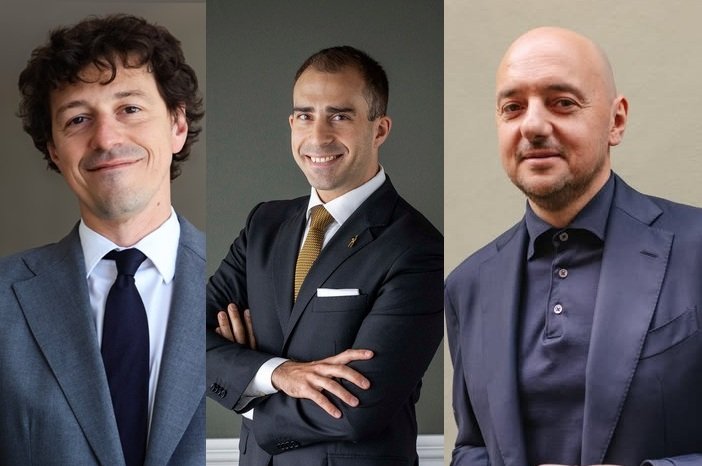
We interviewed three sommeliers from three Michelin-starred restaurants in three different geographical locations, gathering three different views on wine and its role in haute cuisine. Emanuele Baj Rossi tells us about them.
From Abruzzo mountains which have become a gastronomic destination from all over the world, to the Milan international, to the Modena symbol of a gastronomy that combines tradition and contemporaneity: three Michelin-starred restaurants, three territories and three different sensibilities.
We collected the reflections of Carlo Maldotti (Reale), Sebastien Ferrara (Enrico Bartolini at Mudec) and Beppe Palmieri (Osteria Francescana) to understand how the world of wine in haute cuisine is changing. A multifaceted narrative emerges, in which the wine list is no longer just a tool, but a cultural statement.
The wine list: identity, research and vision
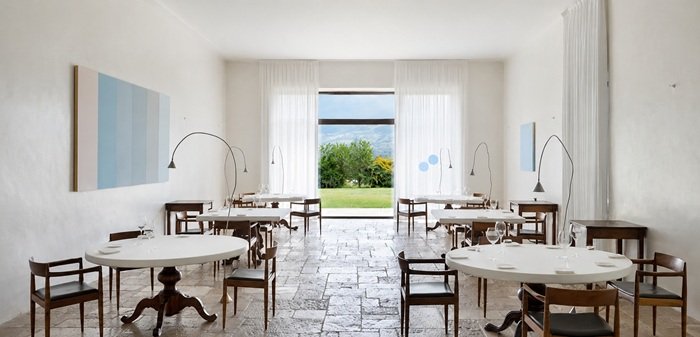
For all three sommeliers, the paper is never static. It is a living organism, constantly evolving. Carlo Maldotti calls it “dynamic, meaningful and curious.” emphasizing how the selection stems from the balance between territorial identity and international openness. At Reale, the focus on the Abruzzi coexists with a global vision, where each bottle must tell a story, whether that of the territory or the producer.
Sebastien Ferrara instead starts from a more personal premise: the paper should reflect the team’s taste. “Artistic, contemporary and classic.” he defines it, focusing on harmony and elegance rather than extreme choices.
Beppe Palmieri, with a vision gained from more than two decades of work, speaks of a balance built over time: a paper “passionate“, built without hierarchies between big names and small producers.
In common there is a strong idea: there is no formula. The perfect paper does not exist, but it is this continuous striving for improvement that defines its value.
Pairing: beyond the rules
If there is one area where differences emerge, it is in the area of pairings.
At the Reale , Maldotti rejects the classical idea of pairing as compensation. Pairing becomes a ” countermelody“, a parallel path to the cuisine of Niko Romito, capable of creating tensions and dialogues that are not always reassuring. Wine does not accompany: dialogues with the plate.
Ferrara, at Mudec, starts instead from theharmony. His goal is to build an overall balance on the palate, but without sacrificing playfulness and surprise. Emblematic is the use of the black goblets, which turn tasting into a sensory and playful experience. Even the most unusual pairings – such as Brachetto or Vernaccia Nera on savory dishes – find a place, as long as they work.
Palmieri represents a synthesis of academia and freedom. Harmony remains a staple, but contrast is the most interesting tool to achieve it. This is how iconic pairings are born, such as the use of Picolit in the opening or, in the past, bold combinations such as gentian and lamb.
Three different approaches, but one shared principle: rules should be known, but should not become a limitation.
The customer has changed (and the sommelier with him)
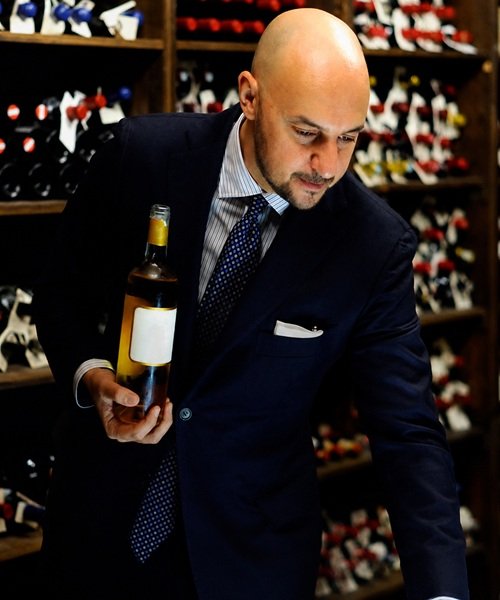
One of the most obvious changes concerns the customer. Everyone agrees: today it is More informed, more curious and more involved. But not necessarily more “technical.”
According to Maldotti, the real difference lies in the sommelier’s ability to read the customer: there are no trivial requests, only more or less sensitive interpretations. Palmieri speaks of a radical transformation: from a decisive and autonomous customer to interlocutor open to dialogue. This has completely changed the service, making it more dynamic and psychological. Ferrara emphasizes how access to information has Raised the average level of preparation, but reiterates that what really matters is to offer something good, regardless of origin.
Drink less, drink better
The theme of consumption is central. Everyone observes a Reduction in quantity, but not in interest. You drink less, but better.
Palmieri recounts a room dominated by half-chalices and fragmented paths, more articulated but also more sustainable from a consumption point of view. Instead, Maldotti invites questions about the proposal: if the customer does not drink, the restaurant is also responsible. Ferrara sums up the moment well: “instead of one bottle, two glasses – but very good.”
In parallel, the space for non-alcoholic alternatives. At Reale, Maldotti has developed a complete path based on extractions, fermentations and vegetable infusions. At Mudec, non-alcoholic beverages assert themselves above all as a conscious choice, linked to the context of the guest.
Trends: lightness, identity, sustainability
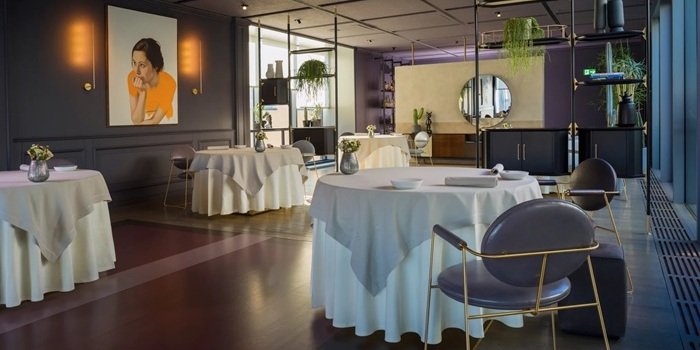
The directions are clear. Cooler, less alcoholic, less concentrated wines are sought. Elegance takes the place of power. There is growing interest in less traveled territories and sustainable production, but without dogmatism.
Maldotti talks about research increasingly focused on the identity and recognizability of wines. Ferrara envisions leaner, more focused charters. Instead, Palmieri calls for not losing depth, working on stable teams and long-term visions.
The sommelier of the future
The figure of the sommelier is evolving. He is no longer just a technician, but a cultural mediator, a storyteller and, increasingly, a manager.
Maldotti stresses the importance of the economic dimension of the winery, while Ferrara highlights the role of listening and communication. Palmieri adds a key element: humanity. Today, the sommelier must be prepared, but also light-hearted, empathetic, able to convey energy as well as competence.
The wine of the heart and personal influences

When moving from the professional to the personal level, very different – and perhaps for that very reason revealing – approaches emerge. Sebastien Ferrara has no doubts and cites an absolute reference: 1947 Château Latour, a symbol of timeless depth and complexity.
Charles Maldotti Instead, he chooses a more reflective response: not a single wine, but a constellation of tastings that have changed meaning over time. More than taste, the emotion that ignited curiosity and led him to make this passion a profession matters.
Consistent with his vision, Beppe Palmieri, instead shifts the focus from bottles to people. The figures of Antonio Santini and Baldo Baldinini represent two pillars for him: rigor, style, and the ability to build an identity.
Beyond the restaurant: wine as a project
Even outside the room, wine continues to be an integral part of their journey, but in very different ways. Maldotti complements his work at Reale with a personal project: an e-commerce dedicated to artisanal wines and the organization of tastings for individuals and companies, with an eye increasingly on future education.
Ferrara also lives wine in the production dimension: since 2021 he has been involved in the creation of Particella EB together with Andrea Picchioni. An experience that combines vineyard, winery and service, closing the circle between production and catering. Palmieri, on the contrary, remains totally focused on the Osteria Francescana. The restaurant’s cellar is its center, the place where it concentrates energy, vision and planning.
A possible synthesis
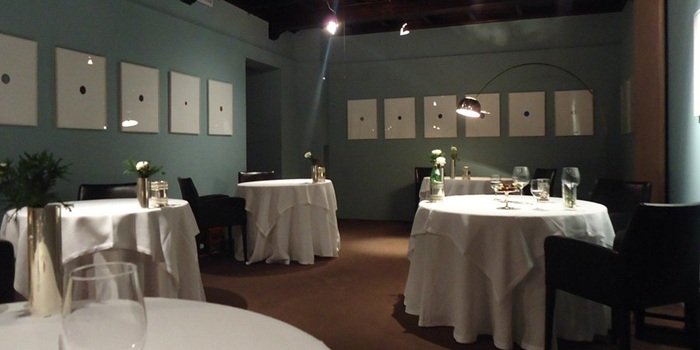
Three restaurants, three visions, one common direction: wine in haute cuisine is becoming less and less ostentation and more and more relationship. Relationship with the land, with the producer, with the customer. And, perhaps above all, with themselves. Because, as their words reveal, being a sommelier today means first and foremost continuing to learn. Always.

